
Explosion Proof Flexible Conduit for Gas Stations: 7 Problems That Cause Rework
News 2026年 9月 24日 62
Choosing the right explosion proof flexible conduit is a small decision that can create a big problem if it is wrong. Based on our overseas project experience, 32% of connection-fitting problems were related to incorrect flexible conduit selection, while rework can cost 5–10 times the original purchase price.
The problem is not only the conduit diameter. Incorrect thread selection, unsuitable sheath material, excessive bending, excessive length, poor sealing, and unverifiable explosion-proof certificates can all create installation or inspection problems.
This guide focuses on the practical issues that should be checked before purchasing and installing flexible conduit for fuel dispensers and other electrical equipment in hazardous areas.
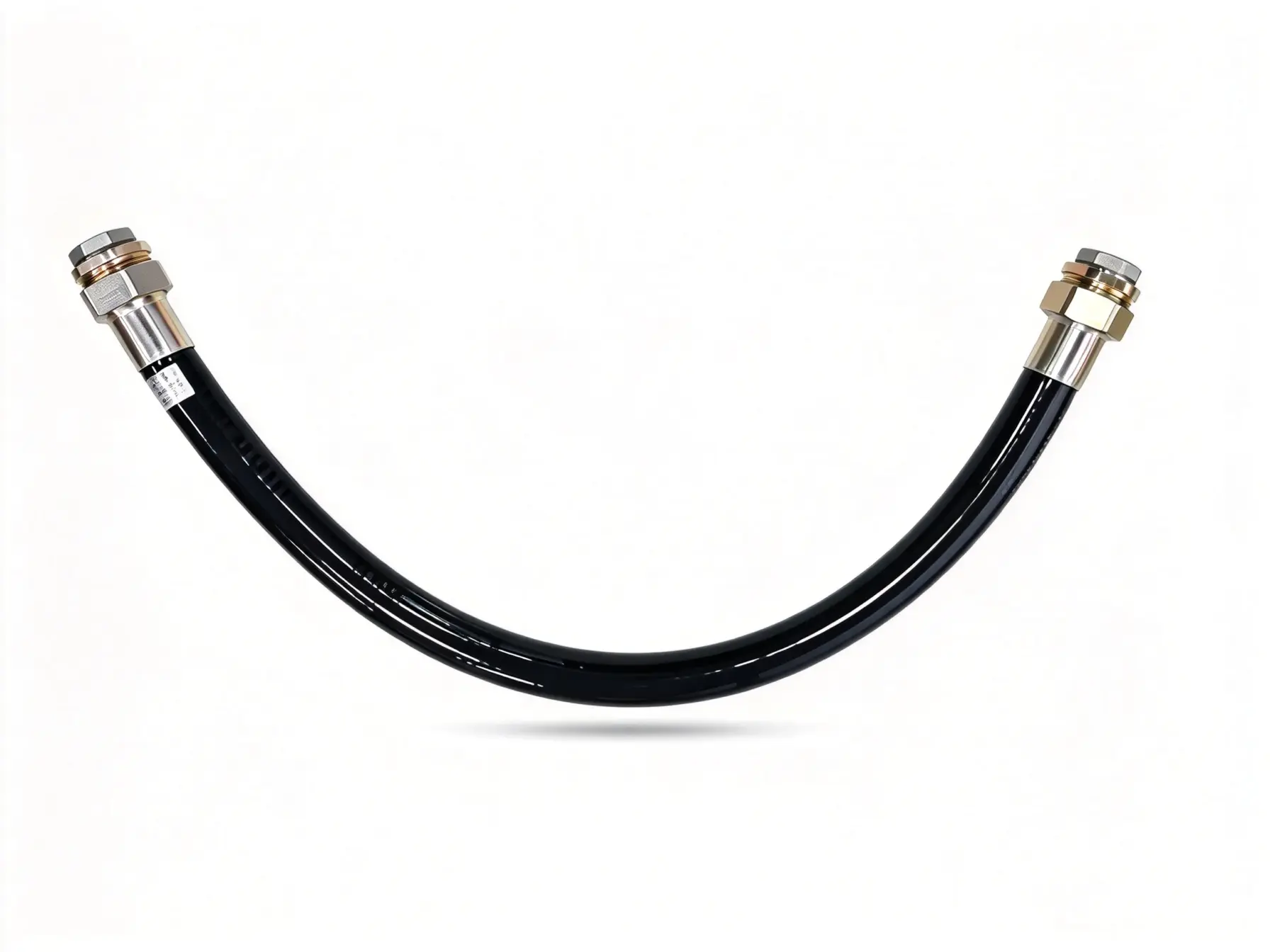
1. Why Does an Explosion Proof Flexible Conduit Fail?
A fuel station is a demanding installation environment. Flexible conduit may be exposed to vibration, fuel, temperature changes, moisture, outdoor conditions, and coastal salt spray.
Sheath material is particularly important. In our field records, 57% of flexible conduit fitting failures were related to incorrect sheath material selection.
The right material depends on the actual installation environment. Before purchasing, check:
- Contact with gasoline, diesel, or other oil products
- Operating temperature
- UV exposure
- Humidity
- Coastal or salt-spray conditions
- Required flexibility
- Mechanical stress
- Applicable explosion-proof certification
The important question is not simply rubber or PVC. The better question is whether the complete flexible conduit assembly is suitable for the actual installation environment.
Need Help Checking Your Specification?
If you already have a flexible conduit specification but are unsure about the material, size, thread, or certification, send us the details. We can help you identify potential matching problems before installation.
2. Is the Thread Correct: NPT, BSPP/G, or Metric?
A common problem is having the correct conduit diameter but the wrong thread.
For example, a request for a 1-inch explosion proof flexible conduit does not automatically define the thread type.
Common thread options include:
- NPT – American tapered pipe thread
- BSPP / G – British parallel pipe thread
- Metric – Metric thread
Common sizes for fuel station applications include 3/4 inch and 1 inch.
The end configuration should also be confirmed. Options can include:
- Male + female
- Double male
- Double female
- Customized configurations
Do not purchase only according to the conduit diameter. Confirm the equipment-side thread before placing the order.
If the thread is wrong, the problem may not be discovered until the equipment reaches the installation site, resulting in additional fittings, replacement costs, or project delays.
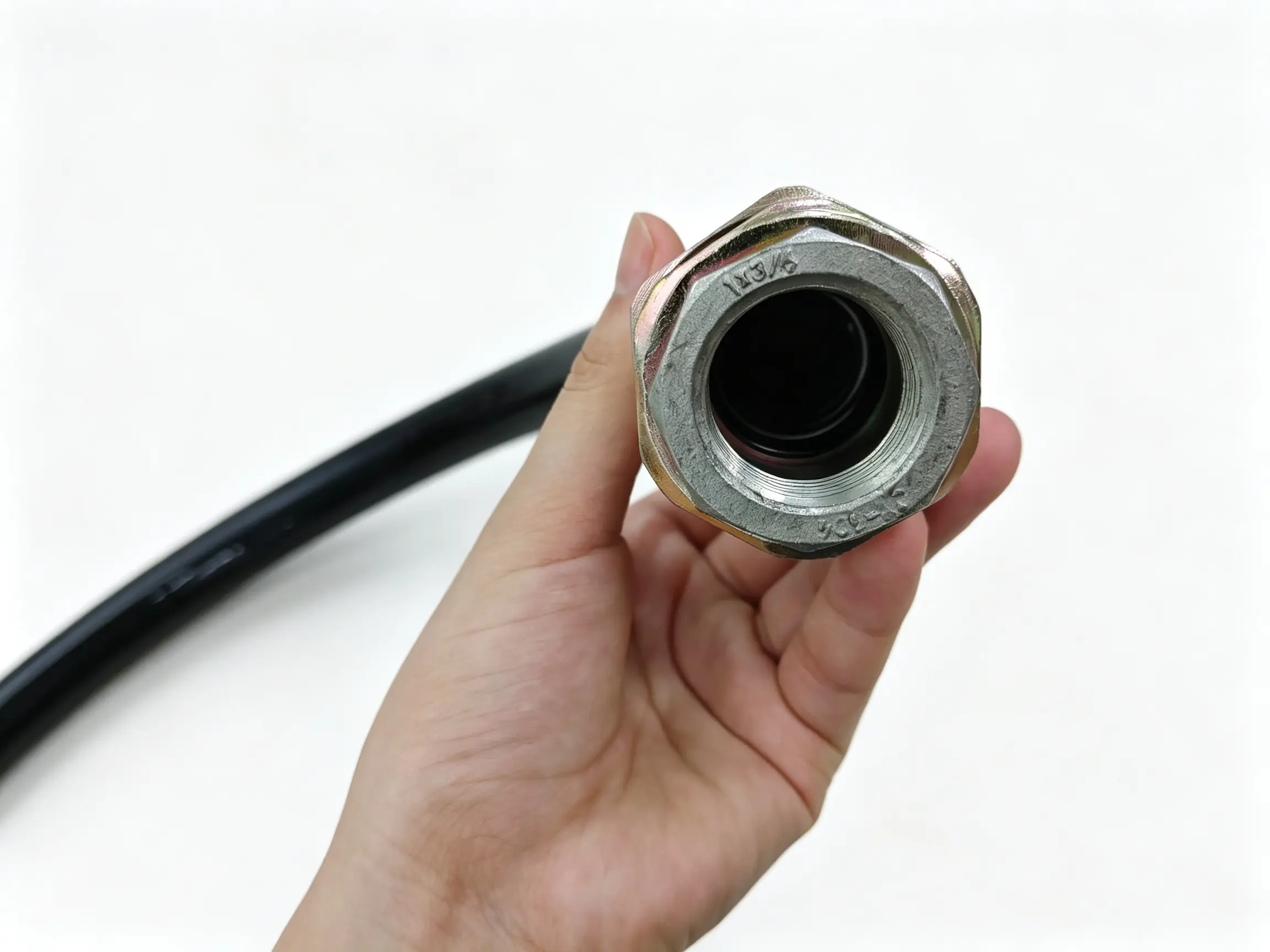
3. Can You Bend an Explosion Proof Flexible Conduit Like a Normal Hose?
No.
Flexible conduit is designed to provide flexibility, but it should not be folded into a sharp 90° bend or permanently deformed during installation.
For the product/project configuration discussed here, the minimum bending radius is:
≥ 5 × conduit outside diameter
For example, if the conduit outside diameter is 20 mm:
Minimum bending radius = 20 × 5 = 100 mm
During installation, avoid:
- Sharp 90° bends
- Crushing the conduit body
- Permanent deformation
- Excessive tension on fittings
- Twisting the conduit during installation
The flexible conduit should remain properly supported after installation rather than being forced into a position that creates continuous mechanical stress.
For a broader understanding of fuel dispenser installation requirements, see our guide to fuel dispenser working principle and installation requirements.
4. Is a Longer Flexible Conduit Always Better?
Not necessarily.
A longer conduit may appear easier to install, but excessive length can create unnecessary sagging, movement, bending, and mechanical stress.
For the specific product/project configuration discussed in this article, the flexible conduit maximum length is:
≤ 1 m
This should not be interpreted as a universal length requirement for every flexible conduit in every market. The actual permitted length must be checked against the specific product certification, technical documentation, and project requirements.
A practical approach is to use the shortest reasonable length that allows proper installation without tension or excessive bending.
5. How Does an Explosion Proof Flexible Conduit Work?
An explosion proof flexible conduit is not simply a flexible tube added to an electrical installation. It forms part of the complete connection system.
Mechanical protection
The conduit helps protect internal cables from mechanical damage, vibration, movement, and bending.
Flexible connection
Fuel dispensers and other equipment may experience vibration or installation movement. A flexible connection provides controlled flexibility between fixed electrical conduit and the equipment.
Environmental protection
The protection level depends on the specific product construction. The configuration discussed here provides IP65 protection against dust and water exposure.
Electrical continuity
Where the conduit assembly is designed to provide grounding continuity through its metal construction, the complete connection must maintain that continuity after installation.
The galvanized corrugated conduit and integrated steel wire braid structure provide a continuous metal path through the flexible section.
The flexible connection is only one part of the dispenser safety system; you can also learn how a fuel dispenser breakaway protects the dispenser connection during abnormal pulling or vehicle movement.
6. What Does Ex db IIB T4 Gb Mean?
Do not select an explosion-proof product simply because the supplier describes it as “explosion proof.”
The certification marking provides important information about the protection method and application.
For example:
Ex db IIB T4 Gb
| Marking | Meaning |
|---|---|
| Ex | Equipment designed for explosive atmospheres |
| db | Flameproof protection level/type |
| IIB | Gas group |
| T4 | Temperature class |
| Gb | Equipment Protection Level |
The actual marking must match the hazardous area and equipment requirements of the project.
IEC 60079-14:2024 covers the design, selection, installation, and initial inspection of electrical Ex equipment in explosive atmospheres. Therefore, hazardous area classification, equipment certification, and installation requirements should be considered together.
7. How Can You Verify an Explosion Proof Conduit Certificate?
A certificate should not be accepted simply because the supplier provides a PDF or paper copy.
Based on our procurement experience, 40% of supplier certificates could not be independently verified online. For IECEx-certified equipment, the IECEx Online Certificate System provides the controlled master record for certificate verification.
Before purchasing, check:
- Certificate number
- Manufacturer
- Product or model
- Ex marking
- Certificate status
- Certified configuration
- Whether the supplied product matches the certified product
This is particularly important when purchasing from overseas suppliers. A certificate number that cannot be verified should be treated as a point requiring further clarification before procurement.
Explosion Proof Flexible Conduit Installation Checklist
Before installation, confirm:
- Hazardous area classification
- Required explosion-proof protection and certification
- Conduit size
- Thread type
- Required length
- Minimum bending radius
- Sheath material
- IP protection
- Fitting configuration
- Sealing
- Grounding continuity
The conduit should be replaced immediately if you find:
- Aged, cracked, swollen, or peeling rubber sheath
- Severe corrosion on metal fittings
- Crushed or permanently bent conduit
- Loose fittings
- Failed seals
- Disconnected grounding
High-temperature, high-humidity, and coastal environments require particular attention because moisture and salt spray can accelerate corrosion of metal fittings.
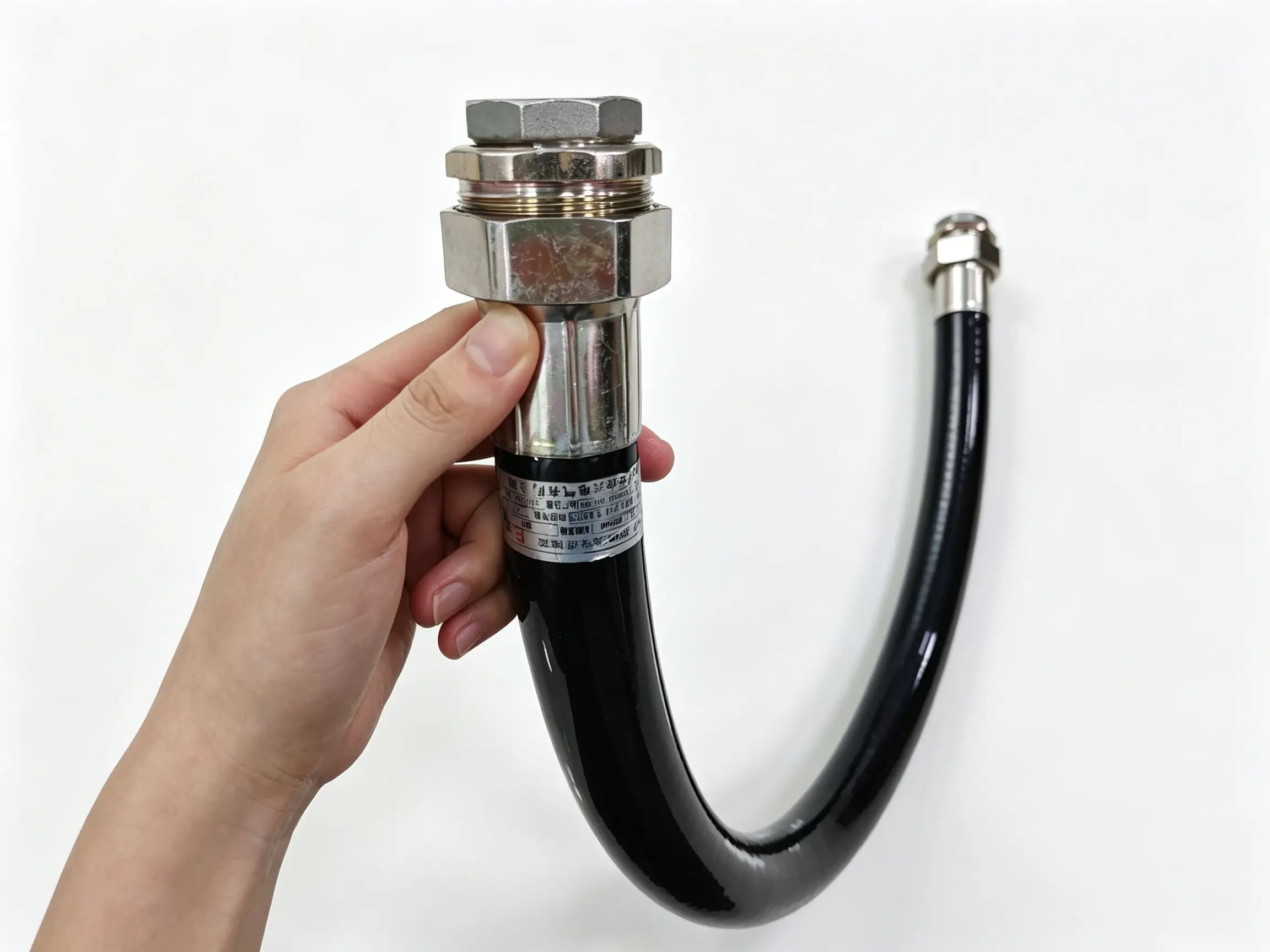
Our Explosion Proof Flexible Conduit Solution
For fuel station projects, we do not recommend selecting a flexible conduit only by diameter. The conduit, fittings, thread, length, material, and certification should be considered as one complete configuration.
Depending on project requirements, we can coordinate:
- 3/4-inch and 1-inch sizes
- NPT, BSPP/G, and other thread configurations
- Male + female ends
- Double-male or double-female ends
- Oil-resistant sheath options
- IP65 configurations
- Galvanized corrugated conduit with steel wire braid
- Customized lengths and fitting combinations
- Required explosion-proof certification documentation
For complete fuel station equipment sourcing and project coordination, learn more about our fuel station equipment supply chain service.
Need a Flexible Conduit Configuration for Your Project?
Send us your:
- Equipment model
- Conduit size
- Required length
- Thread type
- Project country
- Hazardous area requirements
- Certification requirements
We can help you check the suitable explosion proof flexible conduit, fitting configuration, and certification requirements, and coordinate related fuel station equipment as part of your sourcing process.
A flexible conduit may be a small component of a fuel station project, but selecting the wrong specification can lead to installation problems, failed inspection, and expensive rework. Confirming the configuration before purchase is usually much easier than correcting it after installation.