
Fuel Dispenser Solenoid Valve: Structure, Working Principle & Maintenance
News 2026年 7月 16日 63
The fuel dispenser solenoid valve is one of the key control components in a modern fuel dispenser. It is mainly responsible for opening and closing the fuel passage while precisely controlling the flow rate throughout the fueling process.
During fueling, the fuel dispenser solenoid valve must respond quickly to commands from the control system, deliver accurate flow control, and maintain a stable fuel supply. Its performance therefore has a direct impact on fueling speed, metering stability, and the overall reliability of the dispenser.
Whether the system is handling gasoline, diesel, or other fuels, a high-performance solenoid valve must provide reliable sealing, fast response, and stable long-term operation.
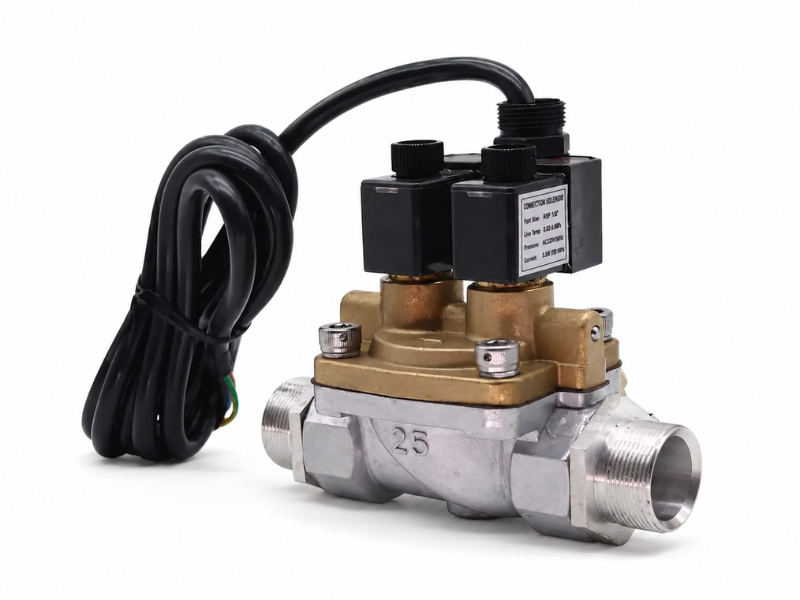
This article takes a detailed look at the structure, working principle, common faults, and routine maintenance of fuel dispenser solenoid valves, helping maintenance personnel understand and resolve related problems more efficiently.
1.What Is a Fuel Dispenser Solenoid Valve?
A fuel dispenser solenoid valve is an automatic control valve that operates through electromagnetic force. It is an important fuel dispenser part used to control the fuel passage during dispensing.
The solenoid coil generates a magnetic force that moves the valve core, opening or closing the fuel passage as required.
During the fueling process, the solenoid valve performs several important functions:
- Controls fuel flow
- Switches between high-flow and low-flow operation
- Ensures rapid shutoff when fueling stops
- Prevents fuel from continuing to flow
- Improves metering accuracy
Modern fuel dispensers normally use a two-stage flow control system.
High-Flow Mode
Used for fast fueling and improved operating efficiency.
Low-Flow Mode
Used for precise control as the preset amount is approached, helping improve metering accuracy and reduce hydraulic impact.
A complete fuel dispenser solenoid valve mainly consists of the following components:
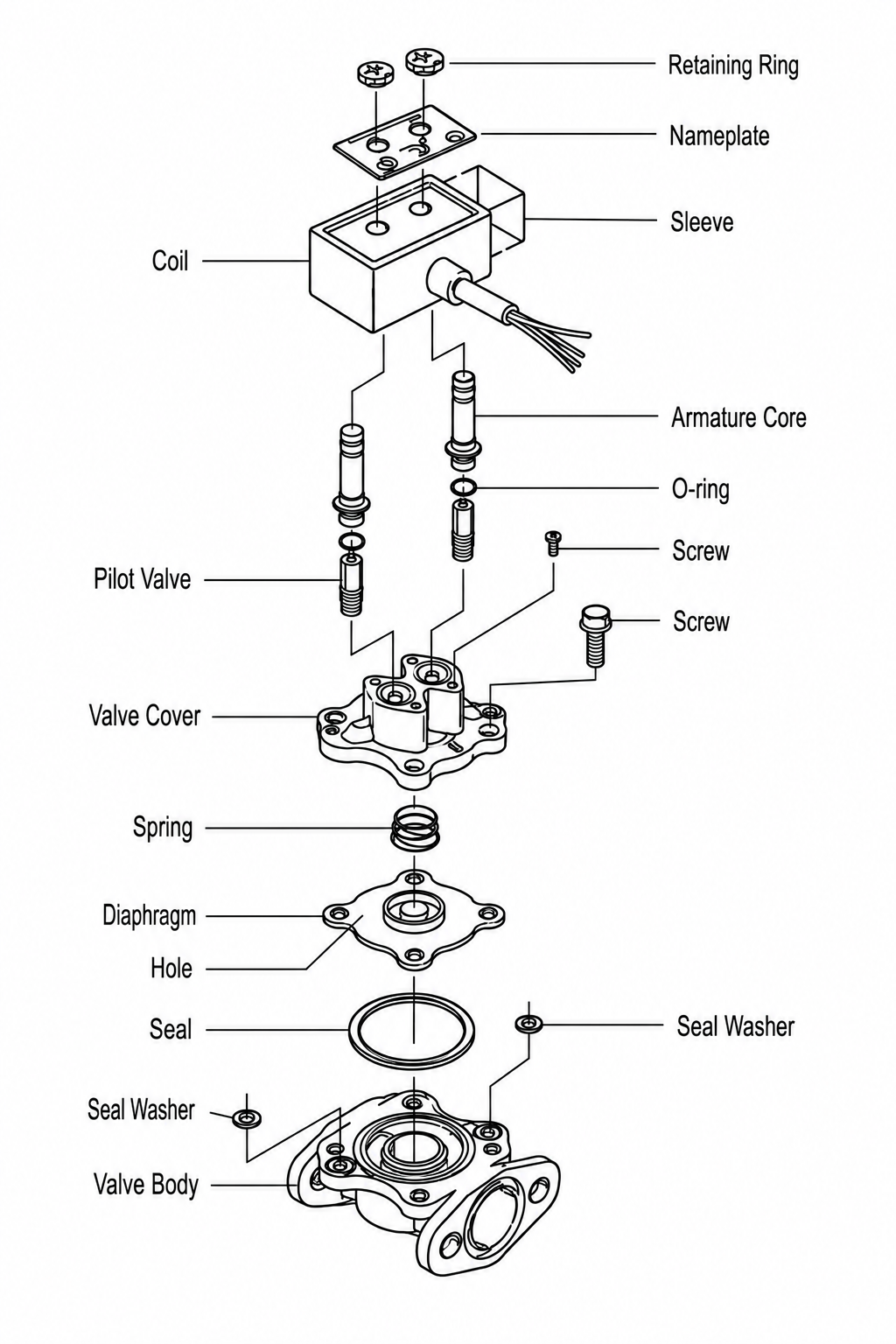
These components work together to provide accurate and reliable fuel flow control.
2.How Does a Fuel Dispenser Solenoid Valve Work?
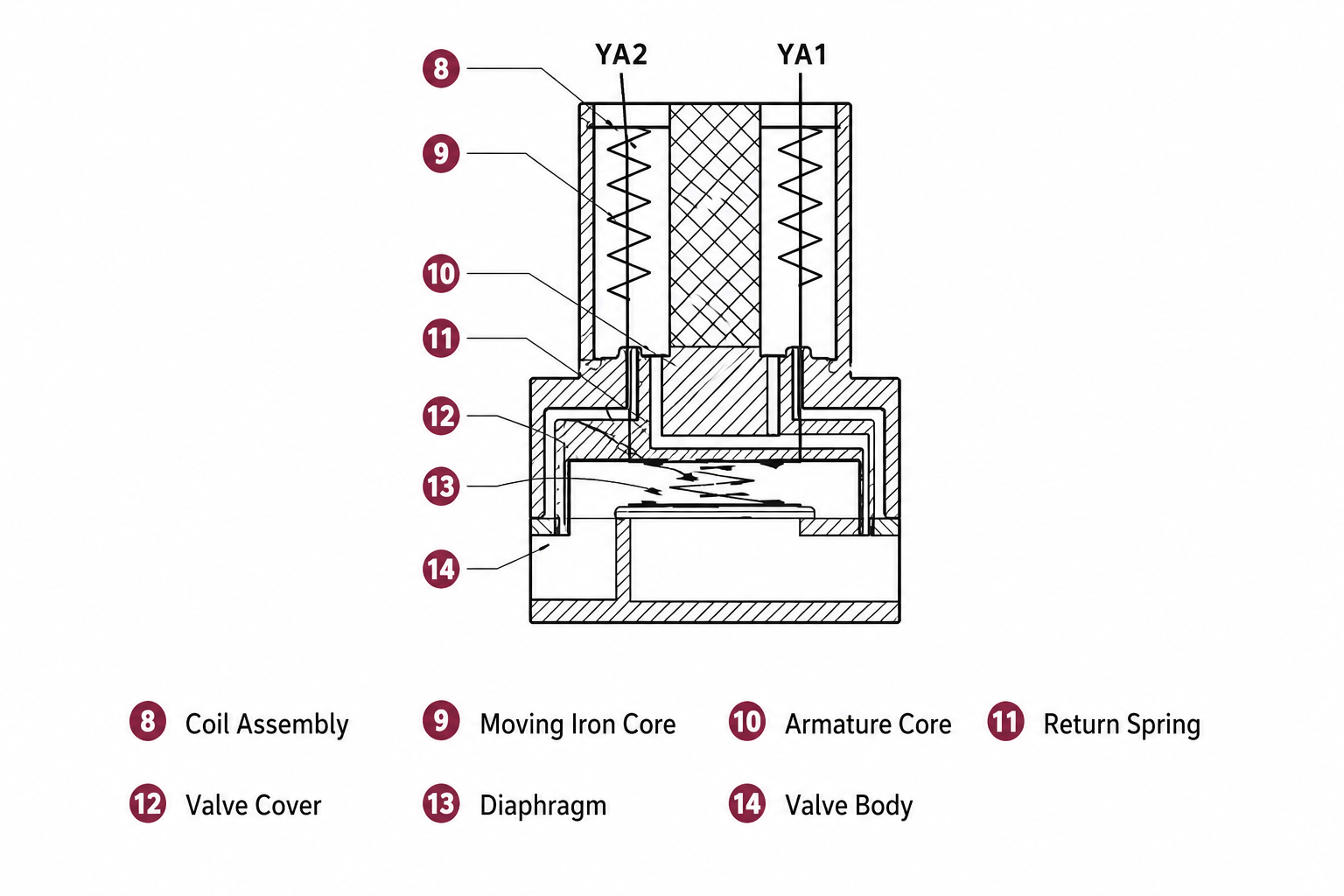
The fuel dispenser solenoid valve working principle is mainly based on controlling pressure changes inside the valve to open and close the fuel passage.
The complete operating process can be divided into the following stages.
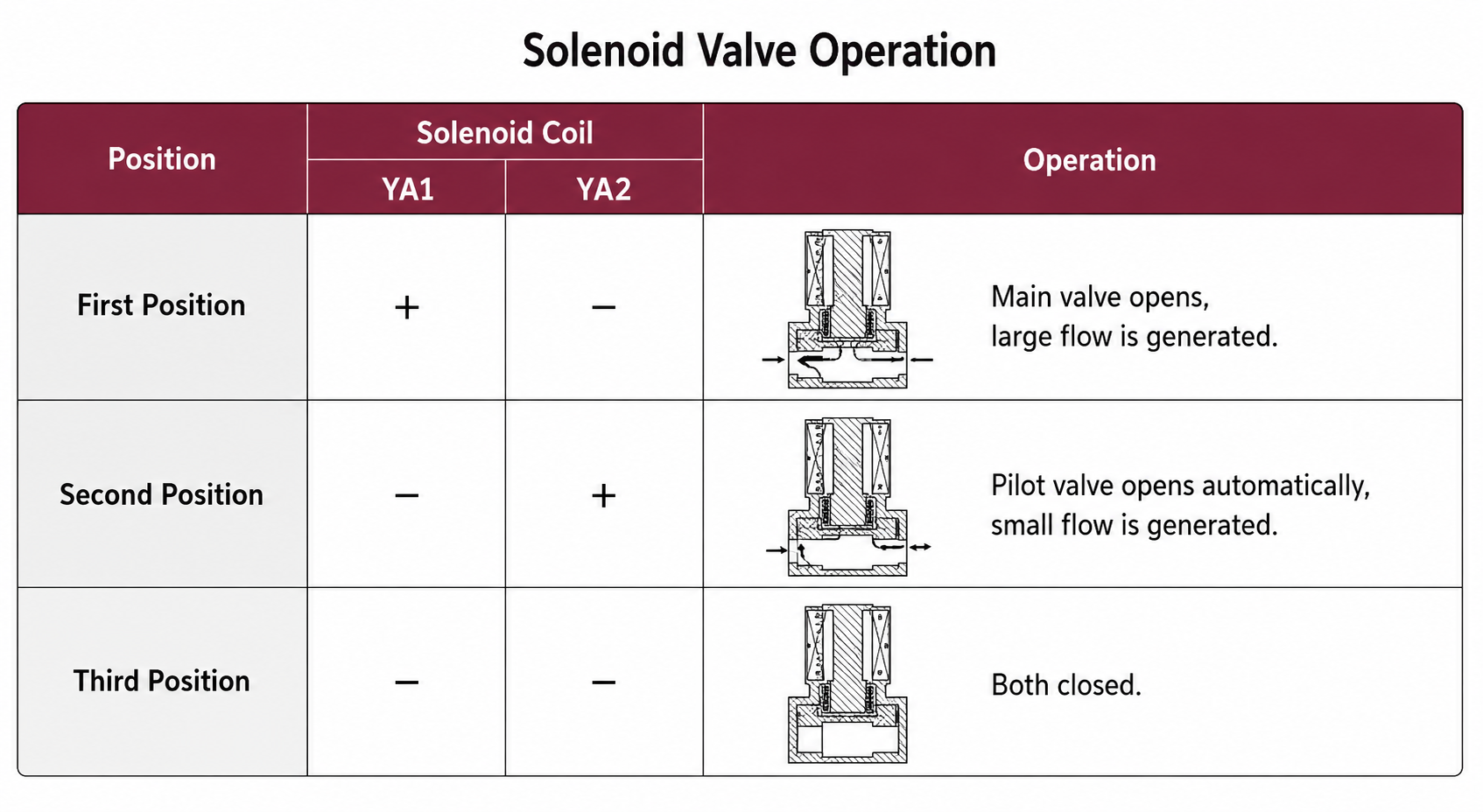
Stage 1: High-Flow Opening
When the control system sends an opening signal:
The YA1 solenoid coil is energized.
The pilot solenoid valve opens.
The pressure above the diaphragm decreases.
Because the inlet pressure is higher than the pressure above the diaphragm, the diaphragm moves upward.
The main valve opens.
Fuel flows through quickly, creating a high flow rate.
Stage 2: Closing Process
- The pilot valve closes.
- Fuel pressure returns to the upper diaphragm chamber.
- Under the combined force of fuel pressure and the spring, the diaphragm moves downward.
- The main valve closes.
- Fuel flow stops.
Stage 3: Low-Flow Control
When the YA2 coil is energized:
The low-flow solenoid valve opens.
Part of the fuel passage is opened.
The system enters low-flow mode.
This operating mode provides:
- Precise control near the end of fueling
- Reduced fuel-flow impact
- Improved metering stability
Stable high-flow and low-flow control also plays an important role in maintaining accurate fuel measurement. Learn more about the fuel dispenser flow meter and its working principle.
3.Common Fuel Dispenser Solenoid Valve Problems and Solutions
3.1 The Solenoid Valve Does Not Open
Possible Causes
- Damaged solenoid coil
- The armature is not being magnetically attracted
- Abnormal power connection
Solution
Check the coil resistance and power supply.
If the coil is damaged, replace it with a new solenoid coil.
3.2 Unusual Noise During Operation
Possible Causes
- Dirt on the contact surfaces of the valve core and armature
- Loose solenoid coil installation
- Worn armature
Solution
Clean the inside of the valve body.
Inspect the armature contact surface.
Secure the solenoid coil again.
3.3 External Fuel Leakage
Possible Causes
- Loose valve-cover bolts
- Broken parts
- Damaged rubber components
Solution
Retighten the bolts.
Replace aging seals.
3.4 Internal Leakage
Possible Causes
- Damaged diaphragm
- Blocked pilot valve
- Contaminated valve core
Solution
Inspect the condition of the diaphragm.
Clean the pilot valve.
Replace damaged components.
3.5 Slow Response
Possible Causes
- Contamination inside the valve body
- Blocked channel
- Faulty spring
Solution
Clean the inside of the valve body.
Inspect the pilot passage.
Replace the damaged spring.
3.6 Low-Flow Function Does Not Work Properly
Possible Causes
- Blocked secondary valve
- Incorrect wiring
- Damaged diaphragm
Solution
Check the wiring.
Clean the valve body.
Inspect the diaphragm for damage.
4.Routine Fuel Dispenser Solenoid Valve Maintenance
To keep the fuel dispenser operating reliably over the long term, the following items should be checked regularly:
- Check the operating condition of the solenoid coil
- Remove dirt and contaminants from inside the valve body
- Check seals for aging
- Make sure the valve core moves freely
- Check that all electrical connections are secure
- Inspect the fuel filtration system regularly
Good maintenance practices help reduce equipment downtime, improve fuel dispenser efficiency, and extend the service life of the fuel dispenser solenoid valve.
For information about fuel dispenser components and related equipment, you can also explore our fuel dispenser parts category.
5.Frequently Asked Questions About Fuel Dispenser Solenoid Valves
5.1 Why Won’t the Fuel Dispenser Solenoid Valve Open?
This is usually caused by a damaged coil, an abnormal power supply, or a stuck valve core. Both the electrical and mechanical components should be inspected.
5.2 Why Does the Fuel Dispenser Only Operate at a Low Flow Rate?
Possible causes include:
- The high-flow solenoid valve has not opened
- The pilot valve is blocked
- There is a fault in the control circuit
5.3 What Should I Do If the Solenoid Valve Leaks Fuel?
First, inspect the seals, valve-cover bolts, and diaphragm for damage, and replace any damaged components promptly.
5.4 How Often Should a Solenoid Valve Be Maintained?
The fuel dispenser solenoid valve should be inspected regularly according to how frequently the fuel dispenser is used. In most cases, it can be checked as part of the dispenser’s annual maintenance schedule.
For relevant international standards and legal metrology information, refer to the International Organization of Legal Metrology (OIML): https://www.oiml.org/
6.Conclusion
The fuel dispenser solenoid valve is an important part of a fuel dispenser’s fuel-control system. It not only determines how effectively the fuel flow is controlled, but also directly affects fueling speed, metering accuracy, and equipment stability.
Understanding the structure, working principle, and common troubleshooting methods of the fuel dispenser solenoid valve helps maintenance personnel identify problems quickly, reduce maintenance costs, and improve the overall operating efficiency of the fuel station.
With regular inspections and proper maintenance, a high-quality solenoid valve can continue to operate safely and reliably over the long term, providing efficient and dependable fuel-flow control for the station.