
Fuel Tanker Aluminum Ball Valve: Selection, Installation & Maintenance Guide
News 2026年 9月 28日 50
Many fuel tanker operators focus on price, valve size, and material when purchasing a tanker ball valve. However, problems often appear after delivery: oil leakage, mismatched flange holes, slow unloading, or a valve that cannot be installed directly on the tanker.
For example, DN80 only tells you the nominal valve size. It does not confirm that the flange connection will match your tanker. The flange type, bolt-hole arrangement, connection dimensions, pressure rating, and sealing materials should all be checked before ordering.
This guide explains how a fuel tanker ball valve works, its main technical specifications, selection points, installation procedure, maintenance requirements, and common problems. If you are unsure whether a valve will fit your tanker, you can also send us your valve photo, drawing, or flange dimensions for checking before purchase.
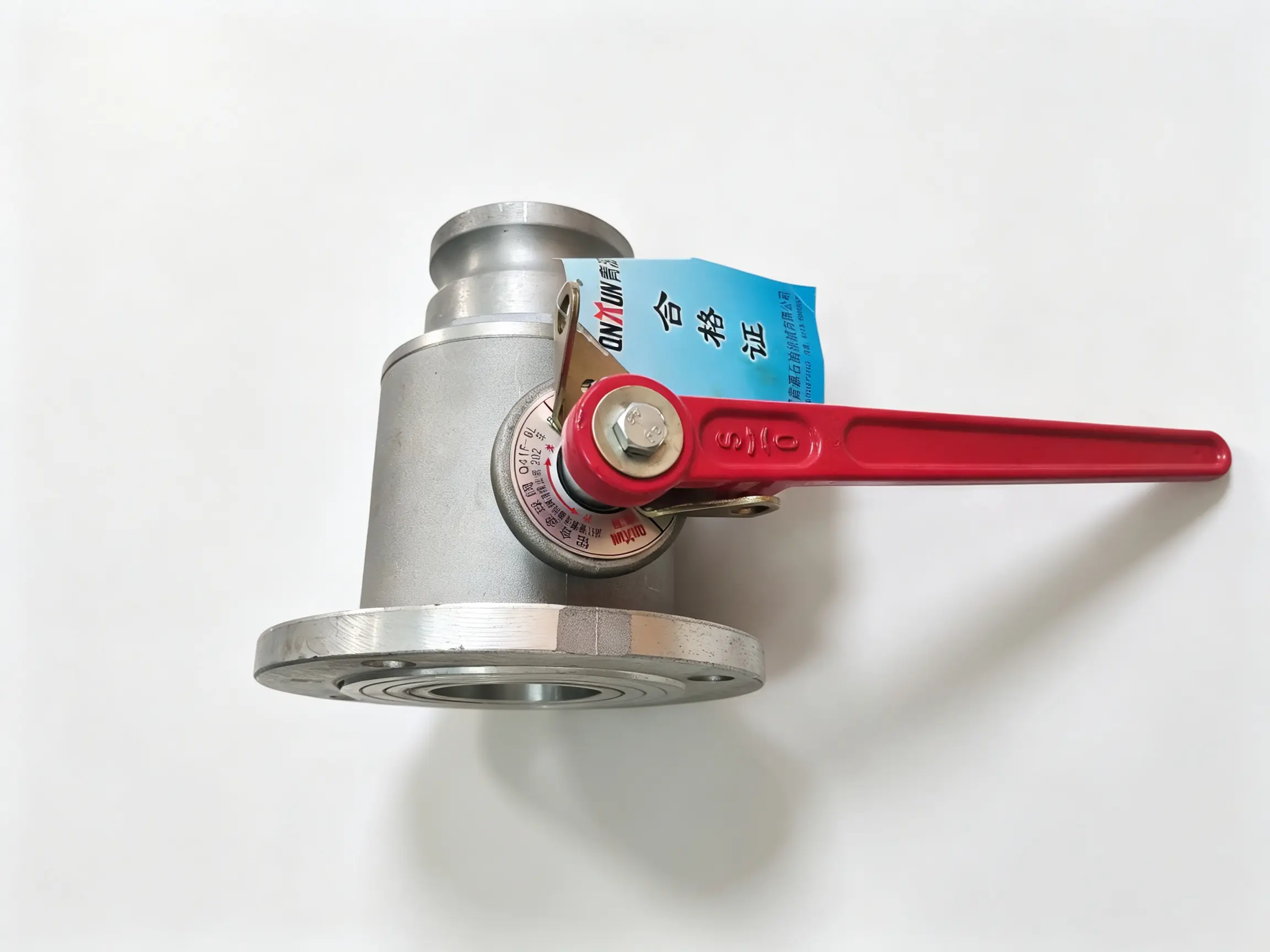
1. What Is a Fuel Tanker Aluminum Ball Valve?
A Fuel Tanker Aluminum Ball Valve is a manually operated valve designed for controlling the flow of fuel during tanker loading, unloading, and transfer operations.
Its aluminum alloy body provides a relatively lightweight solution for tanker applications, while the internal ball provides a straight-through flow path when the valve is fully open.
A typical fuel tanker ball valve includes:
- Aluminum alloy valve body
- Stainless steel ball
- PTFE and oil-resistant NBR sealing components
- Manual operating handle
- Round flange connection
- Quick coupling connection
- Anti-static conductive structure
- Handle locking function
How Does a Fuel Tanker Ball Valve Work?
The valve uses a spherical ball with a through-hole. When the handle is rotated approximately 90°, the ball rotates between the open and closed positions.
When fully open, the flow passage is aligned with the pipeline, helping reduce unnecessary flow restriction. When fully closed, the ball blocks the fuel passage.
The valve is mainly intended for fully open or fully closed operation. Long-term partial opening for throttling is generally not recommended unless the manufacturer specifically permits it.
The anti-static structure helps maintain electrical continuity between metal components and reduce static accumulation. However, it does not replace the tanker grounding, bonding, or other static-control measures required by the installation.
2. Fuel Tanker Aluminum Ball Valve Technical Specifications
The following specifications are for the Q41F-6L configuration:
| Item | Specification |
|---|---|
| Product Model | Q41F-6L |
| Nominal Size | DN80 (3 inch) |
| Available Sizes | DN50 / DN80 / DN100 |
| Nominal Working Pressure | 0.6 MPa |
| Shell Hydrostatic Test Pressure | 0.9 MPa |
| Sealing Test Pressure | 0.66 MPa |
| Applicable Media | Gasoline, diesel, light petroleum products, non-corrosive media |
| Media Temperature | -20°C to +150°C |
| Operation | Manual lever, 90° open/close |
| Valve Body | Cast aluminum alloy ZL104 |
| Ball | Stainless steel |
| Seat / Seal | PTFE + oil-resistant NBR |
| Connection | Round flange + DN80 quick male coupling |
| Net Weight | Approx. 4.5–5 kg |
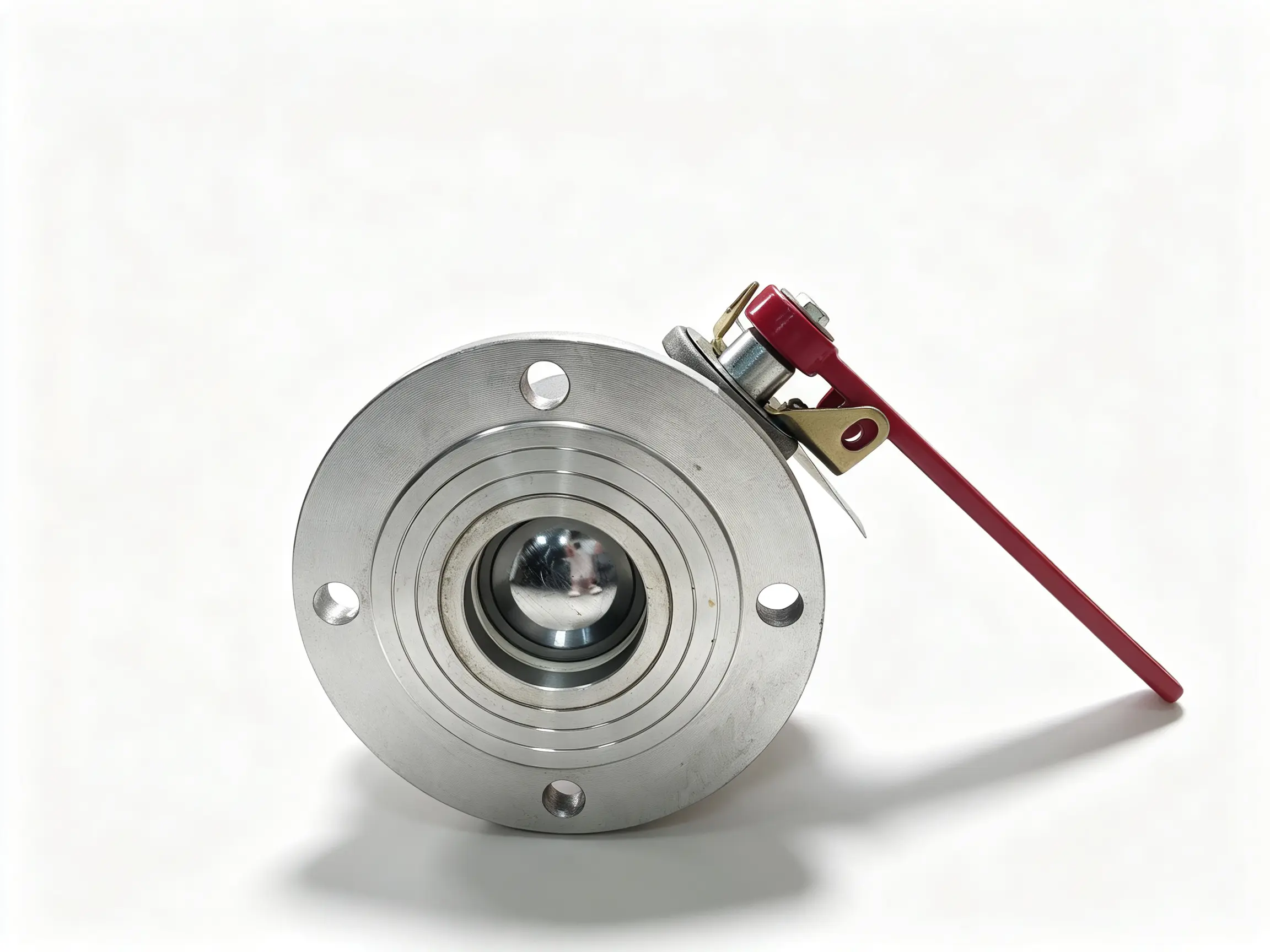
Before ordering a Fuel Tanker Aluminum Ball Valve, the actual product drawing and connection dimensions should be checked against the tanker installation.
3. Key Advantages of a Fuel Tanker Aluminum Ball Valve
3.1 Lightweight Aluminum Alloy Body
The valve body uses cast aluminum alloy ZL104. Compared with heavier metal valve constructions, an aluminum body can help reduce the weight of the tanker discharge assembly.
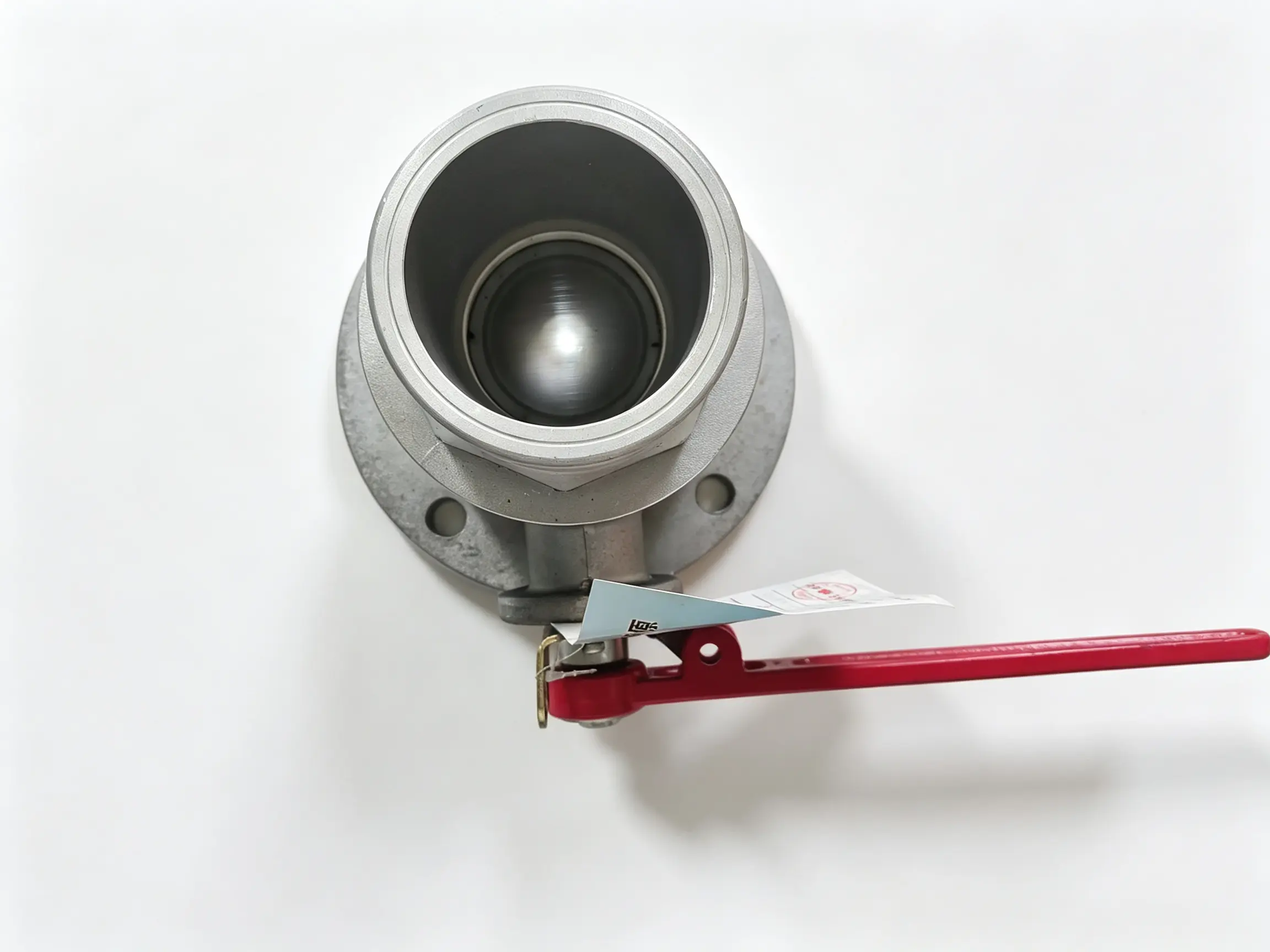
3.2 Full-Bore Flow Passage
A full-bore design allows the internal passage to remain close to the nominal pipeline diameter when fully open. This is useful for fuel unloading applications where unnecessary flow restriction should be avoided.
3.3 Anti-Static Design
A Fuel Tanker Aluminum Ball Valve may incorporate an anti-static conductive structure to help maintain electrical continuity between metallic components.
This feature should be considered part of the overall static-control design rather than treated as a replacement for proper tanker grounding and bonding.
3.4 Lockable Operating Handle
The manual lever allows quick 90° operation and can include a locking stop to help prevent unintended movement during transportation or operation.
3.5 Fuel-Compatible Sealing Materials
PTFE and oil-resistant NBR are used for the seat and sealing components in this configuration. Material compatibility should always be checked against the actual fuel, temperature, and service conditions.
4. How to Choose the Right Fuel Tanker Aluminum Ball Valve
4.1 Confirm the Valve Size
Common sizes include DN50, DN80, and DN100.
However, do not select a Fuel Tanker Aluminum Ball Valve based only on the nominal diameter. The actual connection dimensions are equally important.
4.2 Check the Flange Type
This is one of the most common causes of installation problems.
Before purchasing, check:
- Flange outside diameter
- Bolt-hole quantity
- Bolt-hole diameter
- Bolt-hole spacing
- Flange thickness
- Connection type
- Quick coupling dimensions
A DN80 valve does not automatically mean that every DN80 tanker valve can be installed directly on your tanker.
4.3 Confirm Pressure Rating
The working pressure, shell test pressure, and sealing test pressure should match the requirements of the tanker system.
For this Q41F-6L configuration:
- Working pressure: 0.6 MPa
- Shell test pressure: 0.9 MPa
- Sealing test pressure: 0.66 MPa
4.4 Confirm the Fuel Medium
This Fuel Tanker Aluminum Ball Valve configuration is intended for gasoline, diesel, light petroleum products, and other non-corrosive media.
For aggressive chemicals or unusual fluids, chemical compatibility should be evaluated before selection.
4.5 Check the Material and Seal
The valve body, ball, seat, and seals all affect service life.
For fuel applications, the compatibility of PTFE, NBR, and other sealing materials with the actual medium and operating temperature should be confirmed.
If you need help checking the correct size and connection, Contact Us with the valve photo, drawing, or tanker connection dimensions.
5. Round Flange vs. Other Flange Configurations
The flange connection is an important part of Fuel Tanker Aluminum Ball Valve selection.
| Item | Round Flange Configuration | Other Flange Configurations |
|---|---|---|
| Connection | Round flange | Depends on tanker design |
| Installation | Direct if dimensions match | May require matching components |
| Bolt Pattern | Must be checked | Must be checked |
| Replacement | Convenient when dimensions match | Depends on existing connection |
| Best Use | Matching tanker discharge assemblies | Specific tanker or piping designs |
The most important point is simple:
DN80 only tells you the nominal size. It does not confirm flange compatibility.
If you are replacing an existing valve, sending a clear photo of the old valve together with the flange dimensions is often more useful than simply telling the supplier “I need DN80.”
6. Fuel Tanker Aluminum Ball Valve Installation Guide
Correct installation is essential for preventing leakage and connection problems.
Step 1: Check the Flange
Before installation, clean both flange surfaces and confirm that the bolt holes and connection dimensions match.
Step 2: Install the Correct Gasket
Use a gasket compatible with gasoline or diesel and the expected operating conditions.
The gasket should be correctly positioned without blocking the internal flow passage.
Step 3: Align the Flanges
Do not force the valve into position by tightening bolts against a misaligned pipe or flange.
The valve should be naturally aligned with the tanker connection before the bolts are tightened.
Step 4: Check Operating Space
Make sure there is enough clearance for the manual handle to rotate approximately 90°.
The handle should remain accessible during normal operation.
Step 5: Connect the Quick Coupling
For configurations using a DN80 quick male coupling, confirm that the mating coupling is compatible before operation.
Step 6: Check Electrical Continuity
Where static-control requirements apply, check the electrical continuity of the valve and associated metal components as part of the overall tanker grounding and bonding system.
Do not rely on the valve alone for static protection.
7. Safety and Operating Precautions
When using a Fuel Tanker Aluminum Ball Valve, several basic precautions should be followed.
- Do not use the valve for long-term throttling unless specifically approved.
- Never disassemble the valve while the system is pressurized.
- Do not strike the aluminum valve body with hard tools.
- Do not weld directly on the valve body.
- Keep the sealing surfaces clean.
- Check for fuel leakage before and during operation.
- Follow the applicable tanker and fuel-handling safety procedures.
The valve should always be treated as part of the complete fuel unloading system rather than as an isolated component.
8. Common Installation Mistakes to Avoid
The following mistakes can cause leakage, difficult operation, or premature component damage:
- Ordering only according to DN size
- Using the wrong flange gasket
- Installing a mismatched bolt pattern
- Operating the valve partially open for extended periods
- Blocking the handle movement
- Lifting the valve by the operating handle
- Welding around the installed valve
- Disassembling the valve under pressure
- Ignoring electrical continuity and grounding requirements
For replacement projects, checking the original valve before ordering can significantly reduce installation delays.
9. Maintenance and Troubleshooting
Regular inspection can help extend the service life of a Fuel Tanker Aluminum Ball Valve.
9.1 Daily or Routine Inspection
Check for:
- External fuel leakage
- Loose bolts
- Damaged gasket
- Abnormal handle movement
- Damaged coupling
- Visible corrosion or mechanical damage
9.2 Check the Sealing Components
If leakage occurs around the valve stem, flange, or internal ball area, inspect the relevant sealing components.
Replace damaged seals with materials suitable for the actual fuel service.
9.3 Lubrication
Follow the manufacturer’s maintenance recommendations.
If lubrication is required, use a lubricant compatible with the fuel and sealing materials. Avoid using an unsuitable lubricant simply because it is readily available.
9.4 Cold-Weather Storage
If the valve is stored in cold conditions, avoid leaving water or other freeze-sensitive liquid inside the valve cavity.
Freezing can damage sealing components or other internal parts.
10. Common Fuel Tanker Aluminum Ball Valve Problems
Problem 1: Flange Leakage
Possible causes include:
- Incorrect gasket
- Damaged flange surface
- Uneven tightening
- Incorrect bolt arrangement
- Flange misalignment
Problem 2: Internal Leakage
Possible causes include:
- Damaged seat
- Foreign material
- Worn sealing components
- Incorrect installation
- Valve damage
Problem 3: Quick Coupling Leakage
Check whether the male and female coupling are correctly matched and whether the sealing components are damaged.
If a replacement Fuel Tanker Aluminum Ball Valve is required, comparing the old valve dimensions with the new valve drawing before shipment can help avoid compatibility problems.
11. Fuel Tanker Aluminum Ball Valve FAQ
Can the valve be used for gasoline and diesel?
Yes. The specified configuration is designed for gasoline, diesel, light petroleum products, and other non-corrosive media, subject to material compatibility and operating conditions.
What is the working pressure?
The nominal working pressure of the specified Q41F-6L configuration is 0.6 MPa.
Is this a full-bore valve?
The design provides a relatively direct flow passage when fully open, making it suitable for fuel unloading applications where flow restriction should be minimized.
How can I avoid ordering the wrong valve?
Do not provide only the nominal size.
For a Fuel Tanker Aluminum Ball Valve, provide the valve size together with the flange dimensions, bolt-hole pattern, connection type, and preferably a photo or drawing of the existing valve.
Is the valve anti-static?
The configuration can include an anti-static conductive structure. However, this does not replace the tanker’s grounding, bonding, and other static-control measures.
Is DN80 the same as 3 inch?
DN80 is commonly associated with a nominal 3-inch size, but the actual connection dimensions still need to be checked before replacement.
Can any DN80 tanker ball valve replace another DN80 valve?
No. Two valves with the same nominal size may have different flange dimensions, bolt-hole arrangements, connection types, sealing materials, or overall dimensions.
Can it be used for corrosive chemicals?
The specified configuration is intended for gasoline, diesel, light petroleum products, and non-corrosive media. For corrosive chemicals, material compatibility must be evaluated separately.
Can technical documents be provided?
Technical drawings, specifications, and other available product documents can be provided according to the actual configuration.
Can I order samples?
Sample orders can be discussed before bulk purchasing, especially when flange compatibility or installation dimensions need to be verified.
12. Fuel Tanker Aluminum Ball Valve Sourcing Support
Selecting a Fuel Tanker Aluminum Ball Valve is only one part of a complete fuel equipment sourcing project.
As a fuel station equipment supply chain service provider, we can help customers coordinate equipment and components according to project requirements rather than simply supplying one standard valve.
Our support includes:
- DN50, DN80, and DN100 configurations
- Flange and connection verification
- Product drawings and technical documents
- Sample and bulk-order coordination
- OEM and customized requirements
- Handle and flange configuration coordination
- Technical document collection
- Product inspection and supply coordination
- BOM-based fuel station equipment sourcing
For larger projects, the valve can also be coordinated together with other fuel station equipment and underground system components.
You can learn more about our fuel station equipment supply chain services or send your project requirements directly through Contact Us.
13. Conclusion
A Fuel Tanker Aluminum Ball Valve is a relatively simple component, but choosing the correct model requires more than checking DN50, DN80, or DN100.
The key points are:
- Confirm the actual valve size.
- Check the flange dimensions and bolt-hole arrangement.
- Confirm the pressure rating.
- Verify fuel and seal compatibility.
- Check the quick coupling connection.
- Install the valve without forcing flange alignment.
- Include electrical continuity within the overall grounding and static-control system.
- Inspect the valve and sealing components regularly.
If you are looking for a Fuel Tanker Aluminum Ball Valve for gasoline or diesel service, send us your required size, flange dimensions, product photo, drawing, or application details. We can help check the configuration and coordinate the appropriate equipment for your project.