
Fuel Tanker Bottom Unloading Valve: Selection and Compatibility Guide
News 2026年 10月 13日 15
Failure of a fuel tanker bottom unloading valve can lead to fuel leakage, mismatched connections at depots, parts that do not fit after delivery, and premature seal failure. These issues cause fuel loss, tanker downtime and serious safety risks.
Core pain point: Valves that look identical are usually not interchangeable. If you order based only on nominal size, there is an 80% chance the valve will not fit after arrival.
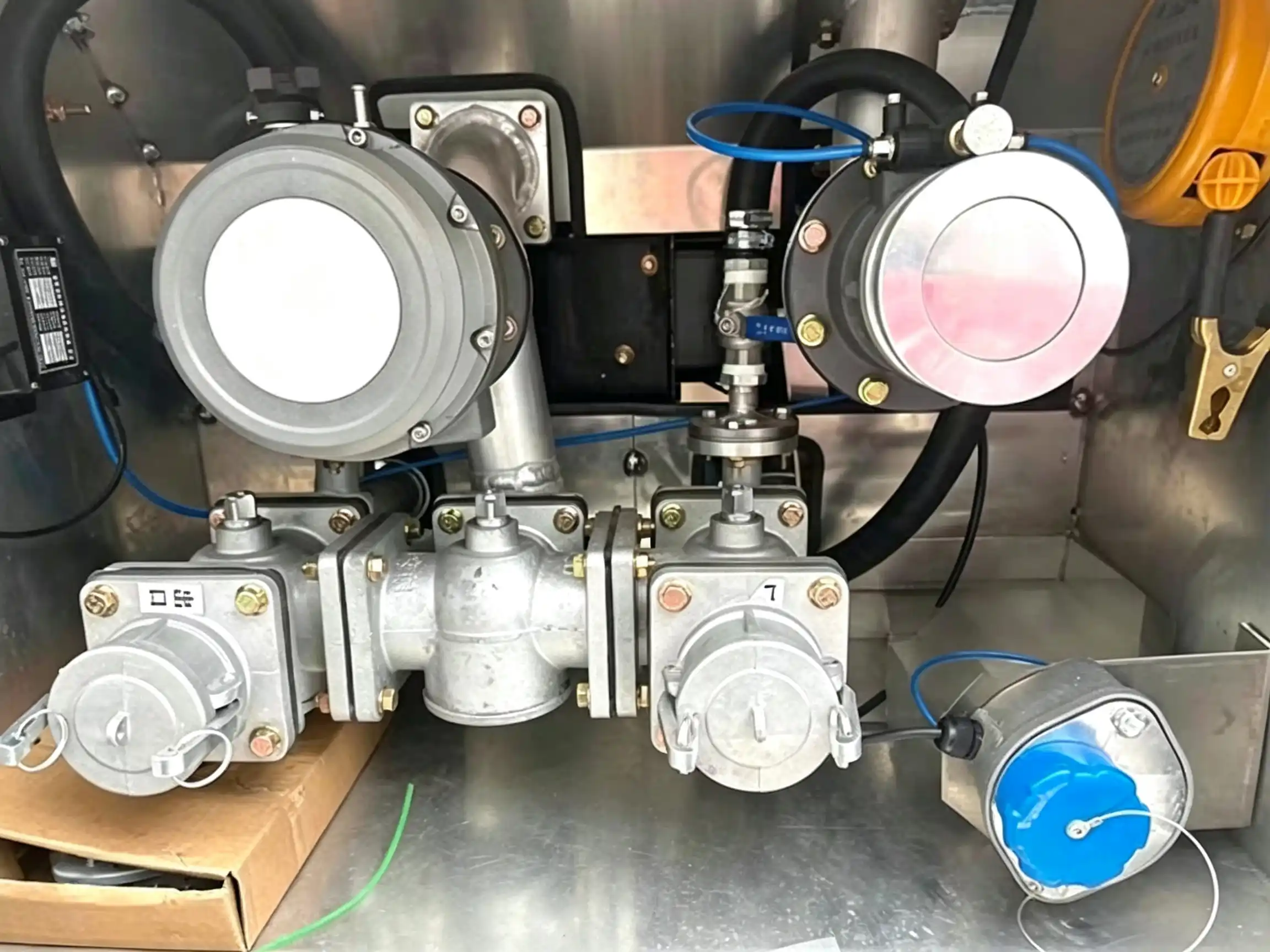
1. What Is a Fuel Tanker Bottom Unloading Valve?
It is installed at the lower discharge port of a fuel tanker to control fuel inlet and outlet. There are two mainstream designs on the market:
- Pull‑rod / manual lever type: Widely used on converted tankers in Africa and Southeast Asia
- API bottom loading valve: Matches standard depot loading arms and complies with API RP 1004
A complete discharge assembly includes: valve body + reducer adapter + dust cap + seal repair kit. No single valve fits all tanker models.
2. Fuel Tanker Bottom Unloading Valve Specifications
| Item | Common Parameters | Notes |
|---|---|---|
| Size | DN80 (3″), DN100 (4″) | Nominal DN size alone is not enough; flange bolt pattern must be verified |
| Working Pressure | 0.6 MPa | Shell test pressure: 0.9 MPa; seal test pressure: 0.66 MPa |
| Seal Material | NBR / FKM / PTFE | FKM recommended for gasoline; NBR acceptable for diesel |
| Temperature Range | -20℃ ~ +70℃ | Confirm seal temperature rating for tropical regions |
| Operation Type | Pull‑rod / Lever / API dry‑break | Pull‑rod preferred for retrofit tankers; API style for depot projects |
| Body Material | ZL104 Aluminum Alloy | Lightweight design to reduce tanker dead weight |
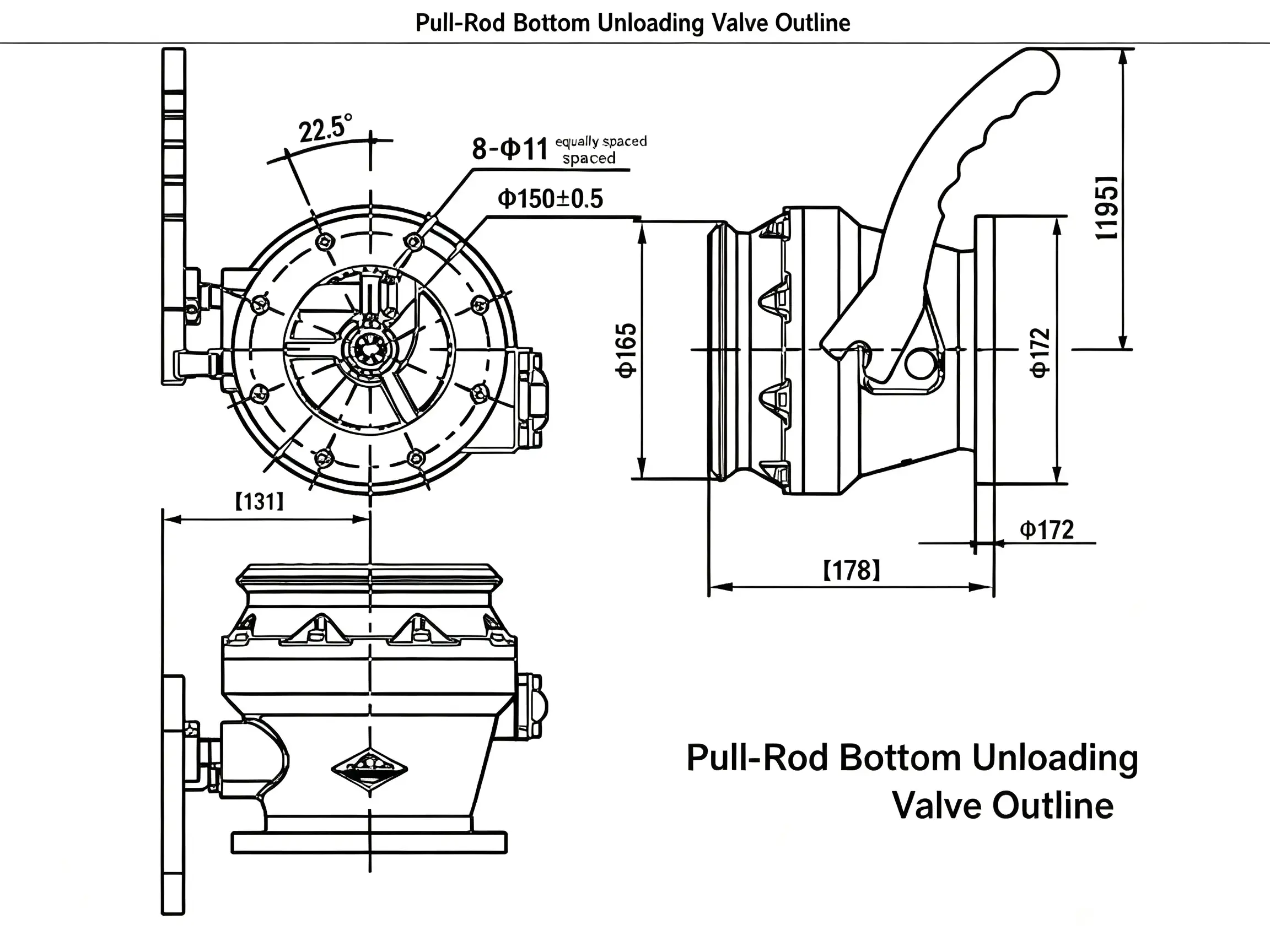
3. 4-Step Selection Checklist (Tick off items during procurement)
✅ Step 1: Confirm connection interface (Most Critical)
- Nominal valve size
- Flange outer diameter, bolt quantity, bolt hole diameter, pitch circle diameter
- Outlet profile and matching coupler / camlock size
Practical tip: Provide multi-angle photos of your old valve plus measured flange dimensions to the supplier. Do not only state DN80 / DN100.
✅ Step 2: Confirm operating mechanism
- Pull‑rod type: Check installation space to avoid on-site interference
- API style: Confirm depot interface standard (API RP 1004)
For tanker retrofit projects: Prepare clear photos of the flange, operating rod, outlet and any marking on the valve body.
✅ Step 3: Match seal material with fuel medium
- Gasoline: FKM is preferred; NBR will swell rapidly and leak
- Diesel / Kerosene: Both NBR and FKM are suitable
⚠️ A seal that fits the groove does not automatically resist fuel corrosion. This is one of the most frequent procurement mistakes.
✅ Step 4: Confirm accessories and spare parts
- Reducer adapter (informally named “pig‑nose”. No universal global standard, both end dimensions must be checked)
- Dust cap with retaining chain: Essential for dusty areas such as Kenya
- Complete seal repair kit: Recommended fleet stock to cut downtime
4. Five Common Fuel Tanker Bottom Unloading Valve Procurement Mistakes
- ❌ Order only by DN size → Flange bolt pattern mismatch, cannot be installed
- ❌ Purchase reducer adapter without measuring both ends → Fails to connect and requires on-site rework
- ❌ Use NBR seals for gasoline service → Early leakage and tanker shutdown
- ❌ Ignore spare parts availability → Tanker stays idle once the valve fails
- ❌ Mix up definitions: A bottom unloading valve is NOT an emergency breakaway valve. They have different safety functions and cannot replace each other.
5. Troubleshooting & Maintenance Table
| Symptom | Probable Cause | Recommended Action |
|---|---|---|
| Leakage at flange | Damaged gasket / uneven bolt torque | Replace gasket; Tighten bolts diagonally |
| Leakage at outlet | Worn seal ring / debris on sealing face | Replace seal ring and clean sealing surface |
| Stiff pull‑rod / lever | Sand and dirt trapped in moving parts | Clean moving components; Apply fuel-compatible grease |
| Internal leakage when closed | Foreign debris or scratches on sealing seat | Disassemble and clean seat; Replace seal if scratched |
Maintenance Reminder: Never disassemble the valve under pressure. Inspect seals every 3–6 months based on service frequency.
6. Fuel Tanker Bottom Unloading Valve RFQ Template
Please quote for bottom unloading valve with the following requirements:
- Valve Type: [Pull‑rod / API style]
- Nominal Size: DN___
- Flange Specs: OD___, bolt holes:___ pcs, hole dia___, PCD___
- Medium: [Gasoline / Diesel / Both]
- Seal Material: [NBR / FKM]
- Accessories: □ Reducer adapter □ Dust cap □ Seal repair kit
- Quantity: ____ pcs
- Destination Port: ________
Attachment: Photos / drawing of existing valve. Please send technical drawing and datasheet before order confirmation.
7. Regional Tips for Nigeria, Kenya, Indonesia and Pakistan
- Nigeria: Confirm depot connection requirements before bulk orders. Sample testing is recommended for retrofit fleets.
- Kenya: Heavy dust environment, dust cap is mandatory.
- Indonesia: Flange standards vary across fleets. Do not assume universal compatibility.
- Pakistan: For new tanker construction, request written depot interface specifications from the end user.
8. Frequently Asked Questions
Is a fuel tanker bottom unloading valve the same as an emergency breakaway valve?
No. They serve different safety functions. A fuel tanker bottom unloading valve controls fuel flow during loading/unloading. An emergency breakaway valve separates automatically under tension to avoid fuel spillage. They cannot replace each other.
Can I order a bottom unloading valve based only on its DN size?
No. Valves with the same DN may have different flange bolt patterns, PCD and outlet profiles. Always measure the flange and provide photos of your existing valve before purchase.
Which seal material should I use for gasoline and diesel?
Use FKM seals for gasoline, as NBR will swell and leak. NBR is suitable for diesel service. Confirm chemical compatibility before ordering.
If you need to source pull‑rod bottom unloading valves, reducer adapters or repair kits, send us your valve photos, flange dimensions and quantity for quotation.