
Fuel Theft and Inventory Loss: 4 Practical Ways for African and Southeast Asian Fuel Stations to Protect Profits
News 2026年 10月 21日 48
For independent fuel station owners in Nigeria, Kenya, Pakistan, Indonesia, Vietnam, and the Philippines, fuel theft and inventory loss can quietly reduce profitability. While operators often focus on fuel purchasing costs and retail prices, unexplained differences between recorded sales and actual tank stock can create significant financial pressure.
In many stations, wet stock losses can reach 3%–8% of total sales. For a station selling 5,000 liters per day, a 5% inventory loss represents 250 liters daily. Over a year, the financial impact can become substantial.
The challenge is that fuel inventory loss does not always result from one obvious incident. It may involve employee fraud, short deliveries, dispenser data discrepancies, measurement errors, or underground tank leakage.
The solution is not simply to install more cameras. Fuel station operators need a reliable process that connects physical inventory, dispenser transactions, and daily management records.
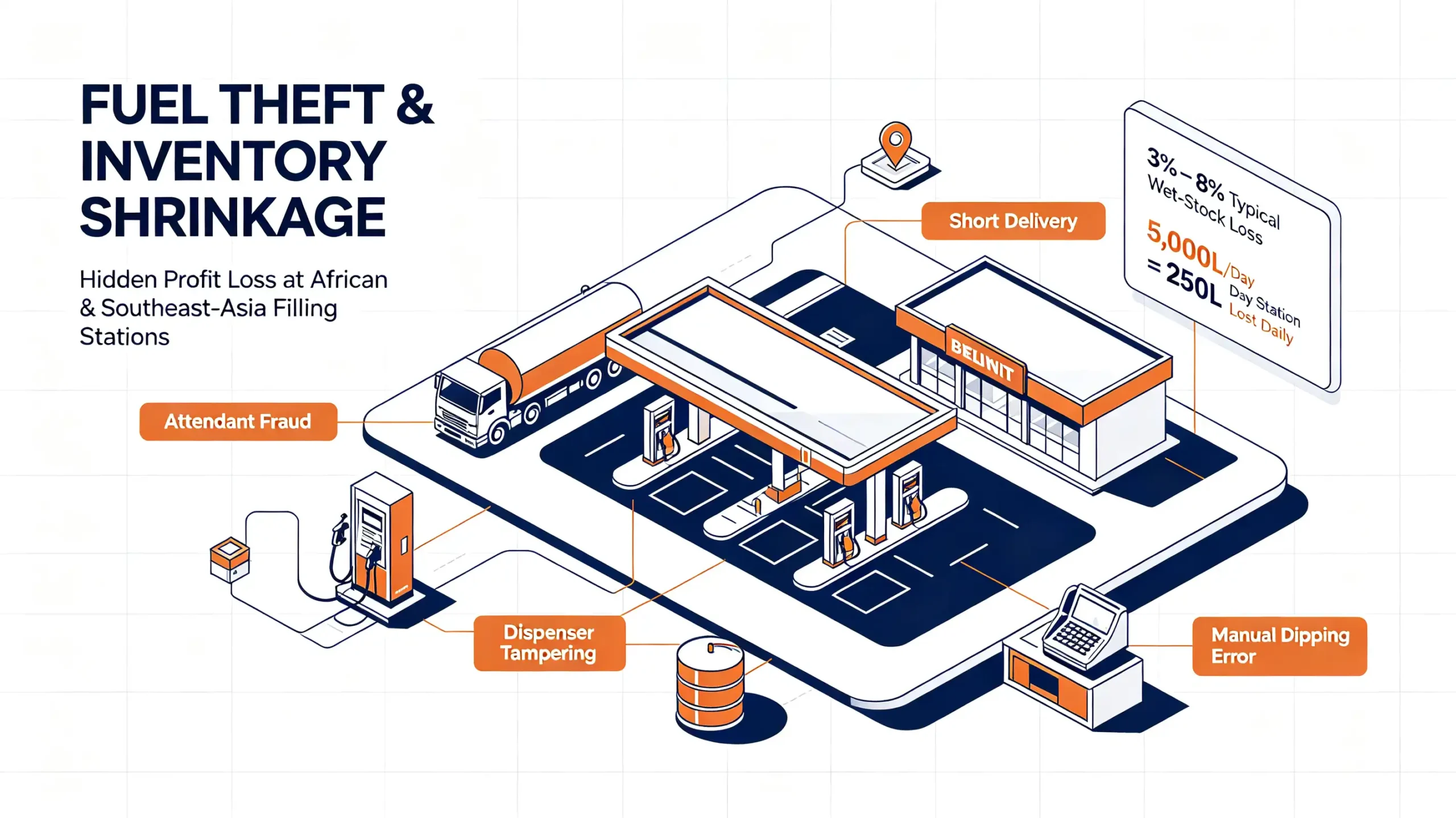
Where Does Fuel Inventory Loss Occur?
Understanding the causes of fuel inventory loss is the first step toward effective fuel theft prevention.
1. Employee fraud and unauthorized transactions
Employees may sell fuel without recording the transaction, mishandle cash, or misuse customer fuel cards. Without clear account permissions and transaction records, these activities can remain unnoticed across multiple shifts.
2. Short delivery during tanker unloading
A difference between the documented delivery quantity and the actual quantity received can create an immediate inventory discrepancy. Stations relying exclusively on manual tank dipping may struggle to identify the source of a shortage.
3. Fuel dispenser tampering and data discrepancies
If dispenser readings do not match recorded transactions, station owners may have difficulty verifying actual sales. Automatic data collection and transaction reconciliation can help identify inconsistencies that require further investigation.
4. Underground tank leakage and measurement errors
Manual measurements can introduce human error, while gradual leakage may cause continuing stock losses. Without appropriate tank monitoring and inspection procedures, these problems may go undetected for an extended period.
Cameras can help investigate incidents, but they cannot independently reconcile fuel deliveries, sales, and physical stock. Effective fuel inventory management requires both reliable equipment and a consistent operating process.
4 Practical Ways to Reduce Fuel Theft and Inventory Loss
1. Integrate ATG Tank Monitoring with Station Management Software
Manual tank dipping requires time and careful measurement. An automatic tank gauge (ATG) can provide tank level readings and, depending on the equipment, additional information such as product temperature and water level.
When compatible ATG equipment is integrated with a gas station management system, operators can compare tank measurements with delivery records and dispenser sales.
Key benefits include:
- More frequent and consistent tank stock measurements.
- Earlier identification of unusual inventory discrepancies.
- Time-stamped records that support investigation and reconciliation.
- Better visibility into potential leakage, delivery shortages, and unexplained stock changes.
However, an inventory discrepancy does not automatically prove theft. Temperature changes, tank calibration, measurement accuracy, and equipment faults must also be considered.
Before selecting an ATG solution, check sensor compatibility, communication protocols, installation requirements, and integration options.
For more technical information, read our gas station level gauge installation guide.

2. Automate Fuel Dispenser Data Collection
Manual transcription of dispenser readings into spreadsheets creates opportunities for mistakes, inconsistent records, and unauthorized adjustments.
A suitable gas station management system can collect dispenser transaction data through compatible communication interfaces and consolidate records for reporting and reconciliation.
Depending on the system configuration, operators may be able to review:
- Sales quantities by dispenser and nozzle.
- Transactions recorded during individual shifts.
- Daily sales reports and payment records.
- Differences between recorded sales and measured tank stock.
Local data storage can also be valuable in locations where internet connectivity is unreliable. A locally deployed system can continue handling supported local functions during an internet outage, while optional cloud backup can provide an additional recovery layer.
These capabilities depend on the software architecture, hardware compatibility, and installation configuration.
The Beyi gas station management system’s four core modules provide a useful starting point for understanding how the MySQL database, DIT data-collection software, server terminal, and application client work together.
Understanding these components helps operators and technical teams evaluate how transaction data is collected, stored, and made available for daily management.

3. Use Account Permissions and Transaction Logs to Reduce Internal Fraud
Fuel theft prevention also depends on controlling who can perform sensitive operations.
A properly configured station management system can assign permissions according to job responsibilities. For example, cashiers may be allowed to process payments without receiving authorization to change fuel prices or adjust inventory records.
Depending on the software, additional controls may include:
- Separate user accounts for different employees.
- Records of price changes and inventory adjustments.
- Transaction histories for management review.
- Alerts for unusual transactions, where supported.
These controls help managers investigate suspicious activity without relying entirely on manual supervision.
For a broader overview of digital station operations, explore our guide to the four key functions of fuel station management software.
Remember that account permissions and audit records must be configured correctly. A system alone cannot prevent every form of employee fraud.
4. Standardize Shift-End Fuel Inventory Reconciliation
Even with automatic data collection, a consistent reconciliation process remains essential.
At the end of each shift, managers should review three groups of records:
| Records to check | Purpose |
|---|---|
| Dispenser sales records | Confirm the recorded quantity sold |
| ATG readings and delivery records | Compare physical stock with expected stock |
| Cash, card, and payment reports | Identify differences between sales and collected payments |
A daily reconciliation routine helps managers identify when discrepancies occur instead of discovering an unexplained loss at the end of the month.
If a difference appears, review the relevant shift, recent deliveries, dispenser transactions, tank measurements, and equipment condition before drawing conclusions.
A digital reporting workflow can make this process faster and more consistent, especially for stations operating multiple shifts.

A Practical Example: Reducing Inventory Loss at a Kenyan Fuel Station
Consider a privately operated fuel station in Kenya that recorded wet stock losses of 5.2% before digital management improvements.
The station relied on manual tank measurements and paper-based records. After implementing a locally deployed station management system, integrating ATG monitoring, and introducing stricter account permissions, its reported inventory loss declined to 1.1%.
The station did not replace all its existing dispensers. Instead, the improvement centered on connecting available equipment with a more consistent inventory management process.
This example illustrates how equipment integration and better operating procedures can work together. Actual results will vary depending on the original causes of loss, equipment compatibility, measurement methods, and staff compliance.
How Beyi Gas Station Management Software Fits into Fuel Inventory Control
Reducing fuel inventory loss requires more than installing an individual monitoring device. Operators also need to understand how data collection, database storage, and management applications work together.
The Beyi gas station management system provides a useful example of a multi-component software architecture:
- MySQL database: Stores supported operational data.
- DIT data-collection software: Handles supported data acquisition from connected equipment.
- Server terminal: Supports the server-side functions of the system.
- Application client: Provides the user interface for supported management operations.
The exact functions available depend on the installed version and configuration. ATG integration, dispenser communication, permission controls, and reporting should be confirmed against the specific equipment and software being deployed.
To understand the architecture in more detail, read our guide to the Beyi gas station management system’s four core modules.
You can also explore our gas station management system overview to learn more about digital station management.
Conclusion: Make Fuel Inventory Loss Visible and Measurable
Fuel stations cannot eliminate every inventory discrepancy, but they can improve their ability to detect, investigate, and manage losses.
Combining ATG tank monitoring, automatic dispenser data collection, appropriate account permissions, and standardized shift reconciliation creates a more traceable inventory management process.
For station owners in Africa and Southeast Asia, the priority should be to identify existing weaknesses before investing in a complete equipment replacement.
Want to assess your fuel station’s inventory control needs?
Tell us about your existing dispensers, tank monitoring equipment, and management software. Xingzhongyuan can help you explore suitable fuel station equipment supply and integration options based on your requirements.
Contact Us to discuss your equipment and system requirements.