
Explosion-Proof Oil Gauging Tape: How to Avoid Tank Manual Gauging Errors
News 2026年 9月 20日 67
If manual tank gauging often produces inconsistent readings or repeated measurements show differences, the problem is not always the operator. Oil gauging tape selection, accuracy range, measuring procedure, and regular calibration can all directly affect the final result.
To reduce tank manual gauging errors, focus on four key factors:
- Use a dedicated oil gauging tape instead of a general-purpose steel measuring tape.
- Select the correct tape length and accuracy range according to the actual tank depth, especially for tanks deeper than 30 m.
- Follow the correct manual gauging procedure, including static discharge, controlled tape movement, stable liquid conditions, and repeated measurement.
- Inspect and calibrate the tape regularly, especially when it is used for custody-transfer measurement.
These four factors address the most common causes of manual gauging errors: unsuitable equipment, incorrect accuracy selection, improper operation, and equipment wear or calibration issues.
If you operate fuel depots, gas stations, or marine fueling facilities, you may have experienced these problems:
- Different readings when measuring the same tank repeatedly;
- General-purpose steel tapes that are not suitable for petroleum tank gauging;
- Measurement accuracy changing after a period of use;
- Steel tape bending or rusting, making the scale difficult to read;
- Uncertainty about tape length and accuracy requirements for tanks deeper than 30 m.
Manual tank gauging is therefore not simply a matter of lowering a tape into a tank. Safety, accuracy, equipment condition, and operating procedure all need to be considered.
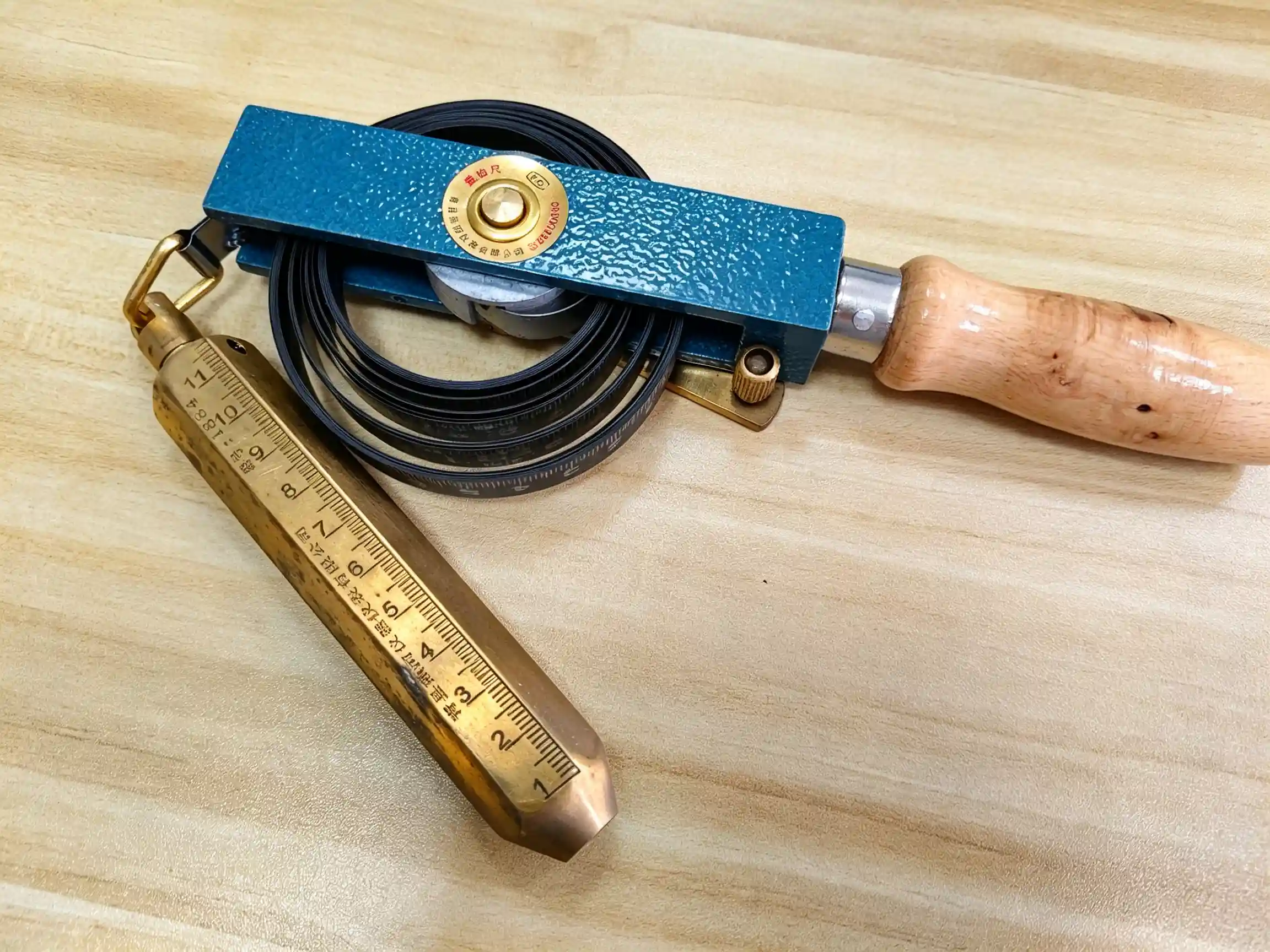
An explosion-proof oil gauging tape, also known as tank sounding tape or dipping tape, is a dedicated tool for manual liquid-level measurement in petroleum storage tanks.
1. Why Do Petroleum Tanks Need a Dedicated Oil Gauging Tape?
General-purpose steel measuring tapes are not necessarily designed for petroleum tank gauging. Two of the most important factors are safety and measurement accuracy.
1.1 Safety in Hazardous Environments
Fuel tanks may contain flammable hydrocarbon vapors. General-purpose measuring tools may not have the non-sparking components and static-release features required for petroleum gauging applications.
A dedicated oil gauging tape is equipped with a brass non-sparking plumb bob for manual measurement in petroleum storage tank environments.
During actual operation, the correct static-discharge procedure should also be followed to reduce unnecessary safety risks while lowering the measuring equipment into the tank.
1.2 Measurement Accuracy
General-purpose measuring tapes may not meet the accuracy requirements of petroleum measurement. For commercial and custody-transfer applications, the gauging tape should meet the applicable accuracy requirements and support proper calibration.
Our explosion-proof oil gauging tape complies with GB/T13263-2011, with an explosion-proof marking of Ex IIB T4 Gb and CE certificate No. CE20.4593X.
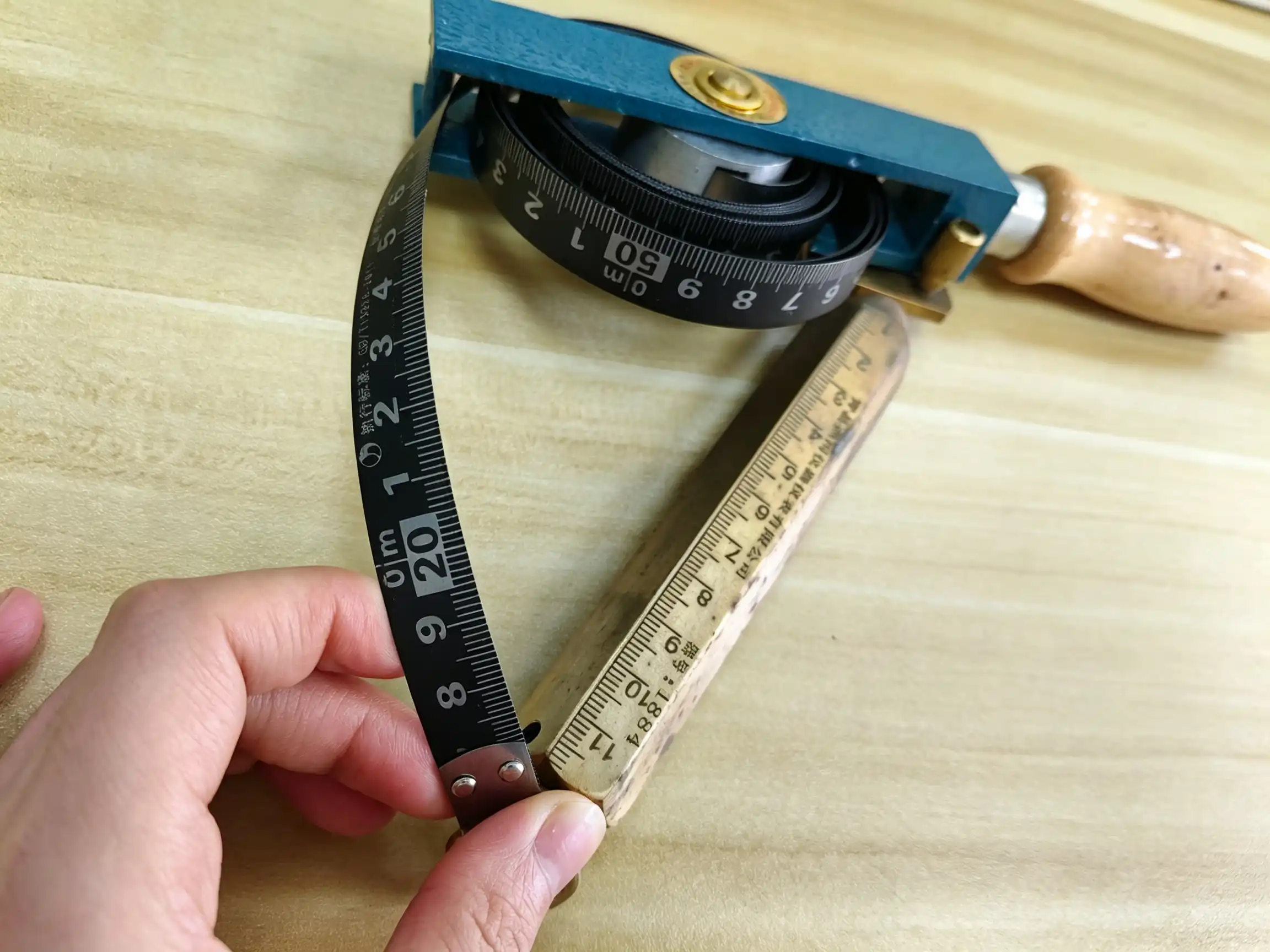
The working temperature range is -40°C to +60°C, with available lengths from 5–50 m and controlled factory measurement tolerances.
2. What Accuracy Does an Oil Gauging Tape Need?
When selecting an oil gauging tape, length alone is not enough. You also need to confirm the allowable error for the corresponding length range.
Core Accuracy Parameters
| Tape Length Range | Max. Allowable Error for New Tape | Max. Allowable Error for In-Use Tape |
|---|---|---|
| 0.000–30.000 m | ±1.5 mm | ±2.0 mm |
| 30.001–60.000 m | ±2.25 mm | ±3.0 mm |
For tanks deeper than 30 m, confirm that the selected gauging tape meets the accuracy requirements for the 30.001–60.000 m range.
This is why deep-tank selection should not be based only on tape length. The corresponding accuracy range must also be considered.
For custody-transfer applications, regular calibration is required.
3. Why Is Manual Tank Gauging Still Used?
Automatic tank level monitoring systems can provide continuous measurement, but manual tank gauging remains an important verification method for petroleum storage tanks.
Manual gauging can be used for:
- Checking tank liquid level on site;
- Verifying automatic measurement results;
- Measuring water at the tank bottom;
- Checking inventory;
- Custody-transfer procedures that require manual measurement.
Depending on the tank and measurement procedure, innage or ullage measurement may be used. The oil gauging tape therefore needs to match the tank structure and specific application requirements.
If automatic tank level monitoring is also required, you can refer to our article on fuel tank liquid level monitoring systems and use manual gauging as an on-site verification method.
4. How Do You Choose the Right Oil Gauging Tape?
Before purchasing, confirm the following four factors.
4.1 Select the Tape Length According to Tank Depth
The tape length should match the actual tank depth and measurement method.
Common selections include:
- 5–10 m: Underground fuel tanks at gas stations;
- 20–30 m: Conventional vertical storage tanks;
- Over 30 m: Select a gauging tape that meets the accuracy requirements for the 30.001–60.000 m range.
Standard lengths include:
5 m, 10 m, 15 m, 20 m, 30 m, and 50 m.
For deep tanks, do not consider length alone. The corresponding accuracy requirement must also be confirmed.
4.2 Confirm the Explosion-Proof Requirement
Where flammable petroleum vapors may be present, dedicated gauging equipment with appropriate non-sparking components and static-release features should be used.
Our oil gauging tape is equipped with a brass plumb bob for manual petroleum tank gauging.
4.3 Confirm the Scale Unit
Depending on project requirements, choose:
- Metric scale;
- Metric + imperial dual scale.
For projects in different countries or regions, a dual-scale version can reduce the need for unit conversion during field operations.
4.4 Consider the Application
Commercial custody-transfer measurement requires traceable calibration support.
For internal inventory checks, the selection can be based on the specific site measurement requirements.
OEM branding and special marking are available for bulk project orders.
5. Which Errors Can Affect Tank Gauging Accuracy?
Even when a qualified oil gauging tape is used, damaged equipment or incorrect operation can still produce unreliable measurement results.
5.1 Equipment-Related Problems
- Permanent bends in the steel tape: These can cause irreversible deviation, and the tape should be taken out of service.
- Rust or contamination: These can make the scale difficult to read.
- Damaged or dented brass plumb bob: This may cause deformation and zero-point deviation.
- Excessive wear: Long-term wear may affect measurement accuracy.
5.2 Operation-Related Problems
- Skipping the static-discharge procedure before lowering the tape;
- Measuring while the tank is being filled or emptied;
- Measuring before the liquid surface has stabilized;
- Performing tank-top operations during thunderstorms or strong winds;
- Dragging or striking the brass plumb bob;
- Applying water-finding paste too thickly and affecting the actual reading.
Reducing manual gauging errors therefore requires more than a high-accuracy tape. Equipment condition and operating procedures are equally important.
6. What Are the Correct Manual Gauging Procedures?
To reduce measurement errors, follow these key operating steps:
- Operators should wear anti-static workwear and stand on the upwind side. Avoid thunderstorms.
- Touch the brass plumb bob against the metal tank opening shell for static discharge. Keep the tape lowering and winding speed at ≤1 m/s.
- Start measurement only after the liquid surface has completely stabilized.
- Take two repeated measurements. When the difference between the two results is ≤1 mm, accept the result and adopt the smaller value.
- Clean oil residues from the steel tape and brass plumb bob after each use. Do not keep the tape excessively tensioned during long-term storage.
For custody-transfer applications, equipment inspection, measurement records, and calibration records should also be included in routine management.
7. How Do You Maintain Oil Gauging Tape Accuracy?
The long-term accuracy of an oil gauging tape depends not only on its factory performance but also on how it is used, stored, and maintained.
After use, clean oil residues from the steel tape and brass plumb bob. Check the tape for bending, rust, or other visible damage.
Pay particular attention to:
- Permanent bends in the steel tape;
- Scale readability;
- Dents or deformation of the brass plumb bob;
- The condition of tape connection components;
- Excessive tension during long-term storage.
For custody-transfer measurement, the maximum calibration interval is 6 months. If the steel tape becomes bent or the brass plumb bob is dented, stop using the equipment immediately.
8. What Information Should You Provide When Buying an Oil Gauging Tape?
For B2B projects, providing complete information before requesting a quotation helps ensure that the selected oil gauging tape matches the actual application.
Recommended information includes:
- Tank depth;
- Required tape length;
- Application: custody transfer or internal inventory checking;
- Scale: metric or metric + imperial;
- Required certifications;
- Plumb bob requirements;
- Order quantity;
- OEM branding or special marking requirements.
With this information, we can recommend a suitable model according to the tank depth and application and provide the relevant technical documents.
Need help selecting the right oil gauging tape length or specification? Contact us with your tank depth and application requirements.
9. Frequently Asked Questions
Q: Can an oil gauging tape measure water at the bottom of a tank as well as oil level?
A: Yes. Apply a thin layer of water-finding paste to the plumb-bob section. The height of the water layer can be determined through the color-change reaction. Many fuel depots use this method to monitor bottom-water corrosion risks.
Q: Is a brass plumb bob required for an explosion-proof oil gauging tape?
A: Yes. Brass is a non-sparking material used in petroleum gauging applications and can reduce the risk of sparks caused by friction or impact in a hydrocarbon-vapor environment.
Q: How often does an oil gauging tape need to be calibrated?
A: For custody-transfer measurement, the maximum calibration interval is 6 months. If the steel tape becomes bent or the brass plumb bob is dented, stop using it immediately.
Q: What should I consider when selecting an oil gauging tape for tanks over 30 m deep?
A: Make sure the tape meets the accuracy requirements for the 30.001–60.000 m range. The maximum allowable error for a new tape is ±2.25 mm. A standard tape rated only within 30 m cannot guarantee the required accuracy for deep-tank measurement.
Q: Can bulk orders be customized?
A: Yes. B2B bulk orders can include OEM branding, metric or metric + imperial dual scales, and relevant technical documentation according to project requirements.
10. Looking for the Right Explosion-Proof Oil Gauging Tape?
We provide explosion-proof oil gauging tape for gas stations, fuel depots, marine tanks, and petroleum projects, with standard lengths from 5–50 m.
If you want to reduce measurement errors during manual tank gauging, please provide:
- Tank depth
- Application
- Required tape length
- Order quantity
We will recommend a suitable model according to your requirements and provide the product datasheet, certification documents, and wholesale quotation.
You can also leave your business email to receive the Oil Tank Manual Gauging Problems & Safety Checklist PDF.
For bulk project orders, we can also coordinate OEM branding and related tank gauging support according to your project requirements.