
R18189-30 Fuel Dispenser Filter: Troubleshooting, Specs & Replacement Guide
News 2026年 10月 5日 29
When a fuel dispenser suddenly becomes slower, many station operators first suspect the pump, flow meter, or fuel supply line.
But before replacing expensive components, there is one simple part worth checking: the fuel dispenser filter.
A clogged filter can restrict fuel flow, increase pressure drop, trigger the bypass valve, and eventually allow unfiltered fuel to reach the dispenser pump and meter.
The R18189-30 fuel dispenser filter is a 30-micron nominal spin-on particulate filter designed to remove solid contaminants such as rust, sand, sludge, and other debris from gasoline and diesel fuel.
So, how can you tell whether the filter is causing the problem? What does the 1.7 bar bypass pressure mean? And should you choose a 10μm, 30μm, or 60μm filter?
This guide answers these questions for gas station operators, maintenance technicians, EPC contractors, and equipment buyers.
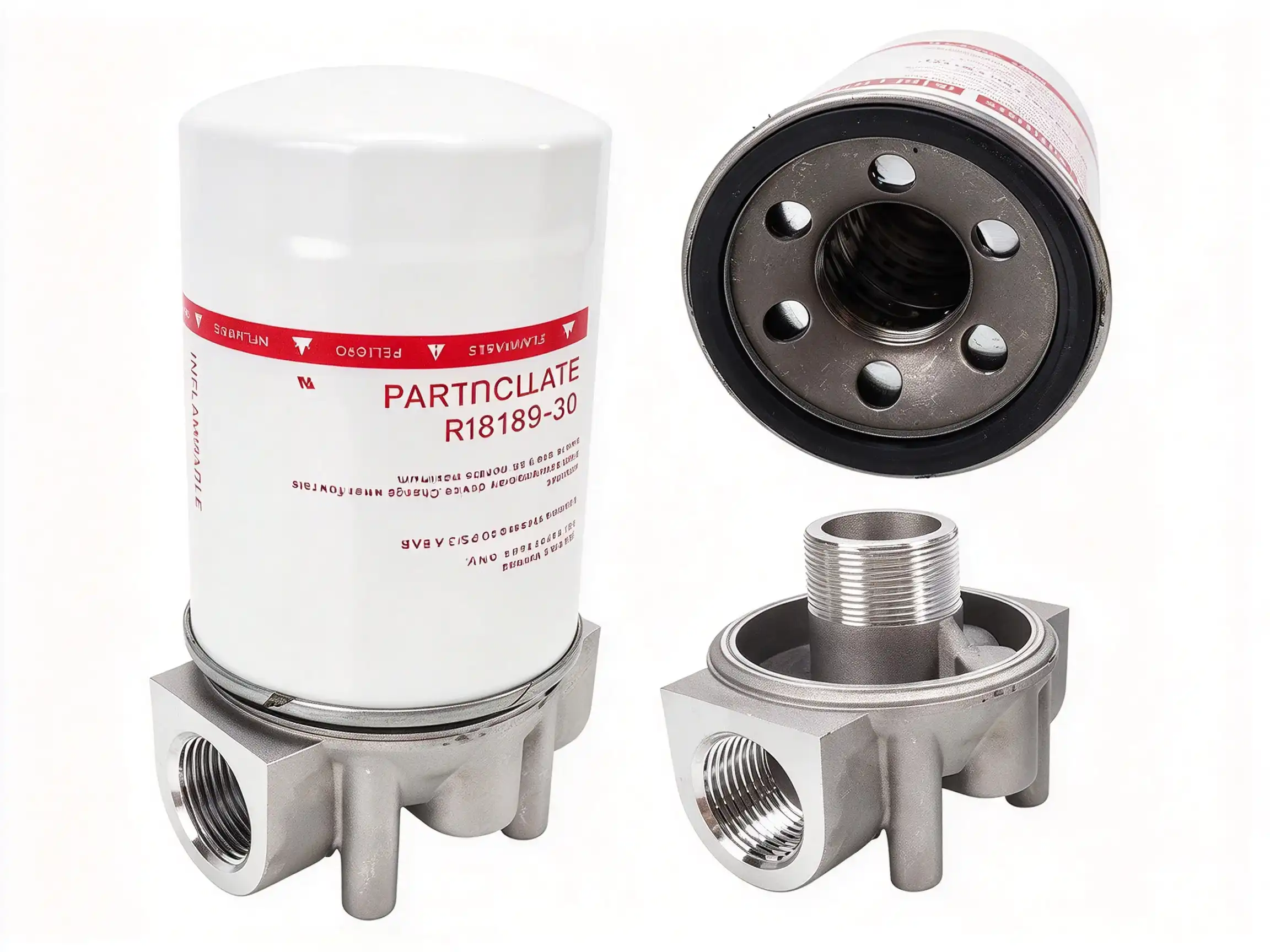
1. Why Is My Fuel Dispenser Flow Getting Slower?
A gradual reduction in dispensing speed is often an early sign of increasing filter restriction.
During normal operation, fuel passes through the filter media while solid contaminants are trapped. As more particles accumulate, the filter becomes increasingly restrictive.
Typical contaminants include:
- Rust and corrosion particles
- Sand and sediment
- Tank sludge
- Carbon particles
- Other solid debris in the fuel system
Therefore, when a dispenser becomes noticeably slower, a practical troubleshooting sequence is:
Slow dispensing → Check the fuel dispenser filter → Measure pressure drop → Check the bypass condition → Inspect the fuel system.
If the new filter becomes clogged again within a few weeks, the problem may be excessive contamination in the storage tank or upstream fuel system rather than the filter itself.
For a broader inspection of dispenser components, you can also review our fuel dispenser parts for related components.
Need help identifying a replacement filter? Contact Us with your old filter model, dispenser model, or product photo.
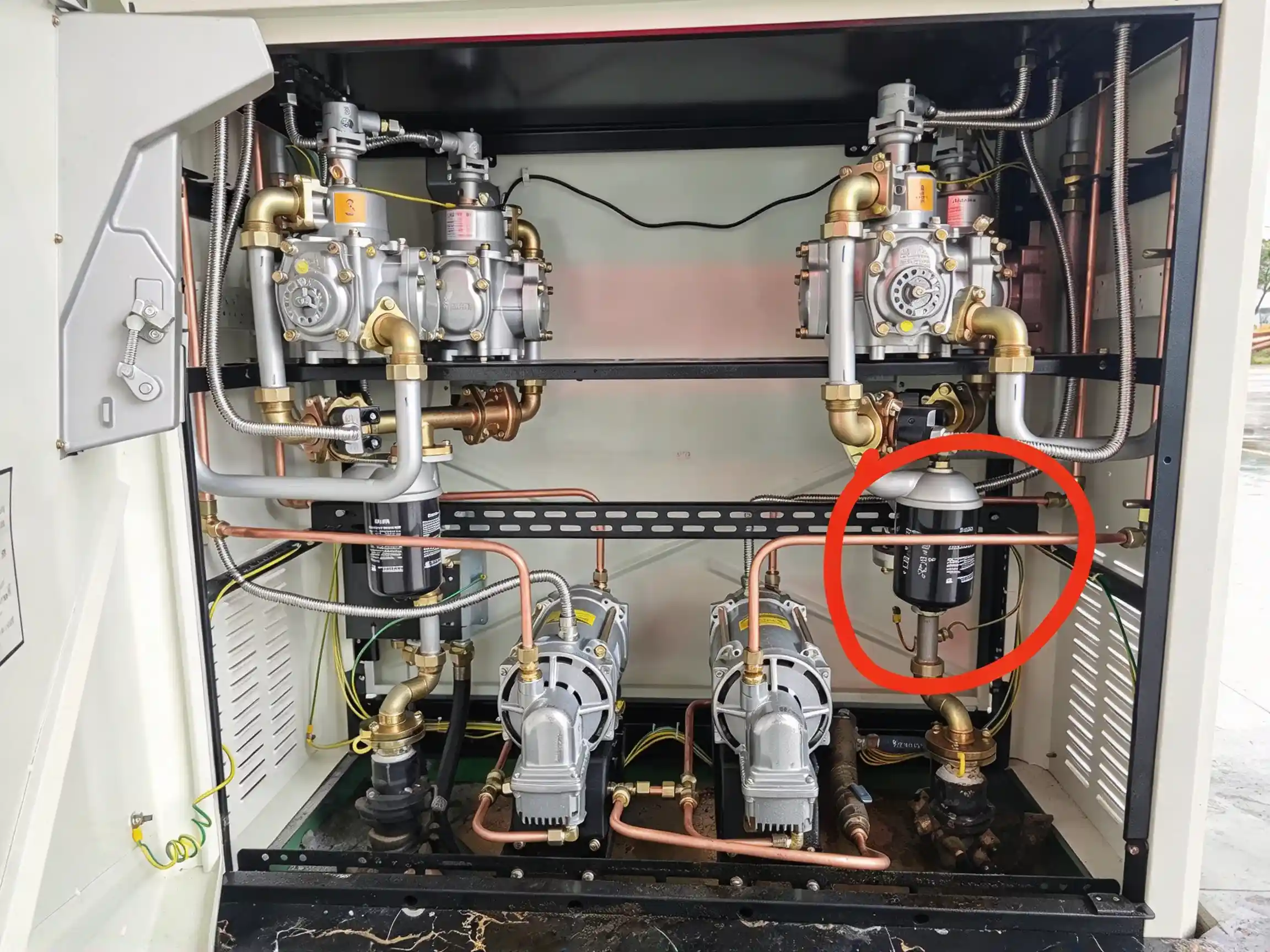
2. How Does the R18189-30 Fuel Dispenser Filter Work?
The R18189-30 is a 30-micron nominal spin-on particulate filter. It is designed to remove solid particles, not free water.
Fuel flows through resin-impregnated cellulose filter media. Contaminants are trapped inside the filter media, while filtered fuel passes through the central perforated support tube toward the dispenser pump and meter.
This makes the filter an important protective component in the dispensing system.
However, one limitation is important:
The R18189-30 is not a water separator.
If a fuel system has frequent free-water contamination, a dedicated water-separation solution is required. Replacing the particulate filter alone will not solve a water problem.
3. What Happens When the Filter Becomes Clogged?
The R18189-30 has a bypass valve that opens at approximately 1.7 bar (25 PSID).
As the filter becomes increasingly blocked, the pressure difference across the filter rises. When it approaches the bypass opening pressure, the bypass valve allows fuel to continue flowing instead of completely stopping the dispenser.
This prevents an immediate loss of fuel flow, but it also means fuel can bypass normal filtration.
That is why 1.7 bar is an important maintenance warning point.
If the pressure difference approaches 1.7 bar, the filter should be inspected and normally replaced rather than allowing the dispenser to operate continuously in bypass.
This is especially important because contaminants passing through an open bypass may reach sensitive components such as the pump and flow meter.
4. R18189-30 Fuel Dispenser Filter Specifications
| Parameter | Value |
|---|---|
| Model | R18189-30 |
| Filtration Rating | 30 micron (nominal) |
| Max Flow Rate | 94.6 LPM (25 GPM) |
| Maximum Working Pressure | 3.4 bar / 50 PSI |
| Bypass Opening Pressure | 1.7 bar / 25 PSID |
| Filter Thread | 1-1/2″-16 UNF |
| Outer Dimension | Φ97 mm × Height 138 mm |
| Filter Media | Resin-impregnated cellulose paper |
| Seal Material | NBR Nitrile rubber |
| Compatible Fuel | Gasoline, diesel, E10 ethanol gasoline, kerosene, ULSD |
| Working Temperature | -10°C to +65°C |
| Limitation | Removes solid particles only; cannot separate free water |
When selecting a replacement, do not compare filters by appearance alone. Thread, dimensions, filtration rating, flow capacity, pressure rating, seal material, and fuel compatibility should all be checked.
If the filter is installed upstream of a metering system, it is also useful to understand how the fuel dispenser flow meter works and why clean fuel is important for reliable metering.
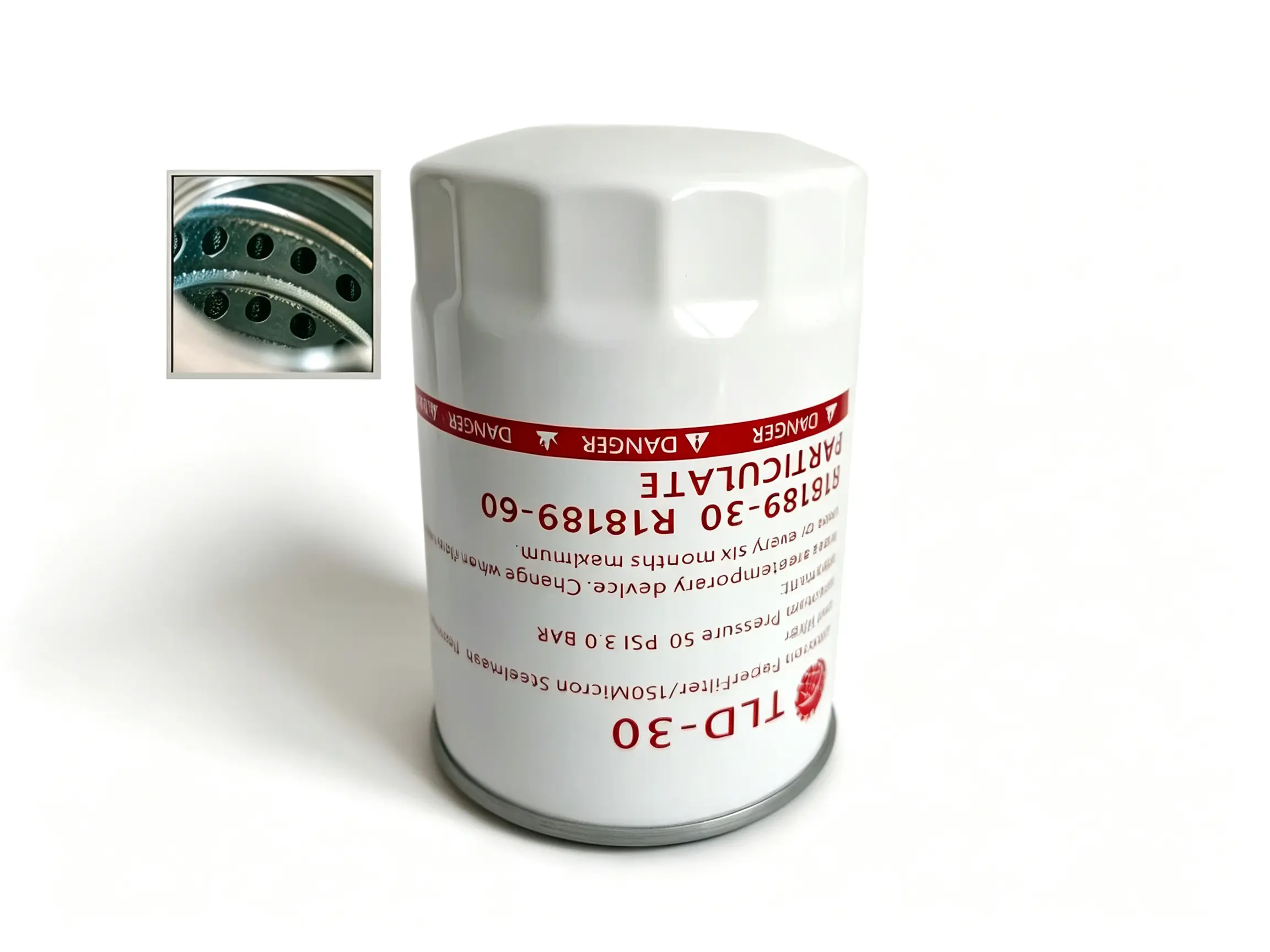
5. Which Filter Should You Choose: 10μm, 30μm or 60μm?
Different fuel dispensing applications may require different filtration levels.
10μm Filter
A 10μm filter provides finer particulate filtration and can be suitable for fixed commercial gas stations with relatively clean fuel and higher filtration requirements.
The trade-off is higher resistance and potentially faster clogging when fuel contains significant contamination.
30μm R18189-30
The R18189-30 fuel dispenser filter is a general-purpose 30μm option.
It provides a practical balance between particle capture and fuel flow capacity and is suitable for many gasoline and diesel dispensing applications.
60μm Reusable Filter
A 60μm stainless steel mesh filter can be considered for mobile tankers, construction fueling sites, temporary refueling points, or other applications where larger debris and high flow are the main concerns.
Unlike disposable paper media, stainless steel mesh can be cleaned and reused.
However, 60μm filtration captures larger particles than 30μm filtration, so it should not automatically replace a finer filter where greater protection of sensitive metering components is required.
Not sure which filtration rating fits your application? Contact Us with your fuel type, dispenser model, and operating environment.
6. Common R18189-30 Filter Problems
6.1 Slow Fuel Flow
Cause: Filter media becomes clogged with rust, sludge, sediment, or other contaminants.
Solution: Check pressure drop across the filter. If it approaches the 1.7 bar bypass opening pressure, replace the filter and investigate the source of contamination.
6.2 Fuel Leak After Filter Replacement
Possible causes include a damaged NBR gasket, dirty sealing surface, incorrect installation, or excessive tightening.
Clean the sealing surface, inspect the gasket, and follow the filter manufacturer’s installation requirements.
6.3 Filter Clogs Again Within Weeks
If a new filter becomes heavily contaminated very quickly, inspect the underground storage tank and upstream fuel system.
Possible causes include heavy tank sediment, water contamination, or insufficient upstream filtration.
6.4 Metering Performance Becomes Unstable
If a heavily clogged filter operates in bypass, contaminants may reach downstream components.
In this situation, replace the filter and inspect the pump and flow meter rather than continuing to operate with a restricted filter.
7. How Often Should You Replace the R18189-30 Filter?
There is no single replacement interval for every fuel station. Fuel quality, throughput, tank condition, contamination level, and operating environment all affect filter life.
As a practical maintenance reference:
- Fixed gas stations: approximately every 1–3 months
- Mobile tanker dispensers: approximately 3–6 months
- E10 fuel: monitor the filter more closely because faster contamination may occur
These intervals should be treated as maintenance guidance rather than a substitute for checking actual filter condition and pressure drop.
8. How to Safely Replace a Fuel Dispenser Filter
Fuel dispenser maintenance involves fire and explosion hazards. Follow your site safety procedures and equipment manufacturer’s requirements.
- Shut down dispenser power.
- Close the fuel supply valve and release line pressure.
- Wear appropriate PPE.
- Place a suitable container below the filter.
- Remove the old spin-on filter with a filter wrench.
- Clean the filter base and sealing surface.
- Inspect the new gasket.
- Install and tighten the new filter according to the manufacturer’s requirements.
- Confirm the correct fuel-flow direction.
- Restore the fuel supply and power.
- Run the dispenser and check carefully for leaks.
- Record the replacement date for future maintenance.
9. OEM vs Aftermarket R18189-30 Filter
For bulk maintenance projects, many buyers compare OEM and aftermarket options.
OEM filter: Factory-specific product, stable specifications, but usually at a higher price and potentially with longer lead times.
High-quality aftermarket filter: Can offer compatible thread, dimensions, pressure parameters, filter media, and sealing materials at a lower cost when properly manufactured and verified.
Low-quality aftermarket filter: Poor filter media, inaccurate bypass calibration, or inferior seals can lead to leakage, premature failure, or poor filtration.
For long-term station operation, the lowest purchase price should not be the only selection criterion. A failed filter can cause downtime or damage downstream components.
10. R18189-30 Cross-Reference Part Numbers
When sourcing replacement filters, the following numbers may be useful for comparison:
- Gilbarco OEM: R18189-30
- Cim-Tek: 70016 / 400-30
- Fleetguard: HF6610
- PertoClear: 40530P-AD
Always verify the actual thread, dimensions, application, and specifications before treating a cross-reference number as a direct replacement.
11. Frequently Asked Questions
Can R18189-30 remove water from gasoline or diesel?
No. It is a particulate filter designed to remove solid contaminants. Free-water contamination requires a dedicated water separator.
When should I replace the filter?
As a practical reference, fixed gas stations may replace it every 1–3 months and mobile tanker dispensers every 3–6 months. Actual replacement should also consider pressure drop and filter condition.
Can the disposable paper filter be reused?
No. The cellulose filter media is designed for one-time use. A reusable 60μm stainless steel mesh filter is a different filtration option.
Which fuel dispensers can use R18189-30?
It can be used with compatible dispenser systems using the specified 1-1/2″-16 UNF filter connection. Always confirm the dispenser model and filter base before ordering.
Is R18189-30 suitable for E10 gasoline?
Yes. The specified NBR seal is compatible with E10 applications, but E10 fuel may contribute to faster contamination and therefore requires closer filter monitoring.
12. Final Takeaway
When a fuel dispenser becomes slower, don’t immediately assume that the pump or flow meter has failed.
The fuel dispenser filter is one of the first components worth checking.
For the R18189-30, the key specifications are 30μm nominal filtration, 94.6 LPM maximum flow, 3.4 bar maximum working pressure, and a 1.7 bar bypass opening pressure.
Choosing the correct filtration level, monitoring pressure drop, and replacing the filter according to actual operating conditions can help protect dispenser components and reduce unnecessary downtime.
Need R18189-30 fuel dispenser filters for a gas station maintenance or equipment project? Contact Us for specifications, replacement options, and wholesale pricing.