
Gas Station Lightning Protection and Static Electricity Protection Requirements
News 2026年 8月 20日 40
Gas stations handle flammable fuels, so lightning protection, grounding and static electricity control are essential parts of station safety design.
A properly designed system should protect underground fuel tanks, fuel piping, dispensers, unloading facilities, electrical equipment and information systems against lightning and static electricity risks.
According to GB 50156-2021, gas station grounding systems should generally be designed as an integrated system. When the relevant grounding systems are combined, the grounding resistance should not exceed 4 Ω. Steel fuel tanks must have at least two lightning grounding connection points.
Important: The requirements below are based mainly on GB 50156-2021. Gas station projects outside China should also comply with the applicable local electrical, fire, petroleum and lightning protection regulations.
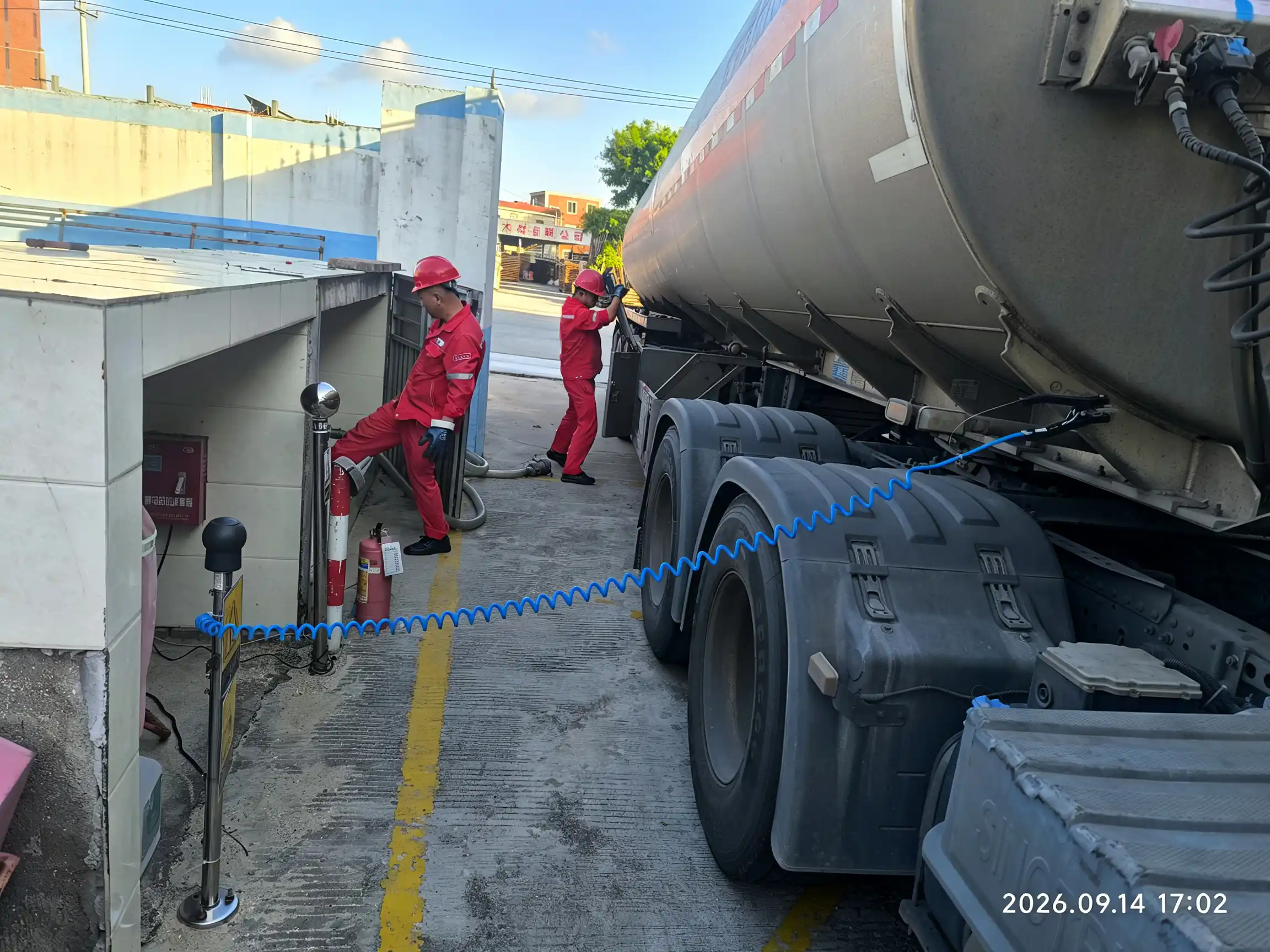
1. Why Do Gas Stations Need Lightning and Static Protection?
A gas station contains flammable fuel and several potential ignition sources.
Lightning can create:
- Direct lightning strikes
- Lightning-induced overvoltage
- Electrical equipment damage
- Potential sparks between metal components
Static electricity can be generated during:
- Fuel unloading
- Fuel transportation through pipelines
- Fuel dispensing
- Movement of fuel through hoses and equipment
The main objective is to prevent a dangerous potential difference or electrical spark from becoming an ignition source.
A simplified safety concept is:
Lightning / Static Electricity → Grounding & Bonding → Controlled Current Path → Safe Dissipation
2. Key Lightning Protection Requirements
2.1 Underground Steel Fuel Tanks
Steel fuel tanks must be connected to the lightning protection grounding system.
According to GB 50156-2021:
- Steel tanks must have lightning grounding.
- The number of grounding connection points should be at least 2.
- The grounding system should provide a reliable path for lightning current to enter the earth.
The requirement for two connection points improves grounding reliability and reduces the risk of losing the grounding path because of a single connection failure.
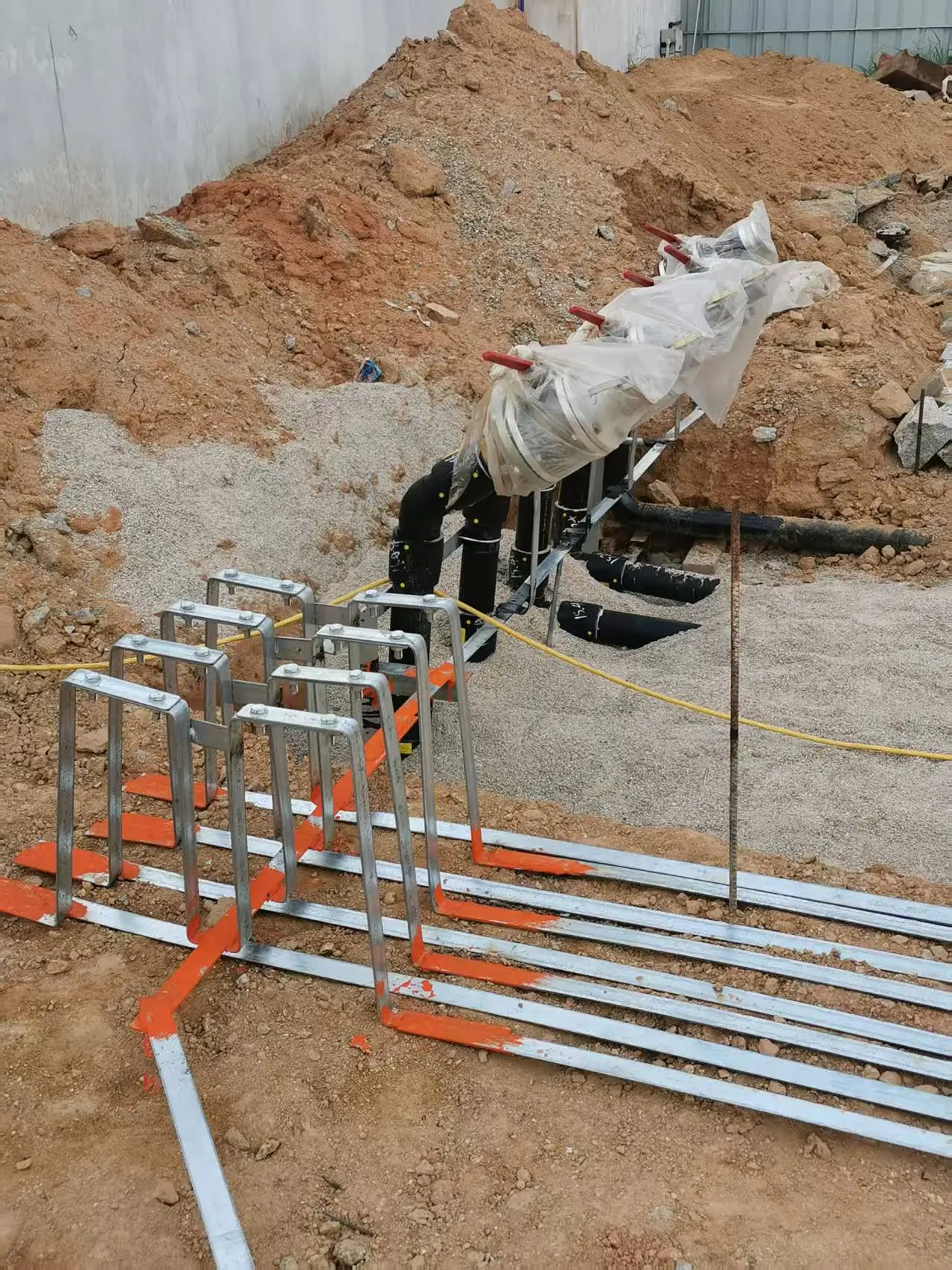
2.2 Common Grounding System
One of the most important numbers in gas station grounding design is:
≤ 4 Ω
GB 50156-2021 states that lightning protection grounding, static electricity grounding, electrical working grounding, protective grounding and information-system grounding should preferably share a common grounding system.
The grounding resistance should not exceed 4 Ω.
This means the grounding design should not be considered as several completely independent systems.
Instead, the project should coordinate:
Lightning Protection + Static Protection + Electrical Protection + Information System Grounding
3. Lightning Protection for Tank Accessories
Although an underground tank is protected by the surrounding soil, metal components extending above the tank can still require electrical bonding and grounding.
Typical components include:
- Tank manholes
- Filling pipes
- Vent pipes
- Vapor recovery connections
- Other exposed metal components
GB 50156-2021 requires the relevant metal components of underground tanks to be properly electrically connected and connected to the common grounding system.
This is especially important because an isolated metal component can develop a potential difference relative to surrounding equipment.
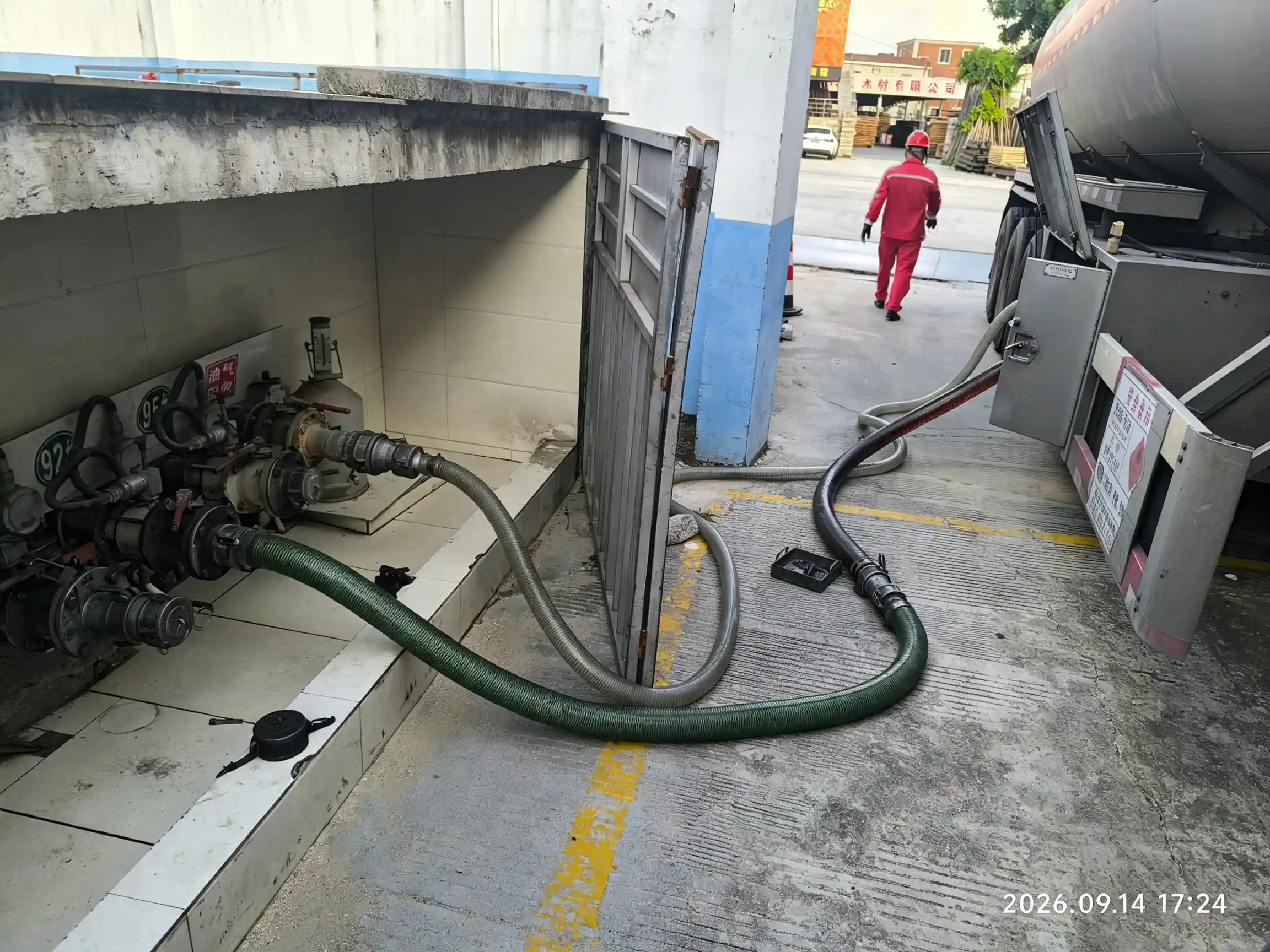
4. Static Electricity Protection During Fuel Unloading
Fuel unloading is one of the most important situations for static electricity control.
Proper static protection should be considered together with the overall gas station fuel unloading system.
During unloading:
Tanker Truck → Unloading Hose → Underground Tank
Fuel movement can generate static electricity.
Therefore, the tanker unloading area should have a temporary static grounding connection.
GB 50156-2021 requires the unloading area to have a temporary anti-static grounding device and a static grounding monitor capable of detecting the bonding connection and monitoring grounding status.
A typical unloading sequence is:
Truck Arrives
↓
Grounding Connection
↓
Grounding Status Confirmed
↓
Fuel Unloading
↓
Grounding Maintained During Unloading
This is why the grounding system should not simply be a piece of metal connected to the ground. The system should also allow the operator to confirm that the grounding connection is actually effective.
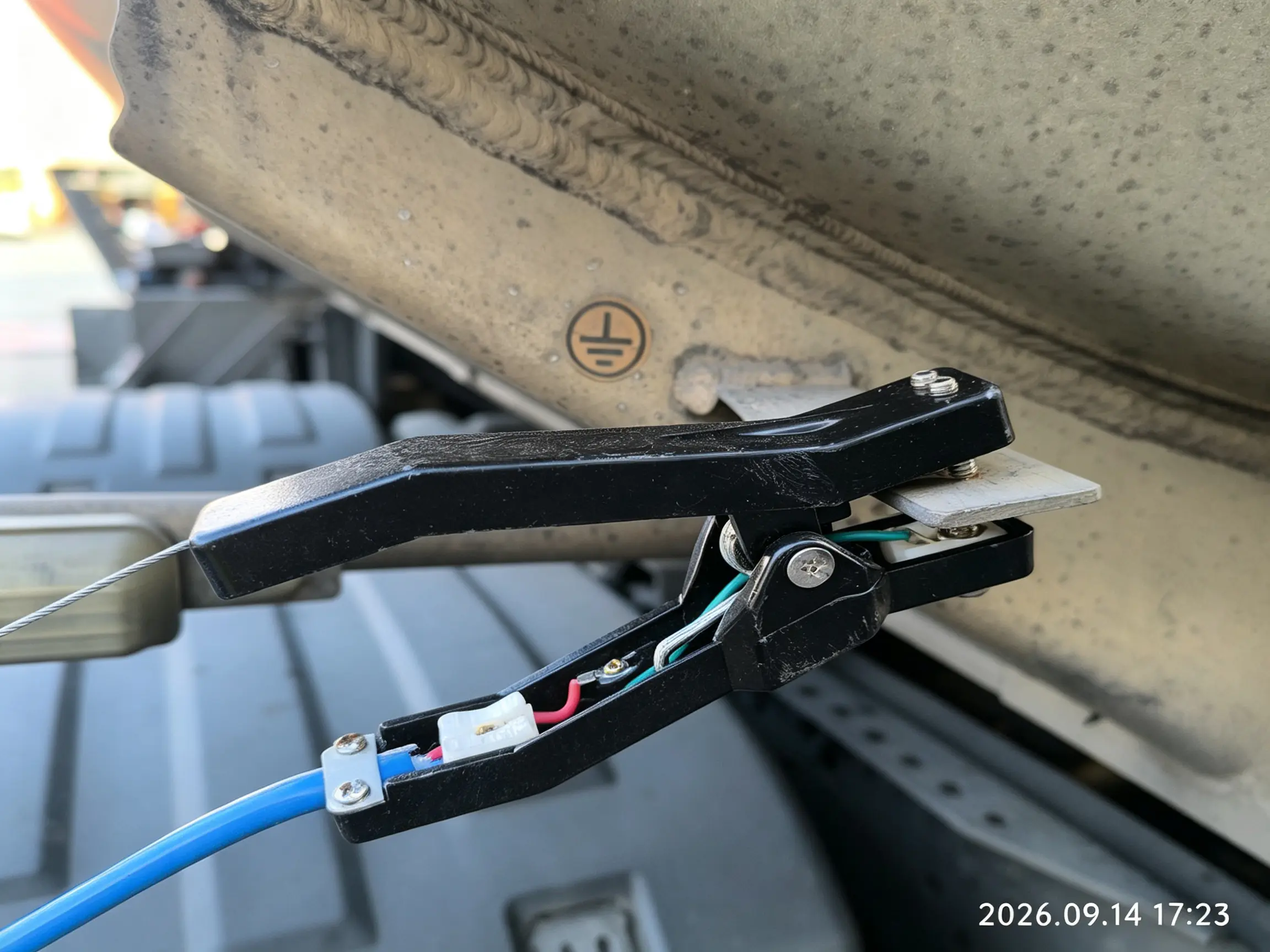
5. Location of the static grounding point on a tank truck
The location of the fixed grounding point is also important.
GB 50156-2021 specifies that the fixed grounding device used for anti-static bonding at the tanker unloading area should not be installed inside Explosion Hazardous Area 1.
The reason is straightforward: connecting or disconnecting a grounding clip can potentially create a spark. The grounding connection point therefore needs to be positioned to reduce ignition risk.
6. Fuel Piping Grounding
Fuel piping can accumulate static electricity and can also be affected by induced lightning currents.
For aboveground or trench-installed fuel pipelines, GB 50156-2021 requires a common grounding system for static electricity and induced lightning protection.
The specified grounding resistance should not exceed:
30 Ω
This requirement applies to relevant aboveground or trench-installed oil-product pipelines and other fuel/gas pipelines covered by the standard.
For a typical fuel station, this means the grounding design should consider:
- Fuel pipelines
- Tank connections
- Valves
- Flanges
- Unloading equipment
- Other conductive components
7. Bonding Across Flanges and Flexible Hoses
In hazardous areas, electrical continuity between metal components is particularly important.
GB 50156-2021 requires metal-wire bonding at connections such as:
- Process pipeline flanges
- Flexible hose connections
- Other relevant connection points
Where a flange has 5 or more connecting bolts, bonding may not be required in non-corrosive environments according to the standard’s specific provision.
For tanker unloading:
Unloading hose + both end fittings
must maintain reliable electrical continuity.
This prevents isolated sections of metal equipment from developing a significant potential difference.
8. Static Grounding Resistance
There are several different grounding resistance values in the standard, so they should not be mixed together.
| Application | Reference value |
|---|---|
| Common grounding system | ≤ 4 Ω |
| Aboveground/trench fuel pipeline grounding | ≤ 30 Ω |
| Independently installed static grounding system | ≤ 100 Ω |
| Steel fuel tank grounding points | ≥ 2 points |
GB 50156-2021 specifies that when a static grounding system is installed separately, its grounding resistance should not exceed 100 Ω.
This distinction is important.
4 Ω and 100 Ω are not interchangeable values.
The applicable requirement depends on how the grounding system is designed.
9. Electrical Equipment and Surge Protection
Lightning protection is not limited to tanks and pipelines.
Gas stations also contain:
- Fuel dispenser control systems
- Monitoring systems
- Communication equipment
- Payment systems
- Control panels
- Other electronic equipment
GB 50156-2021 requires surge protection devices for information-system power circuits at appropriate locations. It also specifies grounding and surge protection requirements for the 380/220 V power supply system.
This is particularly important for modern stations because electronic systems can be more sensitive to transient overvoltage than conventional mechanical equipment.
10. Static Electricity Inside Fuel Tanks
Static protection also needs to be considered inside the fuel tank.
GB 50156-2021 specifies that when a non-metallic layer in direct contact with fuel cannot meet the required static dissipation performance, additional measures may be required.
For example, the standard specifies a surface resistivity requirement of:
< 10⁹ Ω
for relevant non-metallic layers in direct contact with fuel. If this requirement cannot be met, conductive objects may need to be installed to dissipate static electricity.
This shows that static protection is not only about external grounding cables. Fuel tank materials and internal components can also affect static electricity control.
11. Lightning Protection vs. Static Electricity Protection
These two systems are related but should not be treated as exactly the same.
| Item | Lightning Protection | Static Electricity Protection |
|---|---|---|
| Main risk | Lightning current / induced voltage | Static charge accumulation |
| Typical source | Thunderstorms | Fuel flow, unloading, equipment movement |
| Main solution | Lightning protection and grounding | Bonding and grounding |
| Typical equipment | Tanks, buildings, electrical systems | Tanker trucks, hoses, pipelines, equipment |
| Key objective | Safely discharge lightning energy | Prevent static spark |
In practice, the two systems are often integrated through the station grounding system.
12. Gas Station Grounding Inspection Checklist
Before commissioning a gas station, the following items should be checked:
| Inspection Item | Key Requirement |
|---|---|
| Steel fuel tank grounding | At least 2 connection points |
| Common grounding resistance | ≤ 4 Ω |
| Fuel pipeline grounding | ≤ 30 Ω where applicable |
| Separate static grounding | ≤ 100 Ω |
| Tanker grounding | Temporary static grounding provided |
| Grounding monitor | Grounding status can be monitored |
| Tanker unloading hose | Reliable electrical continuity |
| Pipeline flange bonding | Proper bonding where required |
| Surge protection | Installed according to electrical design |
| Tank metal components | Proper bonding and grounding |
The exact inspection method and acceptance criteria should be confirmed against the applicable local regulations and project design.
13. Common Problems in Gas Station Grounding
Problem 1: Only the electrical system is grounded
Some projects focus on electrical grounding but overlook fuel tanks, pipelines and unloading equipment.
Solution: Treat grounding as an integrated gas station safety system.
Problem 2: No tanker grounding monitor
A grounding cable may be physically connected but the operator may not know whether the connection is actually effective.
Solution: Use a static grounding monitor that can verify the connection status.
Problem 3: Poor bonding between metal components
Disconnected or poorly bonded flanges, hoses and metal components can create potential differences.
Solution: Check electrical continuity and install bonding where required.
Problem 4: Using the wrong resistance value
A common mistake is applying the 4 Ω requirement to every individual grounding application.
Solution: Identify whether the system is a common grounding system, pipeline grounding system or separately installed static grounding system before applying the corresponding requirement.
14. Final Takeaway
A reliable gas station lightning and static electricity protection system should focus on four areas:
1. Ground the fuel tank
Steel fuel tanks should have at least two grounding connection points.
2. Control static during unloading
The tanker should be connected to a dedicated static grounding system, with grounding status monitored before and during unloading.
3. Maintain electrical continuity
Fuel pipelines, hoses, flanges and other conductive components should be properly bonded and grounded.
4. Protect electrical and electronic systems
Surge protection and appropriate grounding should be incorporated into the station’s electrical and information systems.
The key figures to remember from GB 50156-2021 are:
4 Ω — common grounding system
30 Ω — relevant aboveground/trench fuel pipeline grounding
100 Ω — separately installed static grounding system
2 points — minimum grounding connection points for steel fuel tanks
< 10⁹ Ω — specified surface resistivity for relevant non-metallic tank layers in direct fuel contact
These values should be applied according to the specific grounding configuration and applicable project standards, rather than treated as one universal resistance requirement.
Need Help With Your Gas Station Grounding System?
Planning a new gas station or upgrading an existing facility? Contact our team to discuss fuel tank grounding, static electricity protection, fuel unloading systems and related gas station equipment.