
Gas Station Fuel Unloading System: Design, Components & Installation Guide
News 2026年 8月 16日 37
Introduction
A reliable gas station fuel unloading system is the starting point of the fuel storage process. It transfers gasoline or diesel from a tanker truck to the underground storage tank while controlling fuel leakage, vapor emissions, static electricity, and overfilling risks.
According to GB 50156-2021, gasoline and diesel tanker trucks must use a closed unloading system. Gasoline tanker trucks should also be equipped with a vapor recovery system for the unloading process.
A typical unloading system includes:
- Unloading connection
- Quick coupling
- Unloading pipe
- Vapor recovery connection
- Vapor recovery pipe
- Underground fuel tank
- Overfill protection
- Static grounding system
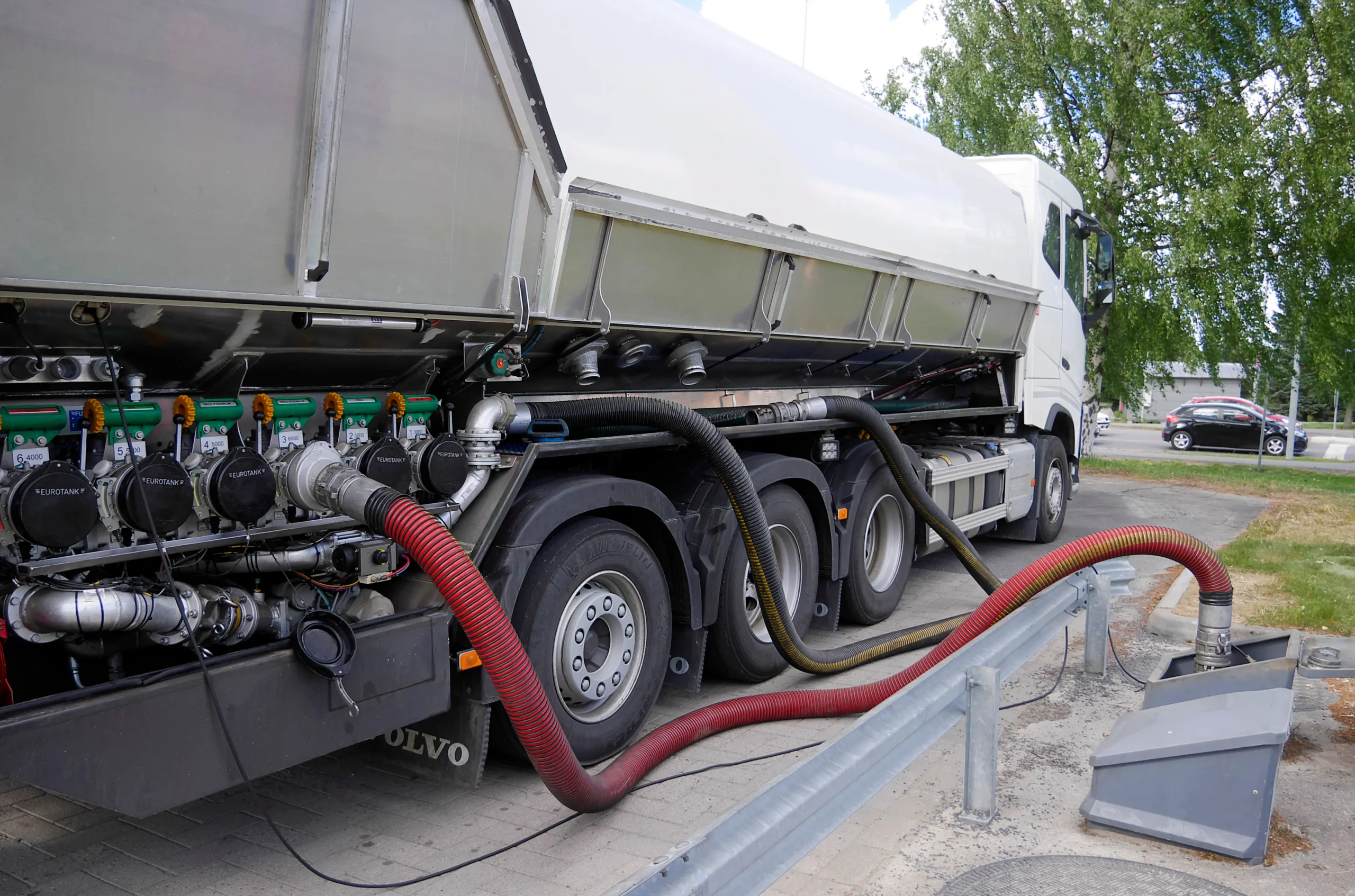
1. How Does a Gas Station Fuel Unloading System Work?
The basic fuel flow is:
Tanker Truck → Unloading Connection → Underground Unloading Pipe → Storage Tank
The unloading system must be properly coordinated with the underground storage tank, including tank capacity, inlet connections and installation requirements.
See our [Underground Fuel Tank Installation Guide] for more information.
During gasoline unloading, vapor generated inside the underground tank is returned to the tanker through a separate vapor recovery line.
This creates a relatively closed transfer process and reduces direct release of fuel vapor.
The unloading connection should be clearly identified for the corresponding fuel product. Each storage tank should have its own unloading pipe and unloading connection to reduce the risk of unloading the wrong fuel into the wrong tank.
2. Key Components of the Unloading System
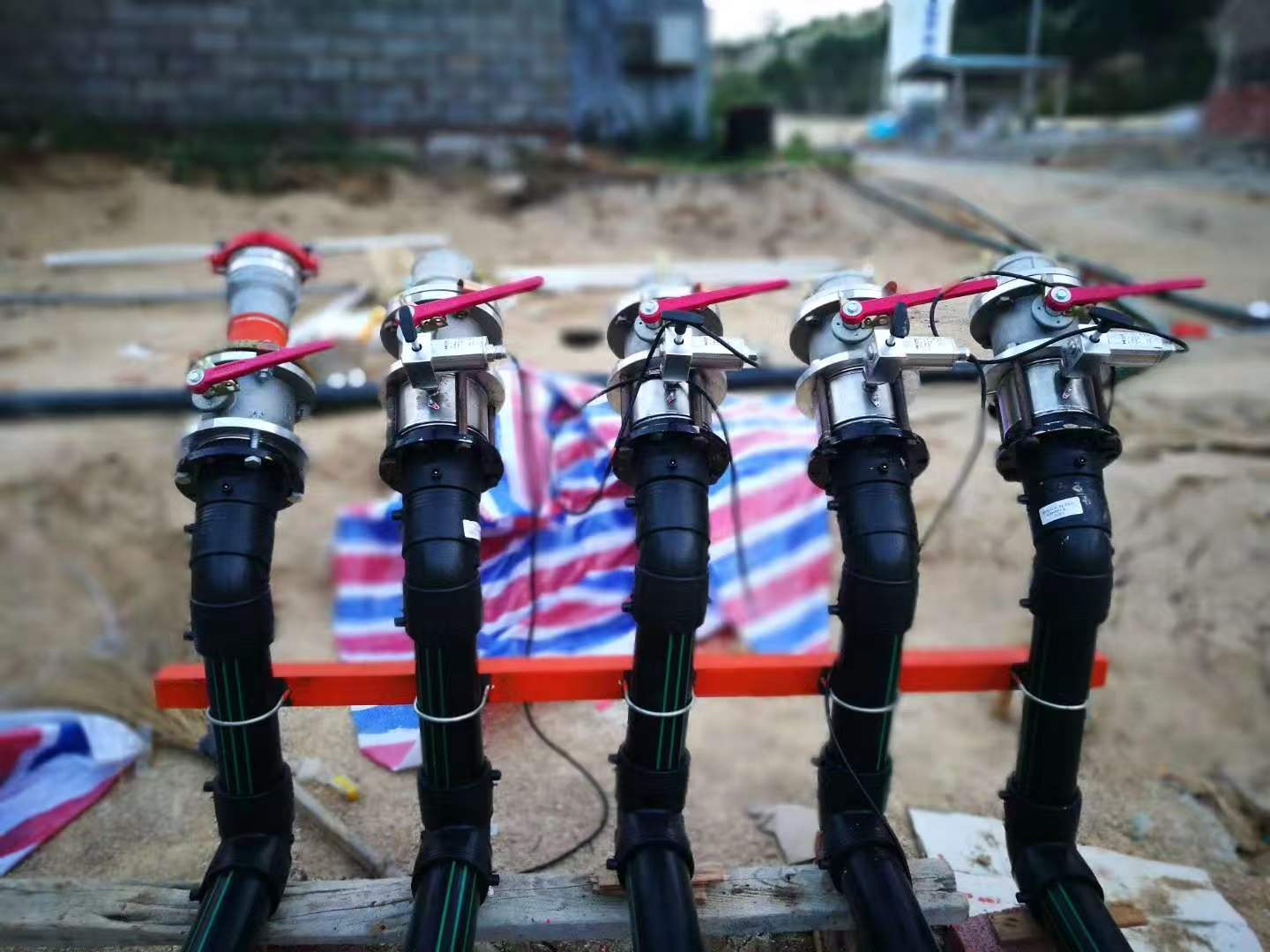
Unloading Connection
The unloading connection is the point where the tanker truck connects to the station’s underground unloading system.
According to GB 50156-2021, the unloading connection should be equipped with:
- A quick coupling
- A sealing cap
- Clear fuel identification
For vapor recovery systems, self-closing quick couplings and caps are preferred. If a non-self-closing quick coupling is used, a valve and cap should be installed near the connection.
Underground Unloading Pipe
The unloading pipe transfers fuel from the tanker truck to the underground storage tank.
One important installation requirement is the pipe slope.
According to GB 50156-2021:
The unloading pipe slope should not be less than 2‰.
The unloading pipe should slope toward the underground storage tank. This means that for every 10 meters of horizontal pipe length, the elevation difference should be at least:
10 m × 0.002 = 0.02 m = 20 mm
The slope helps facilitate fuel drainage toward the storage tank.
The unloading pipe is part of the station’s underground fuel piping network. Pipe diameter, routing, burial depth and slope should be considered together during system design.
See our [Gas Station Underground Fuel Piping Guide] for more information.
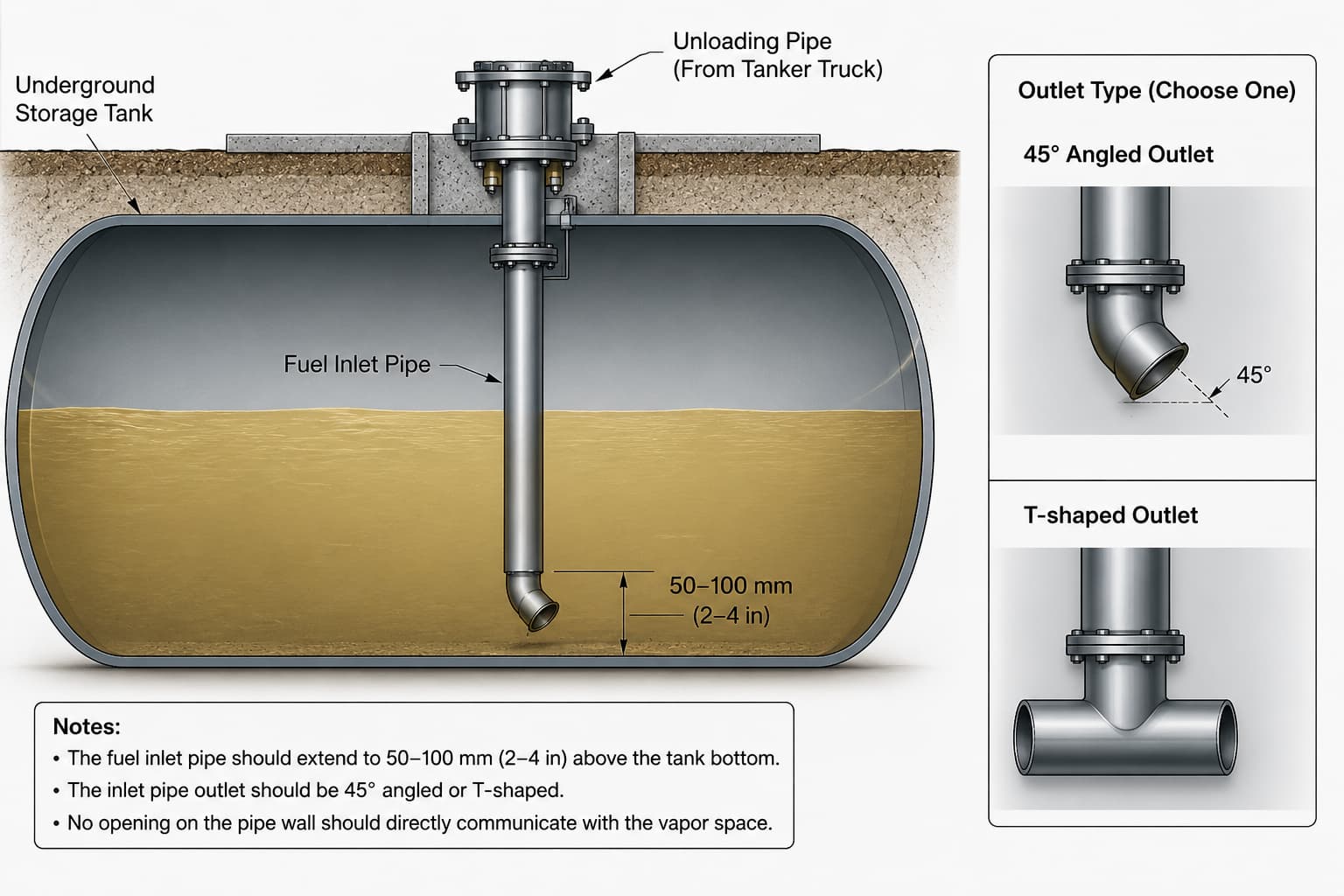
3. Fuel Inlet Pipe Inside the Tank
The unloading pipe does not simply stop at the tank shell.
GB 50156-2021 specifies that the fuel inlet pipe should extend to approximately:
50–100 mm above the tank bottom
The bottom of the inlet pipe should use either:
- A 45° angled outlet, or
- A T-shaped outlet
The pipe wall should not have an opening that directly communicates with the vapor space of the tank.
This arrangement is important when designing the connection between the underground unloading system and the storage tank.
4. Vapor Recovery During Fuel Unloading
For gasoline unloading, vapor recovery is an important part of the system.
GB 50156-2021 specifies a balanced closed vapor recovery system for gasoline tanker truck unloading.
The basic process is:
Gasoline Tanker → Liquid Fuel → Underground Tank
while:
Underground Tank Vapor → Vapor Recovery Pipe → Tanker Truck
The standard allows multiple gasoline tanks to share one unloading vapor recovery main pipe, with a recommended nominal diameter of:
DN100 or larger
The vapor recovery connection should preferably use a self-closing quick coupling and cap.
This is one of the most important differences between a basic fuel unloading connection and a complete gasoline unloading system.
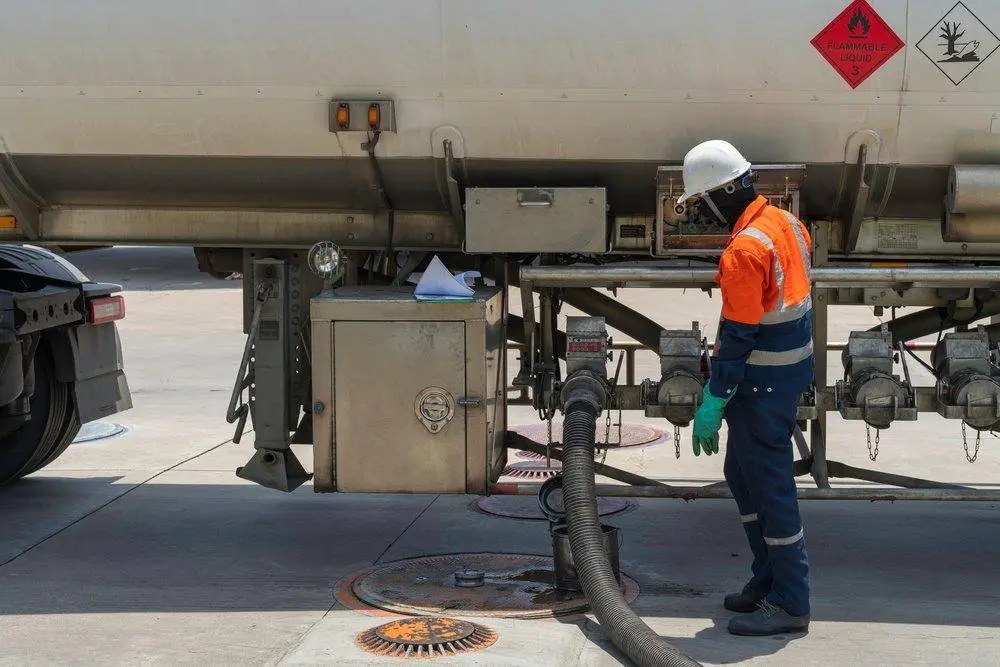
5. Static Grounding and Unloading Safety
Fuel unloading involves the movement of flammable liquids, so static electricity must be controlled.
The unloading area should be equipped with a dedicated static grounding connection.
GB 50156-2021 requires a temporary anti-static grounding device for tanker unloading and a static grounding monitor capable of detecting the grounding condition. The unloading hose and vapor recovery hose should also maintain reliable electrical continuity between their two ends.
In practical operation, the general sequence is:
Park Tanker → Connect Grounding → Connect Unloading Hose → Check Connections → Start Closed Unloading
The exact operating procedure should follow the local regulations and the station operator’s safety procedures.
6. How Deep Should the Underground Unloading Pipe Be Buried?
The unloading pipe is part of the station’s underground process piping system.
GB 50156-2021 specifies:
Minimum buried depth: 0.4 m
For pipes installed beneath concrete areas or roads:
Pipe top to underside of concrete layer: ≥ 0.2 m
In addition, the area around the buried process pipe should be backfilled with at least:
100 mm of neutral sand or fine soil
These requirements should be considered during excavation, pipe installation and backfilling.
7. What About the Tank Vent Pipe?
The storage tank also needs a properly designed venting system.
For gasoline and diesel tanks, the vent pipes should be installed separately.
According to GB 50156-2021:
- Vent pipe outlet height above ground: ≥ 4 m
- Vent pipe nominal diameter: ≥ DN50
- Vent pipe outlet should have a flame arrester
When a vapor recovery system is used, the gasoline tank vent outlet should also be equipped with a pressure-vacuum valve.
Its recommended operating pressure range is:
- Positive pressure: 2–3 kPa
- Negative pressure: 1.5–2 kPa
8. Common Fuel Unloading System Problems
1. Using an Open Unloading Method
Fuel should not simply be discharged through an open tank measuring port.
GB 50156-2021 requires closed unloading.
2. No Clear Fuel Identification
Each tank should have its own unloading connection and clear identification.
This helps prevent incorrect fuel unloading and cross-contamination.
3. Incorrect Pipe Slope
If the unloading pipe does not slope toward the underground tank, the system may not drain as intended.
The minimum unloading pipe slope is:
2‰
4. Insufficient Burial Depth
The minimum buried depth for underground process piping is:
0.4 m
Under concrete areas or roads, the pipe top should also be at least:
0.2 m below the underside of the concrete layer.
5. Poor Static Grounding
A tanker should not begin unloading before the grounding system has been properly connected and verified.
9. Fuel Unloading System Checklist
Before finalizing the design, check:
| Item | Reference Requirement |
|---|---|
| Unloading method | Closed unloading |
| Unloading pipe slope | ≥ 2‰ |
| Fuel inlet pipe above tank bottom | 50–100 mm |
| Underground process pipe burial depth | ≥ 0.4 m |
| Pipe top below concrete layer | ≥ 0.2 m |
| Backfill around pipe | ≥ 100 mm |
| Unloading vapor recovery main | Recommended ≥ DN100 |
| Vent pipe diameter | ≥ DN50 |
| Vent pipe outlet height | ≥ 4 m |
| Gasoline vapor recovery | Balanced closed system |
These values are based on GB 50156-2021 and should be checked against the applicable local regulations before construction.
10. Conclusion
A properly designed gas station fuel unloading system needs more than an unloading hose and connection.
The system should integrate:
Tanker Truck → Unloading Connection → Underground Pipe → Storage Tank → Vapor Recovery → Static Grounding → Safety Monitoring
Key design parameters such as 2‰ pipe slope, 0.4 m minimum burial depth, 0.2 m concrete clearance, 100 mm protective backfill and DN100 vapor recovery piping should be considered during engineering design.
For a complete gas station project, the unloading system should also be coordinated with the underground fuel tank, tank manhole, Submersible oil pump, underground fuel piping and vapor recovery system.
Need help selecting and matching gas station unloading equipment? Contact us for equipment selection and project support.
Need Help With Your Gas Station Unloading System?
We can help you select and match fuel unloading equipment, underground piping, vapor recovery components and related gas station equipment according to your project requirements.