
Gas Station Industry News: Why Fuel Retail Networks Are Still Expanding in 2026
News 2026年 9月 2日 154
Introduction
The global gas station industry is undergoing a major transformation.
Electric vehicle adoption is accelerating, governments are tightening environmental policies, and the energy industry is moving toward a more diversified transportation system. According to the International Energy Agency (IEA), global electric car sales exceeded 20 million units in 2025, increasing by about 20% year over year. Electric cars accounted for approximately one-quarter of all new cars sold worldwide in 2025.
However, the growth of electric vehicles does not mean that fuel retail networks are disappearing.
In fact, several major developments in 2026 show that fuel companies are still investing in gas stations, fuel distribution networks, convenience retail, and station modernization.
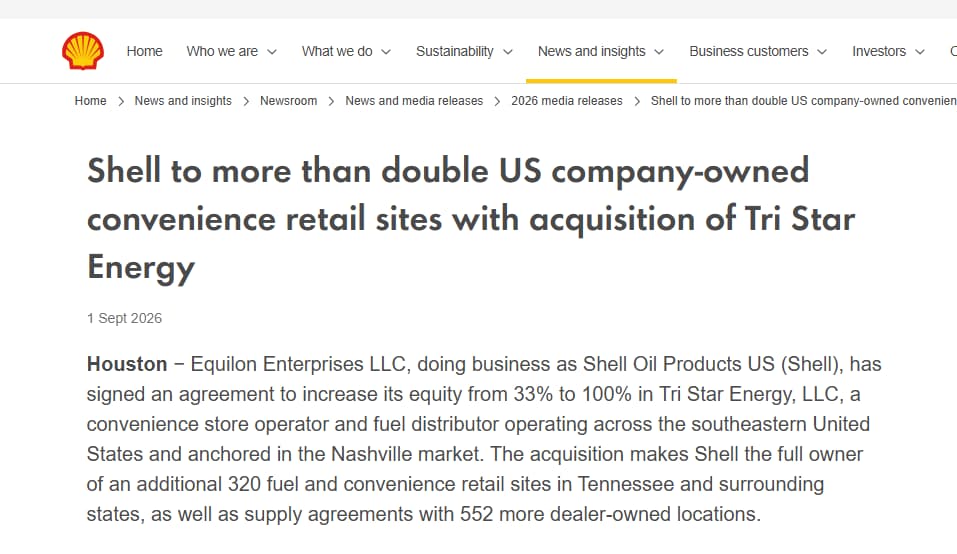
One of the clearest examples came on September 1, 2026, when Shell announced an agreement to acquire full ownership of Tri Star Energy in the United States. The transaction would add approximately 320 fuel and convenience retail sites to Shell’s company-owned portfolio and provide supply agreements covering another 552 dealer-owned locations.
This raises an important question:
Why are major energy companies still expanding fuel retail networks in 2026 while electric vehicle adoption continues to grow?
The answer is more complicated than simply comparing gasoline vehicles with electric vehicles.
1. EV Growth Is Real, but the Global Vehicle Market Is Still Diverse
The rapid growth of EVs is one of the most important changes in transportation.
The IEA reported that global electric car sales exceeded 20 million vehicles in 2025, representing around 25% of new car sales worldwide. Europe reached an electric-car sales share of approximately 28%, while electric-car sales in Europe increased by more than 30% in 2025.
These figures clearly demonstrate that transportation is moving toward electrification.
But a 25% share of new-car sales does not mean that 25% of vehicles already on the road are electric.
The existing global vehicle fleet is much larger and turns over gradually.
Millions of gasoline and diesel vehicles remain in operation, while commercial transportation, heavy-duty vehicles, logistics fleets, agricultural machinery, and other applications continue to depend heavily on liquid fuels.
The transition therefore takes time.
For this reason, the development of EV infrastructure and the continued operation of fuel stations can occur at the same time.
2. Shell’s 2026 Tri Star Deal Shows That Fuel Retail Networks Still Have Strategic Value
The most recent example is Shell’s planned acquisition of the remaining ownership of Tri Star Energy.
Shell already owned 33% of Tri Star Energy and announced on September 1, 2026 that it had agreed to acquire the remaining shares, bringing its ownership to 100%. The transaction is expected to close by the end of 2026, subject to customary conditions.
The acquisition includes approximately:
- 320 fuel and convenience retail sites
- 552 dealer-owned locations covered by supply agreements
After the transaction, Shell’s U.S. Mobility & Convenience portfolio will include nearly 550 company-owned convenience retail sites and supply agreements with approximately 650 dealer-owned locations across the southern United States, according to Shell’s announcement.
Shell also already has approximately 12,000 wholesaler- and dealer-owned fuel retail sites across 49 U.S. states.
The significance of this deal is not simply the number of stations.
It demonstrates that a major energy company still considers the physical fuel retail network strategically valuable.
3. The Modern Gas Station Is Becoming a Retail Network, Not Just a Fueling Point
One of the biggest changes in the gas station business is the diversification of station revenue.
A traditional gas station mainly provides:
Fuel → Vehicle → Payment
A modern fuel retail location can provide:
Fuel
Convenience Retail
Food & Beverage
Lubricants
Car Services
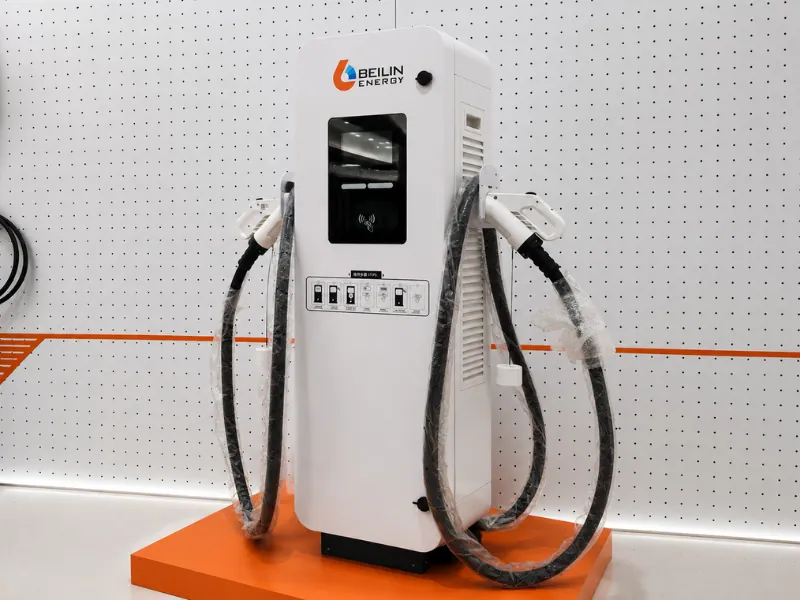
EV Charging
Digital Services
The Shell–Tri Star transaction illustrates this direction because the acquired locations combine fuel retail with convenience stores and fuel distribution.
This model gives operators more ways to generate revenue from each customer visit.
Instead of relying exclusively on gasoline or diesel sales, operators can use the station’s location, customer traffic, and existing infrastructure to provide additional services.
This is one reason fuel retail networks can remain commercially attractive even while transportation is becoming more electrified.
4. Fuel Retail Expansion Can Mean More Than Building New Stations
When people talk about gas station expansion, they often think only about new station construction.
In reality, fuel retail networks can expand through several different strategies.
New Gas Station Construction
Companies can build new gas stations in areas with growing vehicle traffic, population, logistics activity, or commercial development.
Acquisition
A large fuel company can acquire an existing gas station network and immediately increase its market presence.
The Shell–Tri Star transaction is a clear example.
Dealer Network Expansion
Fuel companies can also expand through independent dealers.
Shell’s latest deal includes supply agreements with 552 dealer-owned locations, demonstrating the importance of dealer networks in fuel retail.
Gas Station Modernization
Existing gas stations can be upgraded with:
- New fuel dispensers
- New pumps
- Tank monitoring systems
- Vapor recovery equipment
- Leak detection
- Safety systems
- Digital payment systems
- EV charging equipment
Brand Conversion
Independent gas stations can become part of a larger fuel brand or dealer network.
Therefore, a growing fuel retail network does not necessarily mean that hundreds of completely new gas stations must be constructed.
It can also mean acquisition, renovation, rebranding, equipment replacement, and network integration.|
5. International Energy Companies Are Still Entering New Fuel Retail Markets
Another important example appeared in the Philippines in 2026.
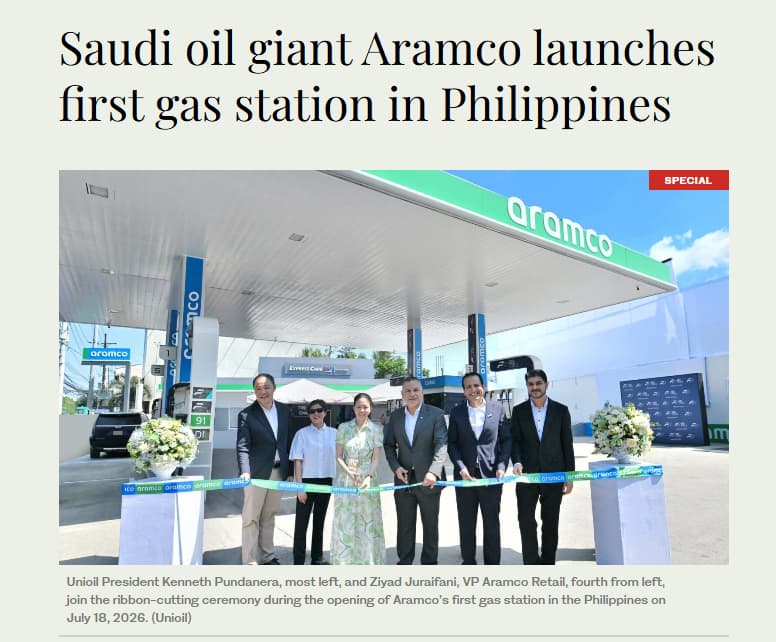
Saudi Aramco opened its first branded gas station in the Philippines in July 2026 in Sucat Road, Parañaque City in the Manila metropolitan area.
The gas station was developed following Aramco’s investment in Unioil, one of the Philippines’ established fuel retailers. Aramco acquired a 25% equity stake in Unioil in 2025, and the first Aramco-branded station was opened in July 2026.

The significance of this development is that Aramco is not simply selling fuel into the market.
It is establishing a branded retail presence.
Reports on the opening stated that the Sucat gas station was the first of several Aramco-branded stations planned in the Philippines, with some additional locations already in development.
This provides another example of how international energy companies can expand fuel retail networks through:
Investment
↓
Local Partnership
↓
Existing Retail Network
↓
Brand Expansion
↓
Gas station Development and Modernization
Planning a New Gas Station Project?
Contact us for fuel station equipment selection and supply chain support.
6. Global Fuel Station Investment Is Not Disappearing
Market research estimates vary depending on how researchers define the “fuel station market.”
One recent market estimate places the global fuel station market at approximately US$648 billion in 2025, with the market projected to reach approximately US$784 billion by 2032–2035, representing a CAGR of around 2.8%.
Other market research estimates use broader definitions and report significantly different market sizes.
This difference is important.
A gas station market figure should not be treated as an exact global accounting number because market reports may include different combinations of:
- Fuel retail
- Convenience retail
- Fuel distribution
- Service stations
- Automotive services
- Energy services
However, the broader direction is clear:
Fuel retail remains a large global infrastructure business even as its business model changes.
7. Oil Market Conditions Still Affect Gas Station Operations
Fuel retail networks are also influenced by global oil market conditions.
On August 31, 2026, a Reuters poll of 31 analysts estimated that Brent crude could average approximately US$85.08 per barrel in 2026, while U.S. crude was forecast to average around US$80.20 per barrel.
The survey also highlighted continuing supply risks related to geopolitical tensions and disruptions around the Strait of Hormuz.
At the same time, the IEA expects global oil demand to decline by approximately 1.6 million barrels per day in 2026, according to the Reuters report.
These two developments may appear contradictory:
Oil demand ↓
while
Fuel prices and supply risks ↑
But they can occur simultaneously.
Fuel demand is affected by vehicle efficiency, EV adoption, economic activity, and regional transportation patterns, while prices are also affected by supply disruptions, geopolitical risks, production decisions, inventories, and logistics.
For gas station operators, this makes efficient fuel inventory management increasingly important.
8. Why Emerging Markets Still Need Gas Station Infrastructure
The global transition to EVs is not occurring at the same speed in every country.
In many emerging markets, gasoline and diesel vehicles still dominate the road fleet, while charging infrastructure is developing from a lower base.
This creates continued demand for conventional fuel infrastructure.
New and upgraded gas stations may require:
- Fuel dispensers
- Submersible pumps
- Underground storage tanks
- Fuel piping
- Tank accessories
- Fuel level monitoring systems
- Leak detection systems
- Vapor recovery equipment
- Emergency shut-off systems
- Electrical and grounding equipment
For contractors, distributors, and equipment suppliers, this means the gas station market is not only about the number of gas stations being built.
It is also about the equipment required to build, upgrade, maintain, and modernize existing gas stations.
9. Gas Station Modernization Creates Another Equipment Opportunity
A gas station does not need to be completely rebuilt to generate equipment demand.
Consider a typical modernization project.
An operator may keep the existing underground tank but replace aging dispensers.
Another gas station may upgrade its tank monitoring system while keeping the existing fuel dispensers.
A larger project may replace:
- Fuel dispensers
- Pumps
- Piping
- Tank monitoring equipment
- Vapor recovery systems
- Safety equipment
This creates multiple procurement opportunities.
For equipment suppliers, the market can therefore be divided into:
| Project Type | Typical Equipment Demand |
|---|---|
| New Gas Station | Complete fueling system |
| Station Expansion | Additional dispensers, pumps and piping |
| Station Renovation | Dispensers, pumps, monitoring and safety equipment |
| Brand Conversion | Dispensers and station equipment |
| Underground System Upgrade | Pumps, piping, tank accessories and monitoring |
| Equipment Replacement | Dispenser parts, pumps, meters and components |
| Network Modernization | Multiple equipment categories |
The opportunity is therefore broader than simply selling a fuel dispenser.
10. Fuel Dispensers Remain a Critical Part of the Fuel Retail System
Even as station business models evolve, the basic fuel dispensing process remains essential for conventional fuel stations.
A typical system follows:
Underground Storage Tank
↓
↓
Underground Piping
↓
Flow Meter
↓
↓
Vehicle
The fuel dispenser is therefore not an isolated machine.
It is part of an integrated fueling system.
Reliable operation depends on the compatibility of the dispenser, meter, pump, piping, valves, hoses, electrical system, and control components.
This is why fuel station projects increasingly require suppliers who understand the complete equipment chain rather than only one individual product.
11. Oil Storage Tank Monitoring Is Becoming More Important
As fuel station networks become larger and more professionally managed, operators also need better control of fuel inventory and underground assets.
Modern fuel tank monitoring systems can provide information such as:
- Fuel level
- Water level
- Fuel temperature
- Inventory status
- Leakage alarms
- Historical operating records
A properly configured monitoring system can help operators identify abnormal conditions and improve inventory management.
For new gas station projects and station modernization, fuel tank monitoring can therefore become an important part of the overall equipment package.
12. The Future Gas Station Will Combine Multiple Energy and Retail Services
The future of the gas station industry should not be viewed simply as:
Gasoline vs. EV
A more realistic model is:
Gasoline
Diesel
EV Charging
Convenience Retail
Digital Management
Vehicle Services
Energy Services
The exact combination will vary by country, traffic patterns, customer demand, regulations, and economics.
Some stations may remain primarily fuel-focused.
Others may become convenience-led retail locations.
Some may add EV charging.
Others may focus on fleet customers, logistics vehicles, or commercial transportation.
The common factor is flexibility.
13. What Gas Station Owners Should Focus on in 2026
For gas station owners, operators, contractors, and investors, several areas deserve particular attention.
1. Equipment Reliability
Fuel dispensers, pumps, meters, valves, hoses, and underground equipment need to operate reliably.
Equipment downtime can directly affect station operations and revenue.
2. Accurate Fuel Measurement
Accurate measurement is fundamental to fuel retail.
Reliable metering equipment helps protect both gas station operators and customers.
3. Underground System Safety
Storage tanks, piping, pumps, monitoring equipment, and related components must be appropriately selected, installed, and maintained.
4. Environmental Protection
Leak detection, vapor recovery, spill prevention, and other environmental measures are becoming increasingly important.
5. Fuel Inventory Management
With changing fuel prices and supply conditions, accurate inventory information can help operators manage purchasing and gas station operations more effectively.
6. Flexible Station Design
Future stations may need to accommodate multiple services, including convenience retail and EV charging.
A flexible design can make future upgrades easier.
14. What This Means for Gas Station Equipment Suppliers
The transformation of the fuel retail industry also changes the role of equipment suppliers.
Customers are increasingly looking beyond a single product.
A contractor may need:
Fuel Dispenser
Submersible Pump
Tank Accessories
Piping Components
Monitoring System
Safety Equipment
Instead of managing many independent suppliers, project owners and contractors may prefer a partner who can coordinate multiple equipment categories.
This is where a gas station equipment supply chain service can create additional value.
The goal is not simply to provide products.
It is to help customers:
- Select appropriate equipment
- Coordinate specifications
- Consolidate purchasing
- Manage different suppliers
- Prepare technical documentation
- Coordinate inspection and shipment
- Obtain technical support
- Source spare parts
Conclusion: Gas Stations Are Changing, Not Simply Disappearing
The gas station industry in 2026 presents a more complicated picture than the simple idea that “EVs will replace gas stations.”
Electric vehicle adoption is clearly accelerating. Global electric car sales exceeded 20 million units in 2025, and electric cars represented approximately one-quarter of new car sales worldwide.
At the same time, major energy companies continue to invest in fuel retail.
Shell’s September 2026 agreement to acquire Tri Star Energy would add approximately 320 fuel and convenience retail sites and supply agreements covering another 552 dealer-owned locations.
In the Philippines, Aramco opened its first branded gas station in July 2026 and plans to develop additional branded locations.
These developments suggest that the future of fuel retail is not simply about building more traditional gas stations.
It is about building stronger networks, modernizing existing stations, adding new services, improving operational efficiency, and adapting to changing transportation needs.
For gas station owners, contractors, distributors, and equipment suppliers, this means that opportunities will continue to exist across both new construction and station modernization.
The gas station of the future may look different from the traditional fueling station.
But the need for reliable infrastructure, accurate fuel dispensing, underground fuel systems, safety equipment, monitoring systems, and professional supply chain support will remain an important part of the global energy infrastructure.
Gas Station Equipment Supply for Global Projects
Our product range includes Fuel Dispensers and Refueling Equipment,Fuel Dispenser Parts and Components,Underground Fuel Storage Tank Systems and Fuel Transfer Equipment,Tank Accessories and Safety Equipment,Vapor Recovery Systems,Fuel Station Level Monitoring and Management Systems,EV Charging and Energy Infrastructure,Fuel Station Equipment Procurement and Supply Chain Services
Whether you are developing a new fuel station, upgrading an existing site, expanding a dealer network, or sourcing equipment for distribution, our team can support equipment selection and supply coordination.
Learn more about our gas station equipment and supply chain services.