
How Does a Fuel Dispenser Breakaway Work? A Complete Guide to Fuel Hose Safety
News 2026年 9月 15日 98
A fuel dispenser hose can be exposed to significant pulling force when a vehicle moves away before the nozzle has been removed. Without a properly selected breakaway, the hose assembly or dispenser connection can be damaged, potentially causing fuel leakage.
A fuel dispenser breakaway is designed to separate at a controlled pulling force and automatically seal the fuel passages on both sides. For gas station operators, contractors, and maintenance teams, understanding how this component works is important when selecting, installing, or replacing one.
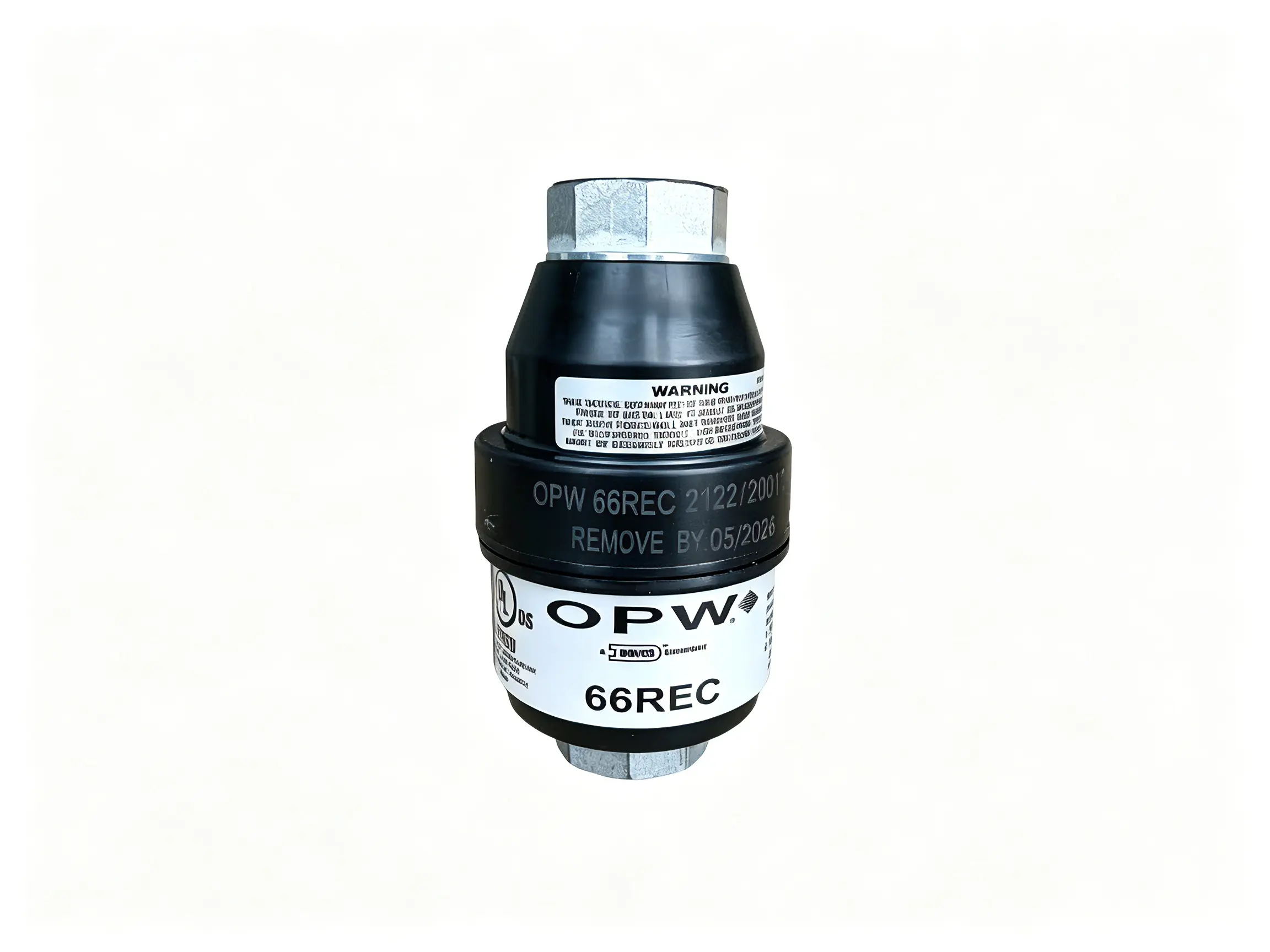
一.What Happens When a Fuel Dispenser Hose Is Pulled?
The operating sequence is straightforward:
Hose pulled → Breakaway separates → Internal valves close → Fuel flow is interrupted
When the pulling force reaches the specified separation level, the breakaway disconnects instead of allowing the entire hose assembly or dispenser connection to take the load.
For the 66REC-1000, the breakaway force is no more than 350 lb (approximately 159 kgf).
Once separation occurs, its dual-valve design automatically seals both sides of the breakaway. This limits the amount of fuel that can escape from the disconnected sections and helps protect the dispensing equipment and forecourt.
The dual-valve structure is also designed for relatively low pressure drop during normal fuel flow.
二 .How Does a Reconnectable Breakaway Work?
Not every breakaway is designed to be reused after separation. A reconnectable breakaway allows the separated sections to be reconnected after the unit and hose assembly have been properly inspected.
The reconnection process of the 66REC is simple:
- Align the two separated sections.
- Press the sections together.
- Twist them until they engage.
- A click indicates that the connection has been made.
Approximately 15 lb of force is required for reconnection.
An important part of the design is the sealing sequence. During reconnection, the O-ring is compressed before the main valve stem opens the valve. This establishes the seal before the fuel passage is reopened.
The 66REC can be reconnected under both wet and dry hose conditions, which can be useful during field maintenance.
Need a 3/4″ fuel dispenser breakaway for a replacement or new station project? Contact us with your hose size and connection requirements for product and quotation support.
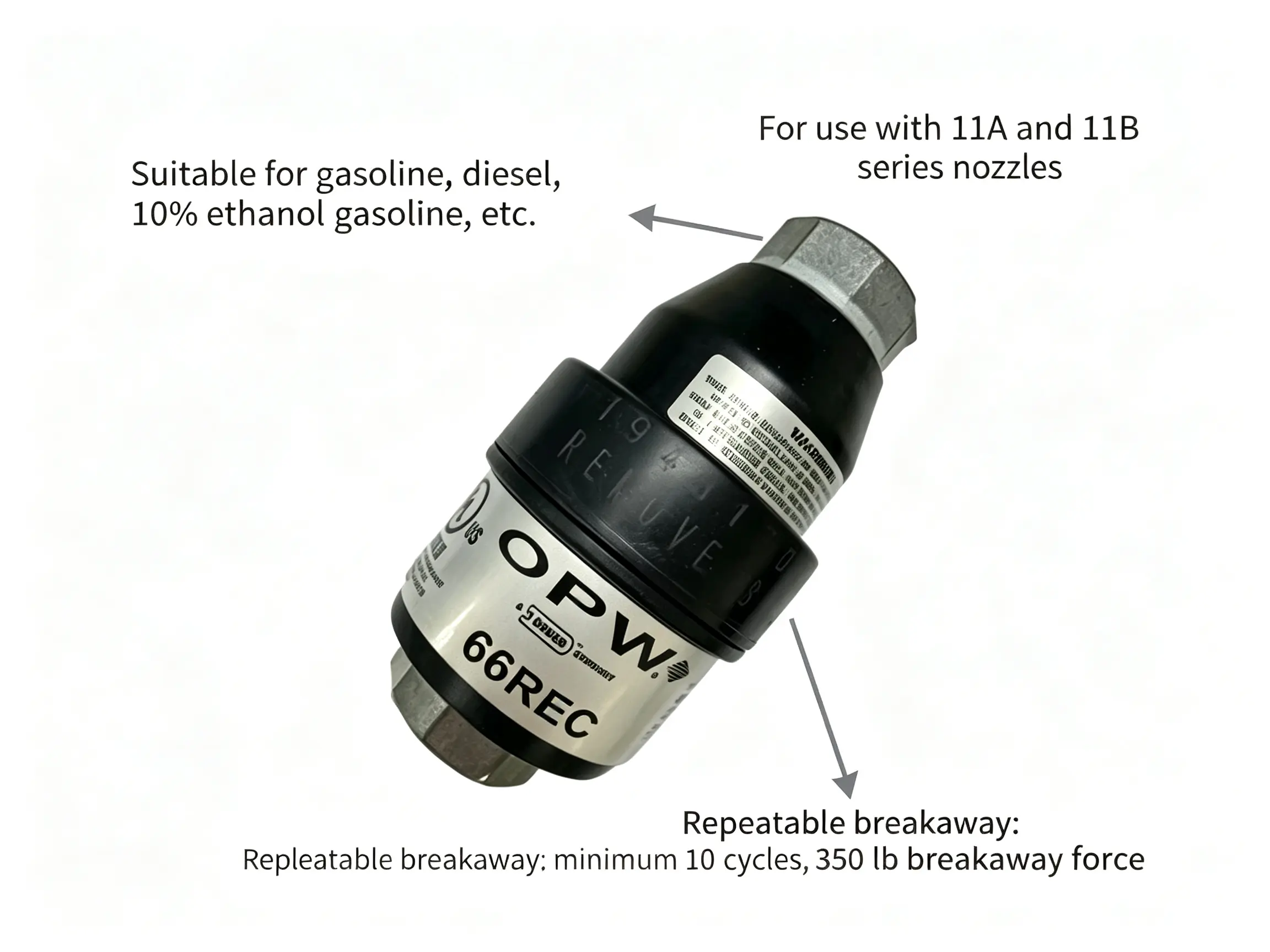
三.What Is a Dry Reconnectable Breakaway?
“Dry reconnectable” describes a breakaway designed to be returned to its connected configuration rather than being treated as a single-use component.
For fuel station maintenance, this can be useful when a breakaway has separated during an abnormal pulling event. However, reconnection should not be treated as an automatic approval for continued operation.
Before returning the system to service, the breakaway, hose, threads, seals, and surrounding components should be checked for visible damage or leakage, and the manufacturer’s installation and maintenance requirements should be followed.
四.What Materials Are Used in a Fuel Dispenser Breakaway?
Material selection directly affects sealing, mechanical strength, and protection of the internal components.
The 66REC uses:
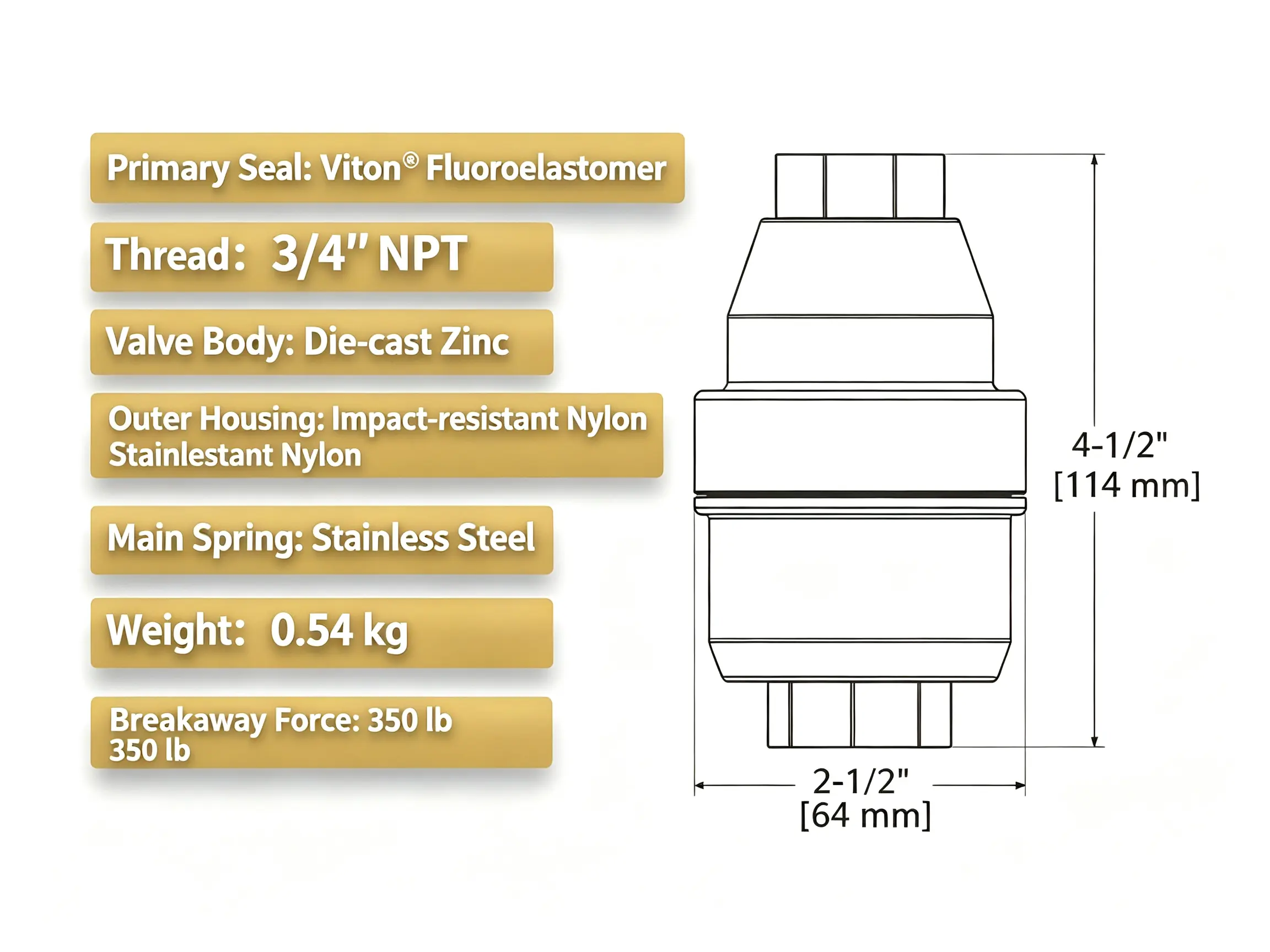
| Component | Material |
|---|---|
| Valve body | Die-cast zinc |
| Protective housing | Impact-resistant nylon |
| Main seal | Viton® fluoroelastomer |
| Main spring | Stainless steel |
| Guide ring & valve | Acetal |
The protective housing helps protect the connection area from impact, while the main seal provides the sealing function. The stainless steel spring and acetal valve components are part of the internal operating mechanism.
The unit is also designed for low-temperature resistance, which is important for fuel dispensing equipment installed in outdoor environments.
六.Which Specifications Should You Check Before Ordering?
Choosing a fuel dispenser breakaway based only on appearance or model name can result in an incompatible installation. At minimum, check these specifications:
1. Connection Size and Thread
The 66REC-1000 uses a 3/4″ NPT connection, equivalent to approximately 19 mm.
The thread type and hose connection must match the existing fuel dispensing assembly.
2. Working Pressure
The design working pressure is:
50 psi / 3.45 bar
The breakaway should be selected according to the pressure requirements of the dispensing system.
3. Breakaway Force
The 66REC-1000 separates at a pulling force of no more than 350 lb.
This is one of the most important specifications when comparing fuel hose breakaways.
4. Fuel Compatibility
The 66REC is designed for use with:
- Gasoline
- Diesel
- Gasoline containing up to 10% ethanol
Always confirm fuel compatibility before ordering for a specific application.
5. Reconnectable or Single-Use Design
If your maintenance strategy requires the possibility of reconnecting the component after a separation event, a reconnectable breakaway should be considered instead of a single-use design.
七.Fuel Dispenser Breakaway Installation Considerations
Installation details can affect how a breakaway responds to pulling forces.
For high-position installation, the 66REC must be installed on a hose with a minimum length of 0.23 m (9″).
The installation should also be checked for:
- Correct hose and thread size
- Proper connection orientation
- Hose condition and routing
- Adequate clearance
- Correct positioning of the breakaway within the hose assembly
A breakaway should not be treated as an independent component. Its performance depends on the complete hose, nozzle, dispenser, and installation configuration.
Proper hose routing and dispenser installation are important for the safe operation of the complete dispensing system. See our guide to Fuel Dispenser Installation for more details.
For other components used in fuel dispensing systems, see our Fuel Dispenser Parts & Components category.
八.What Should You Check After a Breakaway Separates?
After a drive-off or other separation event, do not simply reconnect the component without inspection.
Check:
① Breakaway housing — Look for cracks, deformation, or impact damage.
② Connection sections — Check the reconnecting surfaces and threads.
③ Hose assembly — Inspect for stretching, cuts, kinks, or other damage.
④ Sealing area — Check for signs of fuel leakage or damaged seals.
⑤ Reconnection — Follow the manufacturer’s reconnection procedure and verify that the connection is properly engaged.
The breakaway’s separation characteristics can also help absorb the effects of hydraulic shock within the piping system, adding another function beyond protection against vehicle drive-off.
九.OPW 66REC-1000 3/4″ Dry Reconnectable Breakaway
For applications requiring a 3/4″ NPT fuel dispenser breakaway, the 66REC-1000 combines a dual-valve design with a reconnectable structure.
Key Specifications
| Specification | 66REC-1000 |
|---|---|
| Connection | 3/4″ NPT / 19 mm |
| Breakaway force | ≤350 lb |
| Working pressure | 50 psi / 3.45 bar |
| Height | 4-1/2″ / 114 mm |
| Maximum diameter | 2-1/2″ / 64 mm |
| Weight | 0.54 kg |
| Main seal | Viton® fluoroelastomer |
| Body | Die-cast zinc |
| Housing | Impact-resistant nylon |
| Main spring | Stainless steel |
| Guide ring & valve | Acetal |
| Certification | UL |
| Packaging | 48 pcs/carton |
The combination of 3/4″ NPT connection, dual-valve shut-off, reconnectable design, wet/dry reconnection capability, and ≤350 lb separation force makes the configuration suitable for conventional fuel dispensing hose applications.
If you are sourcing a complete set of refueling equipment for a new gas station project, you might also want to take a look at our fuel dispenser products.
十.Need a Fuel Dispenser Breakaway for Your Project?
Whether you are replacing a separated component, maintaining an existing fuel dispenser, or sourcing components for a new gas station project, the correct connection size, working pressure, breakaway force, fuel compatibility, and installation configuration should be confirmed before ordering.
We supply fuel dispenser components and support sourcing for gas station projects.
Send us your requirements, including hose size, connection type, fuel type, quantity, and project country.
Contact Us for Specifications, Pricing & Bulk Supply.