
Why Is My Fuel Dispenser Flow Getting Slower? 7 Causes to Check
News 2026年 10月 8日 27
Fuel dispenser slow flow is a common problem in gas station operations. When a fuel dispenser delivers fuel more slowly than normal, customers may have to wait longer, fueling efficiency can decrease, and station operators may lose sales during busy periods.
A fuel dispenser slow flow problem does not always mean that the dispenser itself is faulty. The actual cause may be a clogged fuel filter, insufficient pump capacity, restricted fuel piping, a flow meter problem, a partially open solenoid valve, or a restricted nozzle and hose.
Understanding the complete fuel delivery path is the key to solving a fuel dispenser flow problem.
This guide explains the 7 most common causes of fuel dispenser slow flow, how to troubleshoot a slow fuel dispenser, and what station operators can do to prevent recurring flow problems.
1. Clogged Fuel Dispenser Filter
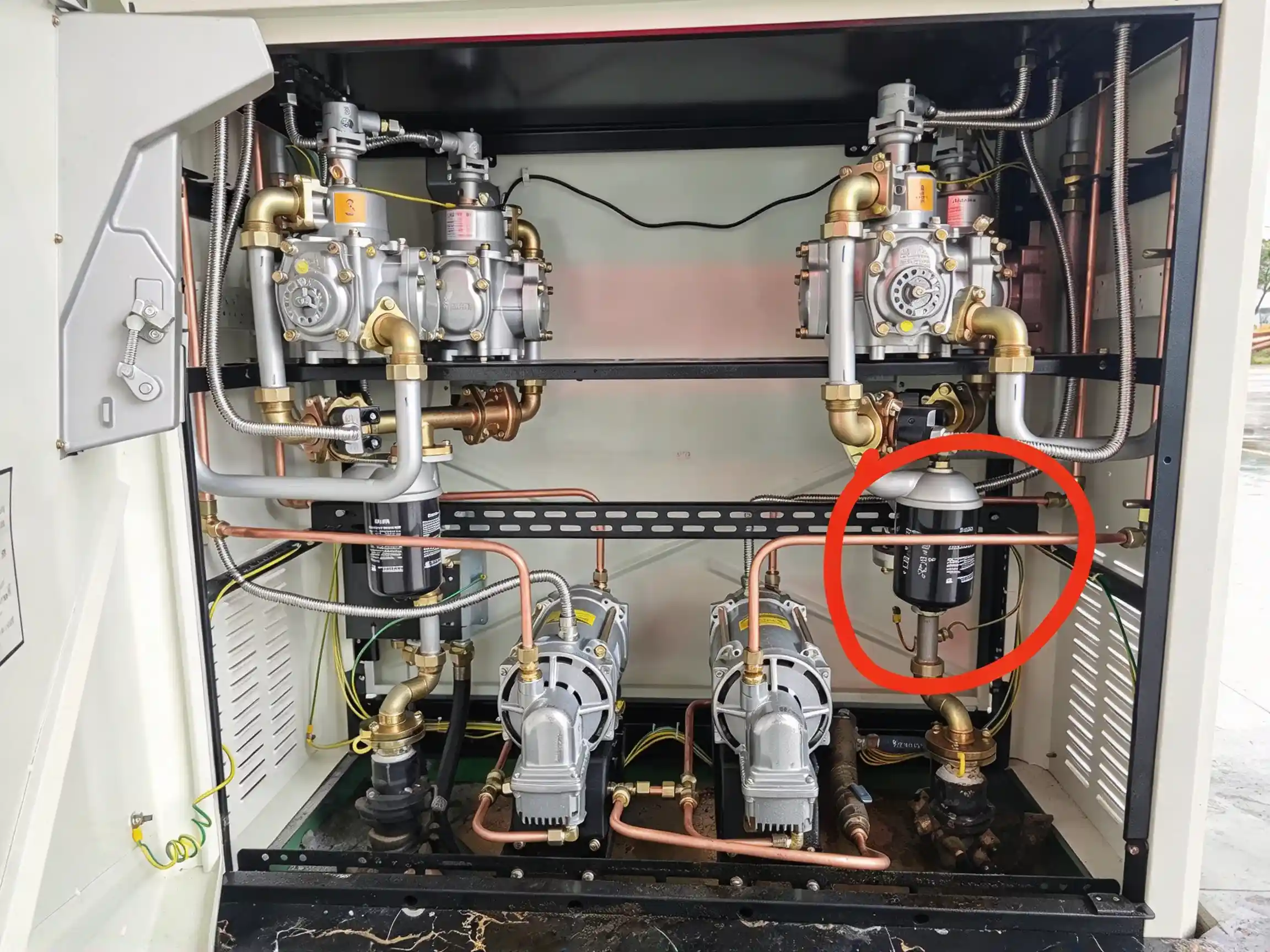
OA clogged fuel dispenser filter is one of the most common causes of fuel dispenser slow flow.
The fuel filter removes dirt, rust, and other particles from the fuel before it reaches the dispenser. Over time, accumulated contamination can restrict the fuel passage and create a pressure drop.
When the filter becomes heavily restricted, the dispenser may still operate normally, but the fuel dispenser flow rate can gradually decrease.
Common signs of a restricted fuel dispenser filter include:
- Fuel dispensing becomes slower than normal
- Flow starts normally but decreases during fueling
- Several nozzles have reduced flow
- The filter has not been replaced for a long period
- The fuel dispenser low flow problem becomes worse over time
If a station has a fuel dispenser slow flow problem, checking the filter should usually be one of the first troubleshooting steps.
If you need to understand filter selection and replacement, see our guide on fuel dispenser filters.
2. Insufficient Pump Capacity or Pump Performance
The fuel dispenser cannot deliver fuel faster than the upstream pump can supply it.
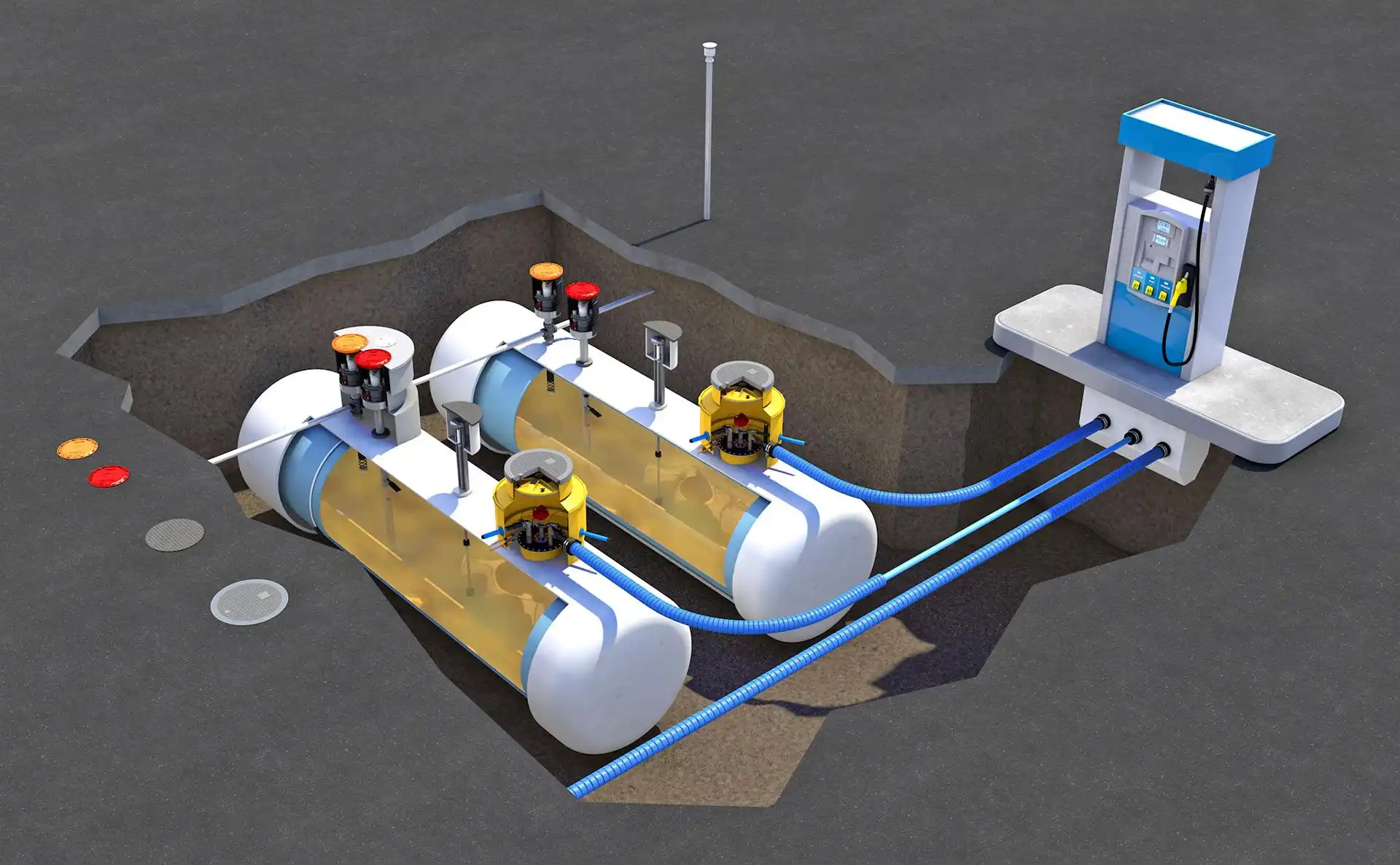
In many modern stations, a submersible pump installed in the underground fuel tank supplies fuel through product piping to the dispenser. If the pump cannot provide sufficient flow or pressure, the dispenser may experience fuel dispenser slow flow.
Possible causes include:
- Pump wear
- Incorrect pump selection
- Electrical problems
- Low pump performance
- Restricted product piping
- Improper system configuration
One important clue is whether one dispenser or several dispensers are affected.
If only one dispenser has a fuel dispenser flow problem, the cause may be local to that dispenser.
If several dispensers become slow at the same time, check the common pump and product piping before replacing individual dispenser components.
For more information, see our guide to submersible pump vs. suction pump.mersible pump vs. suction pump explains the basic differences between these two fuel supply systems.
3. Restricted or Damaged Fuel Piping
Fuel piping is another important cause of fuel dispenser slow flow.
Even if the pump is working correctly, fuel may not reach the dispenser at the required flow rate if the product piping is restricted or incorrectly installed.
Possible causes include:
- Partially blocked fuel piping
- Incorrect pipe diameter
- Excessive bends
- Damaged flexible connections
- Fuel contamination
- Installation problems
- Internal restrictions in piping components
Underground fuel piping can be difficult to inspect, which makes this type of fuel dispenser low flow problem harder to identify.
Flexible connections should also be checked for damage, excessive bending, settlement, vibration, or misalignment.
If the filter and pump are operating normally but the fuel dispenser flow rate remains low, the product piping should be investigated.
For fuel dispensing system design and piping installation, industry guidance such as PEI recommended practices can also be useful.
4. Flow Meter Problems
ThThe fuel dispenser flow meter measures the quantity of fuel delivered through the dispenser. A mechanical or electronic problem with the flow meter can affect dispensing performance and may create an abnormal flow condition.
Possible symptoms include:
- Reduced dispensing speed
- Unstable fuel flow
- Unusual noise
- Abnormal fuel measurement
- Different performance between dispensing positions
However, a flow meter should not automatically be blamed whenever there is a fuel dispenser slow flow problem.
The first step is to determine whether the actual fuel flow is low or whether the problem is related to measurement accuracy.
Understanding how the flow meter works can make fuel dispenser troubleshooting much easier.
You can also read our guide on fuel dispenser flow meter structure and working principle.
5. Solenoid Valve Restriction
The solenoid valve controls fuel flow inside many dispenser systems.
If the valve does not open completely, is contaminated, or has an electrical or mechanical problem, it can restrict fuel flow.
Check:
- Valve opening condition
- Electrical supply
- Coil condition
- Internal contamination
- Mechanical movement
A partially opening solenoid valve can create a flow restriction that may look like a pump or filter problem.
For this reason, troubleshooting should follow the fuel path instead of replacing components randomly.
6. Nozzle or Fuel Hose Restriction
The problem may also be located at the dispensing end.
A fuel nozzle can become restricted because of contamination, mechanical wear, or internal damage.
The hose can also contribute to reduced flow if it is:
- Internally damaged
- Kinked
- Excessively bent
- Incorrectly sized
- Restricting the fuel passage
A simple comparison can provide a useful clue.
If one nozzle is significantly slower than the others while the same pump and piping system supply them, inspect the nozzle and hose before investigating the entire system.
If the problem affects multiple dispensing positions, look further upstream.
7. Operating Conditions and System Configuration
Not every change in dispensing performance is caused by a failed component.
Fuel temperature, product characteristics, pump configuration, electrical conditions, and system design can all influence actual dispensing performance.
When troubleshooting, compare the actual operating conditions with the equipment’s rated:
- Flow rate
- Pump capacity
- Power supply
- Product type
- Temperature range
- Installation conditions
For example, a dispenser designed for a particular flow range may not achieve the expected performance if the upstream pump or piping system cannot provide sufficient fuel supply.
This is why dispenser flow rate should be evaluated as part of the complete fuel delivery system, rather than as an isolated specification.
8. How to Find the Cause of Slow Fuel Flow
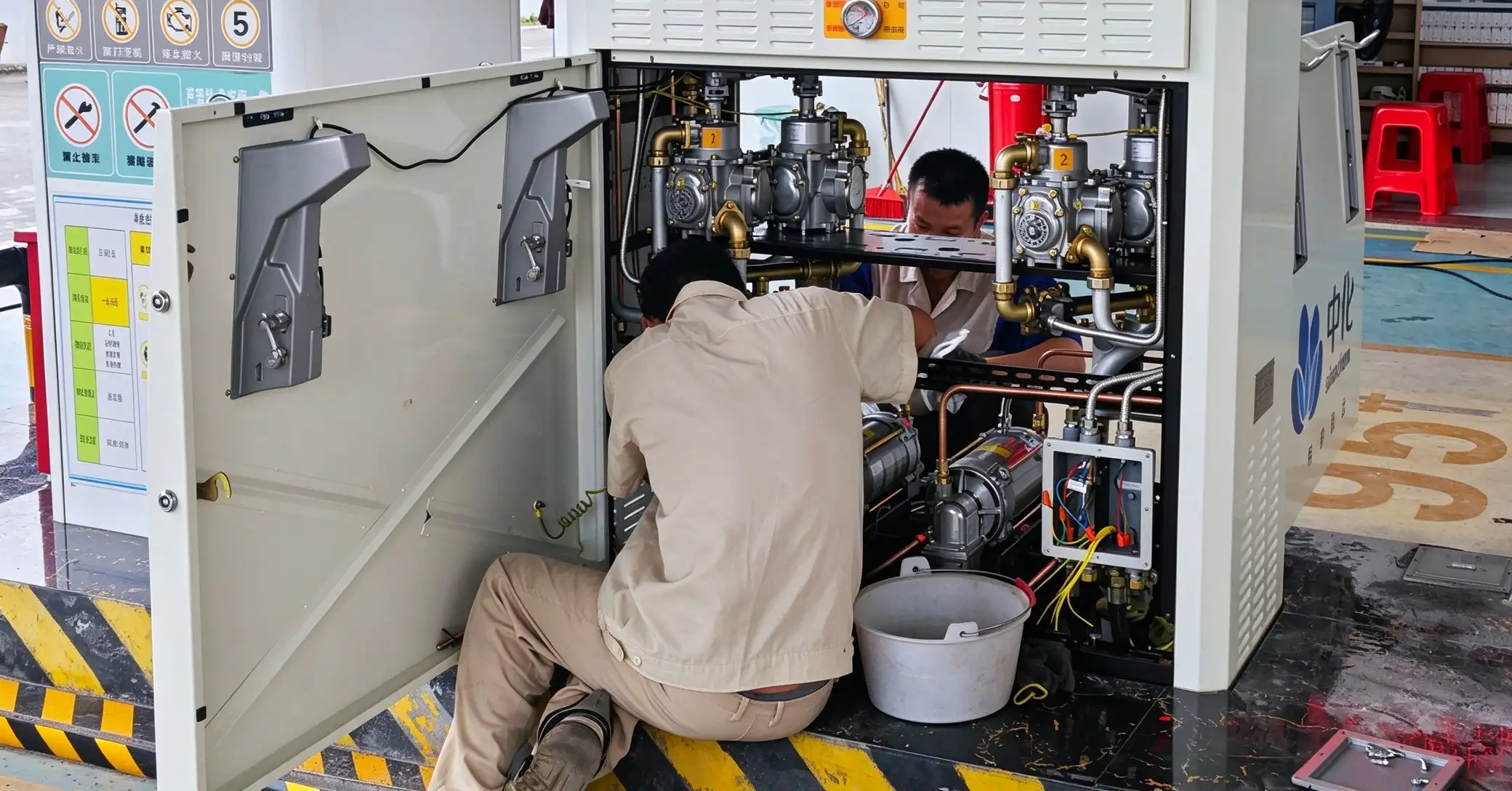
When a dispenser becomes slower, avoid replacing parts randomly.
A practical troubleshooting sequence is:
Nozzle & Hose
↓
Fuel Filter
↓
Solenoid Valve
↓
Flow Meter
↓
Product Piping
↓
Submersible Pump
↓
Operating Conditions
This approach helps narrow down where the restriction occurs.
One Dispenser Is Slow
If only one nozzle or one dispenser becomes slow, the problem is more likely to be local to that dispensing position.
Start by checking:
- Nozzle
- Hose
- Filter
- Solenoid valve
- Flow meter
Multiple Dispensers Are Slow
If several dispensers become slow at the same time, investigate components shared by the system, such as:
- Submersible pump
- Common product piping
- Electrical supply
- Fuel supply conditions
- Storage tank system
This distinction can significantly reduce troubleshooting time.
9. How to Prevent Fuel Dispenser Slow Flow Problems
Regular maintenance can prevent many flow-related problems.
A basic maintenance program should include:
- Inspecting and replacing fuel filters
- Checking nozzle and hose condition
- Inspecting valves
- Monitoring pump performance
- Checking piping and connections
- Verifying dispenser flow rate
- Keeping maintenance records
Do not wait until customers complain about slow fueling.
Gradual changes in flow rate can be an early indication of a developing equipment or system problem.
10. Final Takeaway
A fuel dispenser slow flow problem does not necessarily mean that the dispenser itself needs to be replaced.
The real cause may be a clogged filter, insufficient pump performance, restricted piping, a flow meter problem, a solenoid valve, or even the nozzle and hose.
The most effective approach is to troubleshoot the fuel delivery path step by step and identify where the restriction occurs.
For fuel station projects, equipment selection should also consider flow rate, pump capacity, piping, connections, and system compatibility as one complete system.
If you are planning a new fuel station, upgrading an existing station, or sourcing multiple categories of fuel station equipment, Contact Us to discuss your project requirements. We can help coordinate suitable equipment and components according to the application and project specifications.