
Underground Fuel Tank Installation: 7 Mistakes That Can Lead to Costly Rework
News 2026年 10月 10日 15
Underground fuel tank installation is a critical stage in gas station construction. Mistakes during excavation, tank positioning, piping installation, or backfilling can lead to expensive rework, project delays, equipment damage, and potential fuel leaks.
For EPC contractors, construction companies, and fuel station developers, the challenge is not simply installing an underground storage tank. A successful underground fuel tank installation requires careful coordination between civil works, tank specifications, fuel piping, pumps, monitoring equipment, and safety accessories.
Some installation problems are difficult to identify after the tank has been buried. Checking the right details before backfilling can save significant time and money.
In this guide, we cover seven common underground fuel tank installation mistakes, explain their potential consequences, and share practical checks that can help reduce project risks.
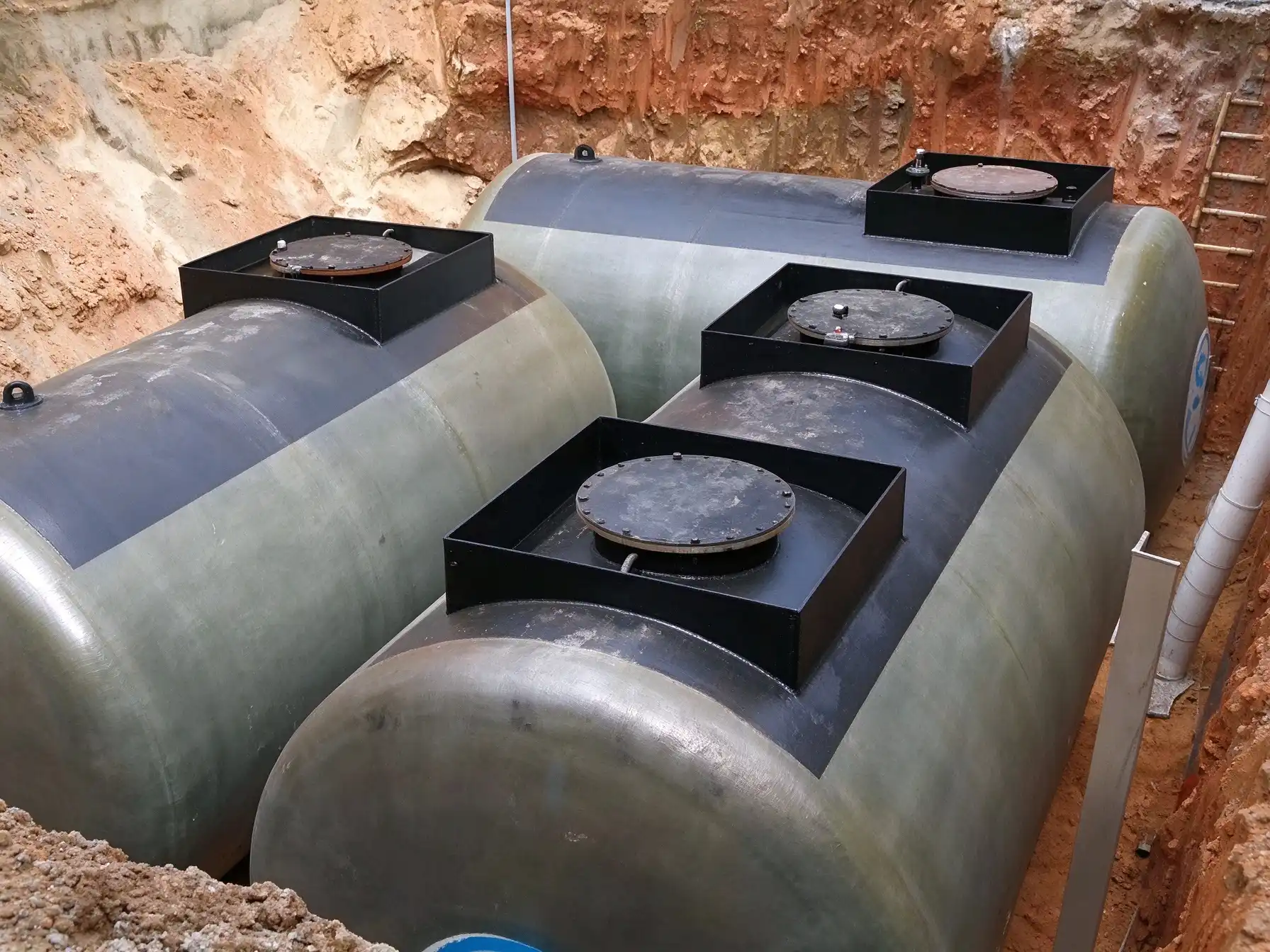
1. Poor Excavation and Foundation Preparation
Excavation is one of the first stages of underground fuel tank installation, but problems at this stage can affect the entire project.
If the excavation is too small, incorrectly positioned, or prepared with an unsuitable base, the tank may be difficult to position correctly. Uneven support can also create unwanted stress on the tank structure.
Common mistakes include:
- Incorrect excavation dimensions or depth
- An uneven or unsuitable foundation
- Failure to consider groundwater conditions
- Insufficient working space for installation
- Poor coordination between excavation and piping layouts
How to prevent it:
Confirm the approved site drawings, tank dimensions, required clearances, foundation details, and groundwater conditions before excavation begins.
The foundation and bedding materials must follow the tank manufacturer’s installation instructions and the applicable project specifications.
Do not assume that every underground tank uses the same foundation or bedding arrangement. Requirements can differ depending on tank material, design, site conditions, and local regulations.
2. Incorrect Tank Positioning or Anchoring
During underground fuel tank installation, the tank’s elevation, orientation, and anchoring requirements should be confirmed before the tank is secured in position.
Incorrect positioning can create problems with access, piping alignment, burial depth, and connections to other equipment.
In areas with a high groundwater level, tank flotation is another important risk. An empty or partially filled underground tank can experience an upward force from groundwater, potentially moving out of position if the installation has not been designed to resist that force.
Possible consequences include:
- Misaligned fuel piping
- Excessive stress on tank connections
- Damage to associated equipment
- Tank movement or flotation
- Additional excavation and installation work
How to prevent it:
Before positioning the tank, verify the required orientation, elevation, separation distances, and connection locations against the approved drawings.
Where groundwater creates a flotation risk, the project engineer must determine whether anchoring or another approved restraint system is necessary. The design should account for relevant groundwater conditions, tank weight, buoyancy, and the specified installation configuration.
Never select an anchoring arrangement based on guesswork. Follow the tank manufacturer’s instructions and the project engineer’s approved design.on guesswork. Follow the tank manufacturer’s instructions and the project engineer’s approved design.
3. Damaging the Tank or Its Protective Coating
Tank damage during transportation, unloading, or underground fuel tank installation can create additional repair work and compromise protective systems. Careful handling and inspection are essential before the tank is lowered into the excavation.
Improper lifting, dragging, dropping, or handling may damage the tank shell, protective coating, connections, or secondary containment components. For coated steel tanks, damage to the external protection system can increase corrosion risk.
Fiberglass-reinforced plastic tanks also require appropriate handling because impact or excessive loading may damage their structure.
Common mistakes include:
- Using lifting points that are not approved
- Dragging the tank across the ground
- Allowing lifting equipment to contact vulnerable components
- Ignoring visible scratches, cracks, or deformation
- Failing to inspect the tank before installation
How to prevent it:
Inspect the tank before unloading and again before it is lowered into the excavation. Use the lifting equipment, lifting points, and handling procedures specified by the manufacturer.
Record visible damage and resolve any discrepancies before the tank is installed or covered.
For steel tanks, confirm that the protective coating and any specified corrosion protection remain intact. For double-wall tanks, also verify the integrity of the secondary containment system according to the manufacturer’s procedures.tegrity of the secondary containment system according to the manufacturer’s procedures.
4. Incorrect Fuel Piping Layout and Connections
Fuel piping is a critical part of underground fuel tank installation. Even when the tank itself is installed Fuel piping is a critical part of underground fuel tank installation. Even when the tank itself is installed correctly, incompatible fittings, poor pipe alignment, or incorrect connection methods can lead to leaks, flow problems, and costly rework.
Potential installation mistakes include:
- Incorrect pipe sizing or routing
- Poorly aligned connections
- Incompatible fittings or materials
- Inadequate support
- Excessive stress on tank outlets
- Incorrect installation of flexible connectors
- Failure to follow specified jointing procedures
For example, a rigidly connected pipe may place unwanted stress on a tank outlet when settlement, vibration, or thermal movement occurs.
Flexible connections may help accommodate movement where the system design calls for them, but they must be suitable for the fuel, pressure, installation environment, and applicable requirements.
How to prevent it:
Check the piping layout against the approved drawings before installation. Confirm the pipe material, diameter, connection type, jointing method, and compatibility of all components.
Inspect the connections between the underground tank, pump system, and downstream fuel piping. Follow the manufacturer’s installation instructions for flexible connectors and other accessories.
For more information about one type of fuel piping connection, see our guide to stainless steel corrugated hose for fuel tank systems.
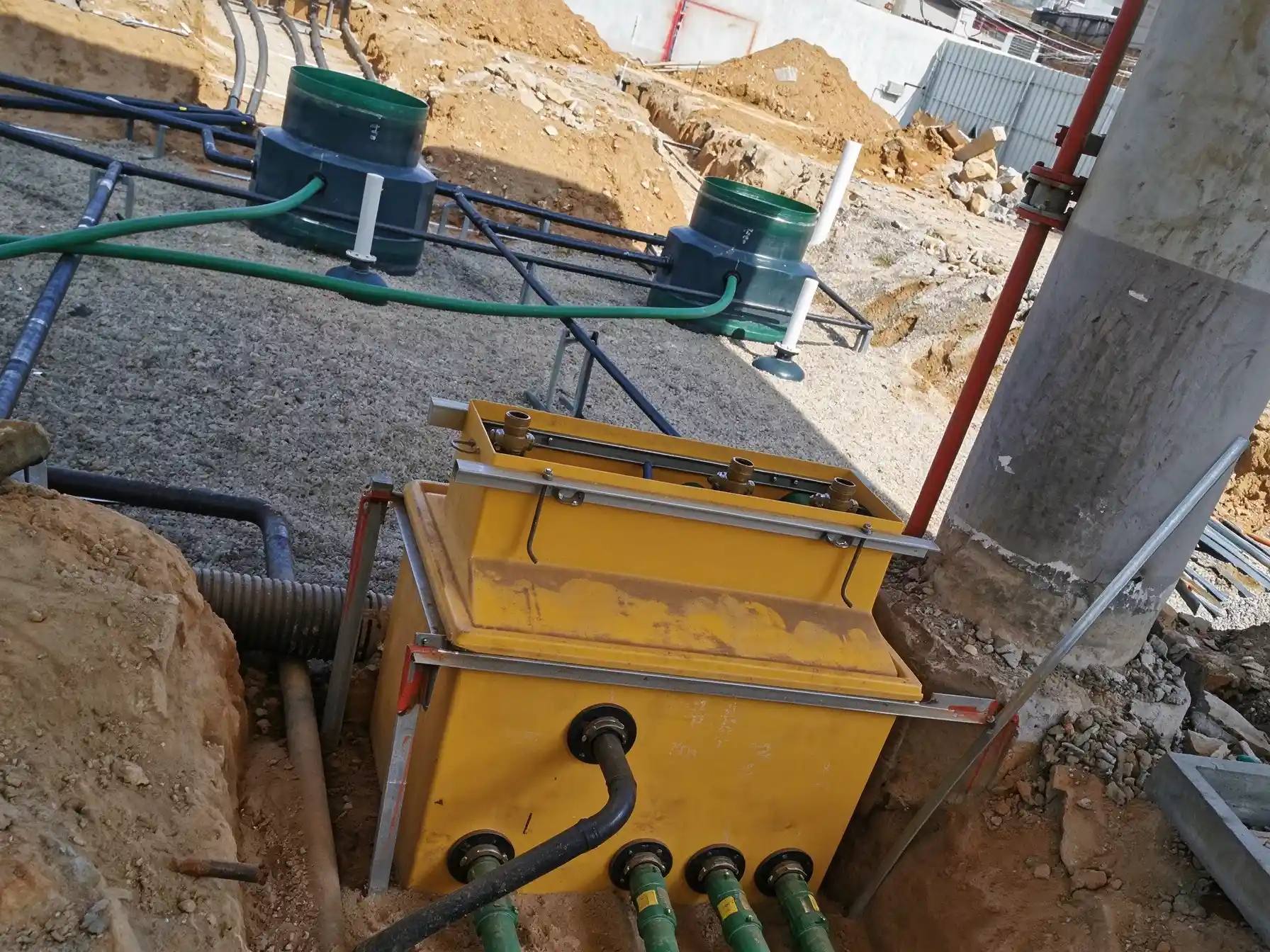
5. Backfilling Before Required Inspections and Tests
One of the most important underground fuel tank installation checks is confirming that all required inspections and tests have been completed before the tank and piping are covered.
Once the tank and piping are buried, accessing connections or repairing damaged components may require excavation. If required inspections and tests have not been completed, a relatively small installation problem can become a costly construction issue.
Potential mistakes include:
- Backfilling before required inspections are complete
- Skipping specified tank or piping tightness tests
- Using unsuitable backfill material
- Leaving voids around the tank
- Uneven placement or inadequate support
- Allowing heavy equipment to damage buried components
How to prevent it:
Establish a formal pre-backfilling inspection hold point in the project schedule.
Before covering the system, verify that the inspections and tests required by the approved design, manufacturer, and local authority have been completed and documented.
Check the tank, piping, joints, protective coatings, and relevant containment or monitoring components. Confirm that the specified backfill material and placement procedure are being followed.
Do not apply a single testing procedure to every tank system. Test methods and acceptance criteria must be appropriate for the equipment and comply with the manufacturer’s instructions and applicable standards.
6. Incorrect Installation of Pumps, Valves, and Tank Accessories
An underground fuel tank is only one part of the complete fuel storage system. Pumps, valves, fittings, monitoring devices, and other accessories must also be correctly selected and installed.
Equipment compatibility should be confirmed before underground fuel tank installation reaches the final assembly stage. This helps prevent connection mismatches, procurement delays, and unnecessary modifications.
Problems can arise when components are purchased separately without confirming their compatibility with the tank and the rest of the system.
Examples include:
- Selecting a pump that does not match the system requirements
- Using incompatible connection sizes
- Installing valves in the wrong configuration
- Omitting required monitoring or containment components
- Failing to provide the specified access for inspection and maintenance
A poorly coordinated equipment package can result in installation delays, additional adapters, replacement purchases, or modifications to completed piping.
How to prevent it:
Prepare an equipment schedule before procurement. Confirm each component’s function, connection dimensions, material compatibility, operating requirements, and installation location.
For systems using a submersible pump, review the pump selection and installation requirements alongside the tank and product piping design. You can also read our guide to submersible pump vs. suction pump.
The goal is not simply to purchase individual products. It is to ensure that the equipment forms a compatible, complete system.
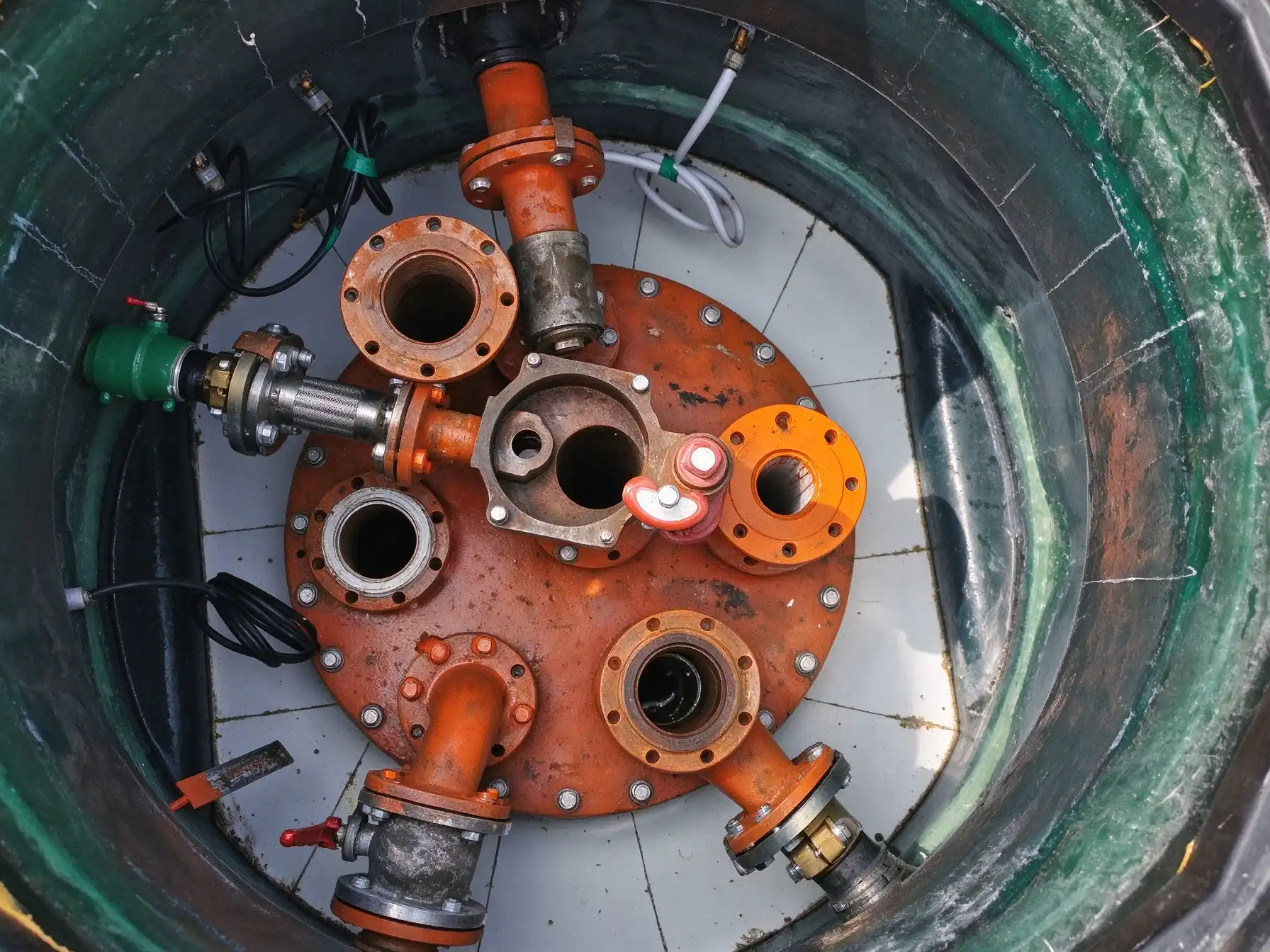
7. Overlooking Leak Detection and Corrosion Protection
A complete underground fuel tank installation plan should identify the required leak detection and corrosion protection systems before equipment procurement and site work begin.
An underground tank system may include monitoring equipment, secondary containment, corrosion-resistant materials, protective coatings, or cathodic protection, depending on the system design and applicable regulations.
Common mistakes include:
- Omitting required leak detection components
- Damaging protective coatings during installation
- Failing to verify specified corrosion protection
- Incorrectly connecting monitoring equipment
- Leaving inspection or testing records incomplete
These problems can affect environmental protection, regulatory compliance, and long-term operating reliability.
How to prevent it:
Confirm the required leak detection and corrosion protection arrangements before purchasing the tank system.
For double-wall tanks, verify the specified interstitial monitoring arrangement and associated components. For steel tanks and piping, check the approved corrosion protection design and the requirements for inspection or testing.
Ensure that monitoring equipment is installed, checked, and documented according to the manufacturer’s instructions and applicable project requirements.
The exact requirements vary by country and installation type. Contractors should confirm local authority requirements rather than assume that one country’s rules apply everywhere.
Underground Fuel Tank Installation Checklist Before Backfilling
Use this underground fuel tank installation checklist before backfilling to confirm that the major construction, piping, equipment, and inspection requirements have been addressed.
- Tank model, dimensions, and condition verified
- Excavation, foundation, and bedding accepted
- Tank position, elevation, and orientation checked
- Required anchoring or flotation protection verified
- Tank coating and protective components inspected
- Fuel piping and connections checked
- Pumps, valves, and accessories installed as specified
- Required tank and piping tests completed
- Leak detection and corrosion protection checked
- Inspection records and test results documented
- Backfill material and placement method confirmed
This checklist is a project coordination aid, not a substitute for a formal inspection plan. The responsible engineer and installation team must determine which checks and tests apply to the specific system.plan. The responsible engineer and installation team must determine which checks and tests apply to the specific system.
Frequently Asked Questions (FAQ)
1. How does leak detection work for underground fuel tanks?
Common leak detection methods include interstitial monitoring for double-wall tanks, automatic tank gauging (ATG), pressure testing, and continuous leak sensors. The selected system must comply with local environmental regulations and be installed and tested before backfilling. Regular routine testing is also required after the gas station goes live.
2. How to prevent corrosion on underground steel fuel tanks?
Corrosion protection options include factory-applied external coating, cathodic protection systems, proper bedding material, and regular inspection. Damaged coating during transportation or installation is one of the top causes of external corrosion. All protective layers must be fully inspected before backfilling.
3. Do all fuel tank accessories work with any brand of underground storage tank?
No. Pumps, valves, fittings and level probes must match the tank’s nozzle size, material rating, pressure rating and fuel compatibility. Mismatched accessories will cause installation delays, leaks or system failure. We help customers verify component compatibility before procurement.
How to Reduce Underground Fuel Tank Installation Costs
The most effective way to reduce underground fuel tank installation costs is to resolve construction, equipment, and compatibility issues before the system is buried.
Three practices are especially valuable.
First, coordinate the equipment package early. Confirm tank outlets, pump requirements, piping dimensions, valves, and monitoring components before procurement. Planning the installation as a complete system can help identify compatibility issues before they become expensive site problems.
Second, create clear inspection checkpoints. Assign responsibility for checking the tank, connections, protective systems, and required tests before backfilling.
Third, keep installation documentation complete. Approved drawings, product specifications, inspection records, and test results help the project team identify discrepancies before they become expensive repairs.
The Petroleum Equipment Institute’s RP100: Installation of Underground Liquid Storage Systems provides industry guidance on underground storage system installation. Contractors should consult the applicable edition and local requirements for their projects.
The US EPA also provides resources for underground storage tank owners and operators, including information relevant to installation, operation, and compliance.
Final Takeaway
Underground fuel tank installation mistakes can affect more than the tank itself. Incorrect excavation, poor anchoring, damaged coatings, incompatible piping, incomplete testing, and missing monitoring components can all lead to additional work, project delays, and higher construction costs.
A successful underground fuel tank installation depends on coordinating the tank, pump, piping, valves, monitoring equipment, and installation requirements as one complete system. Careful planning, equipment compatibility checks, and inspections before backfilling can help contractors avoid preventable problems.
If you are planning a new gas station or sourcing equipment for an underground fuel storage project, contact our team to discuss your equipment requirements and component compatibility before procurement.procurement.