
Fuel Dispenser Solenoid Valve Problems: Causes, Troubleshooting and Solutions
News 2026年 10月 12日 10
When a fuel dispenser frequently fails to deliver fuel after lifting the nozzle, dispenses fuel too slowly, continues dispensing after nozzle shutoff, shows abnormal metering, or switches flow stages incorrectly, fuel dispenser solenoid valve problems may be one of the main causes. Common issues include a sticking two-stage solenoid valve, component aging, electrical faults, and incompatible replacement parts. As a precision control component in a fuel dispenser, the solenoid valve plays an important role in fuel flow, metering accuracy, and safe shutoff.
Maintenance technicians sometimes mistake pump failures, clogged filters, restricted piping, or control board signal problems for a faulty solenoid valve. Replacing parts without identifying the actual cause can increase maintenance costs. This guide covers common fuel dispenser solenoid valve faults, their causes, troubleshooting procedures, repair solutions, and key selection parameters. It also discusses compatibility considerations for Hengxin, Beilin, Zhongsheng, Zhengxing, and other dispenser models. Actual compatibility must be confirmed against the original equipment specifications.
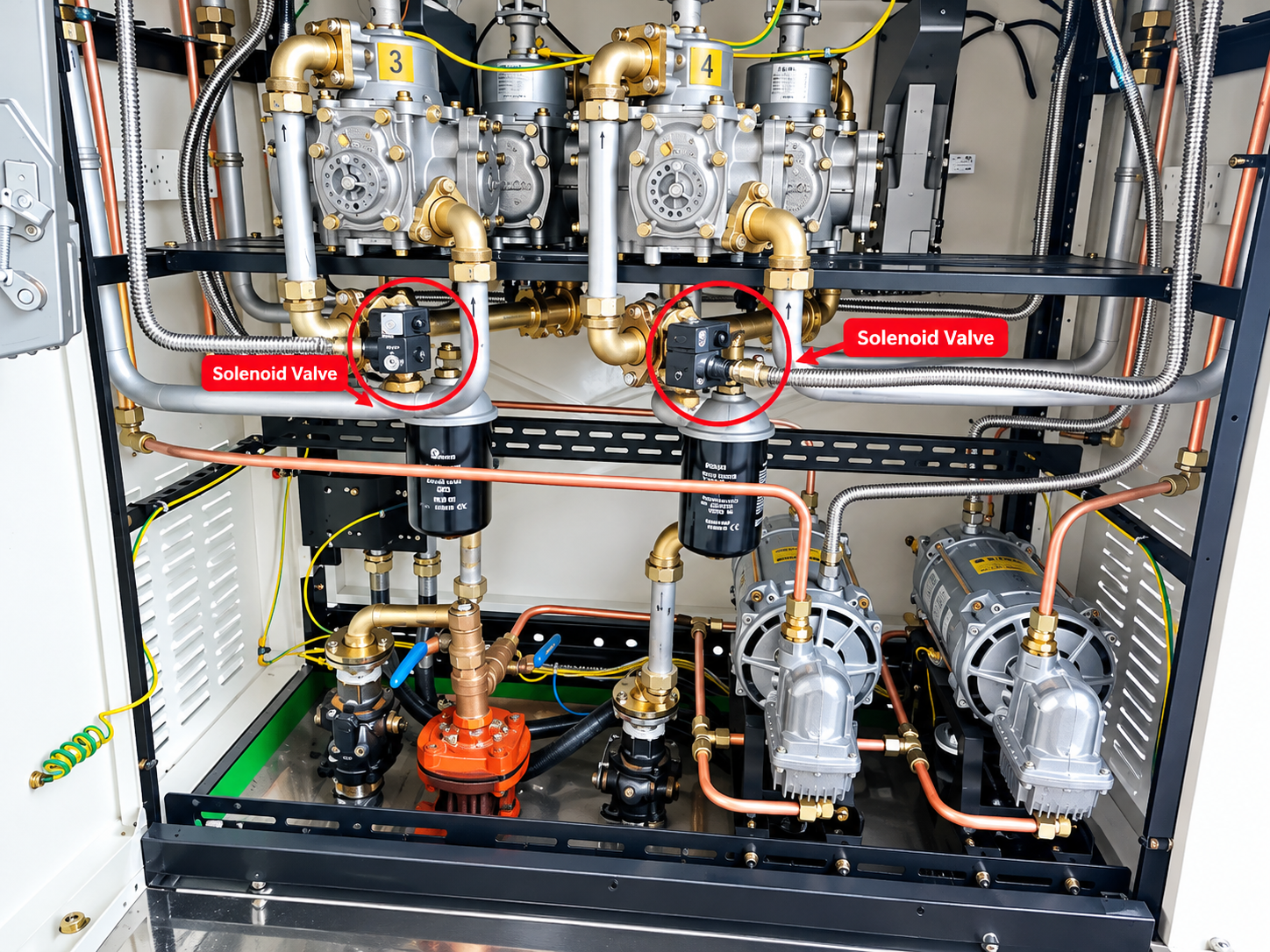
1. Key Functions of a Fuel Dispenser Solenoid Valve
Many fuel dispensers use an explosion-protected, two-stage solenoid valve. Unlike a basic on/off valve, a two-stage valve can help regulate fuel flow at different stages of dispensing, supporting efficient fueling and accurate preset delivery.
Its main functions include:
- Stable startup flow: The system begins with a lower flow rate to help reduce sudden flow changes and the risk of fuel overflow during startup.
- High-flow dispensing: The valve switches to a higher flow stage during normal fueling to improve dispensing efficiency.
- Low-flow finishing: As the preset volume or amount approaches completion, the system switches back to a lower flow rate to support more accurate metering.
- Fuel shutoff: When the control system removes the operating signal, the valve is designed to return to its specified shutoff state.
Incorrect metering, unstable flow, continued fuel delivery after shutoff, and dispensing interruptions can be associated with abnormal solenoid valve operation. However, the entire fuel supply and control system should be checked before confirming the root cause.
2. Five Common Fuel Dispenser Solenoid Valve Problems
The following sections cover five common fault types, including symptoms, possible causes, troubleshooting steps, and practical solutions.
Fault 1: No Fuel Delivery Even Though the Pump Runs
Symptoms: The dispenser appears ready for operation, the pump runs without unusual noise, but no fuel is delivered.
Possible causes: A burned-out coil, broken wiring, a valve core stuck by fuel deposits, a damaged diaphragm, or a control board that does not provide the required output signal.
Troubleshooting steps:
- Use a multimeter according to the manufacturer’s service procedure to check whether the solenoid coil receives the specified voltage and control signal.
- If the correct signal is present but the valve does not actuate, inspect the coil and magnetic core for damage or sticking. Replace the coil assembly if it is confirmed defective and the design permits separate replacement.
- If the expected voltage is absent, inspect the control board, wiring, and connectors. The fault may be in the electrical control circuit rather than the valve body.
- If the electrical supply is correct but fuel still does not flow, have a qualified technician inspect the valve core, spring, and diaphragm according to the manufacturer’s approved procedure.
Solutions: Remove contamination using an approved cleaning procedure, replace aged diaphragms or springs where permitted, install a compatible explosion-protected coil with the correct electrical rating, and secure loose wiring terminals.
Fault 2: Slow Fuel Dispensing and Insufficient Flow
Symptoms: Fuel can be dispensed, but the flow rate is noticeably lower than normal. Dispensing takes longer, and the problem may become more obvious when several dispensers operate simultaneously.
Possible causes: The high-flow valve stage does not open correctly, the internal flow passage is restricted, the diaphragm is partially stuck, or pressure-related settings are abnormal.
Important distinction to avoid misdiagnosis:
- Only one dispenser has slow flow: Possible causes include the solenoid valve, nozzle, hose, or that dispenser’s filter.
- Several dispensers across the station have slow flow: Possible causes include insufficient submersible pump pressure, a restricted main pipeline, or inadequate fuel supply.
Recommended troubleshooting sequence:
Nozzle and hose → Filter → Solenoid valve → Flow meter → Fuel piping → Submersible pump.
Solutions: Test the operation of the high-flow and low-flow coils separately where applicable, clean the valve passage using an approved procedure, restore pressure settings to the manufacturer’s specified values, and replace clogged or worn components as needed.
For more detailed guidance on diagnosing reduced dispensing speed, read our article on fuel dispenser slow flow.
Fault 3: Fuel Continues to Flow After Nozzle Shutoff
Symptoms: Fuel continues to drip or flow after the nozzle is returned to its holder. The dispenser or connected transaction system may continue registering delivery, potentially causing fuel losses and customer complaints.
Possible causes: Contamination on the valve seat prevents proper sealing, the diaphragm has aged or deformed, the return spring no longer operates correctly, or a pressure adjustment component has been loosened.
Troubleshooting and solutions:
Inspect the valve seat and sealing surfaces for contamination or damage. Where the manufacturer’s repair procedure permits, clean the sealing surfaces and replace the diaphragm using a compatible repair kit. Restore the specified pressure settings and do not loosen or adjust pressure components arbitrarily.
If the dispenser cannot reliably stop fuel delivery, take it out of service and arrange qualified inspection. Check the valve, electrical control signal, and other relevant dispensing components before returning the equipment to operation.
Fault 4: Abnormal Two-Stage Flow Switching
Symptoms: Fuel flow changes unexpectedly during dispensing, the delivery rate fluctuates, preset delivery becomes inconsistent, or the final dispensing stage behaves abnormally.
Possible causes: One of the two solenoid coils has failed, switching wiring has a poor connection, the valve mechanism sticks in one direction, or the control board parameters are incorrect.
Solutions: Test the two coil circuits separately according to the manufacturer’s procedure, verify the wiring assignments, inspect and clean the valve mechanism where permitted, and restore the specified factory control parameters.
Correct operation depends on the actual dispenser and valve configuration. Do not assume that two-stage valves from different models use identical electrical connections or switching settings.
Fault 5: Intermittent Solenoid Valve Problems
Symptoms: The dispenser operates normally at some times but fails to deliver fuel or behaves abnormally at others. Vibration and temperature changes may coincide with recurring faults.
Possible causes: Loose wiring connections, an aging coil, a fatigued spring, or fuel deposits that cause intermittent valve sticking.
Solutions: Secure defective electrical connections using approved procedures, replace confirmed defective coils and worn elastic components, and maintain fuel filtration according to the equipment manufacturer’s schedule.
If the same fault repeatedly returns, investigate fuel cleanliness, the electrical control system, and the wider fuel supply system instead of repeatedly replacing the same part.
3. Complete Fuel Dispenser Troubleshooting Logic
To avoid unnecessary replacement and reduce maintenance costs, follow a systematic diagnostic sequence, moving from external components to internal components and from simple checks to more complex tests.
Recommended sequence:
Nozzle and hose inspection → Filter blockage check → Solenoid valve inspection → Flow meter inspection → Fuel pipeline inspection → Pump performance test → System parameter verification.
If only one dispenser is affected, the problem may be related to a component specific to that unit. If several dispensers experience the same problem at the same time, investigate shared components such as the fuel supply system, pump, or main piping.
These patterns are useful diagnostic clues, but they do not replace actual testing.
For installation, piping, and electrical safety considerations, see our guide to fuel dispenser installation, piping, and electrical safety.
4. Key Fuel Dispenser Solenoid Valve Specifications
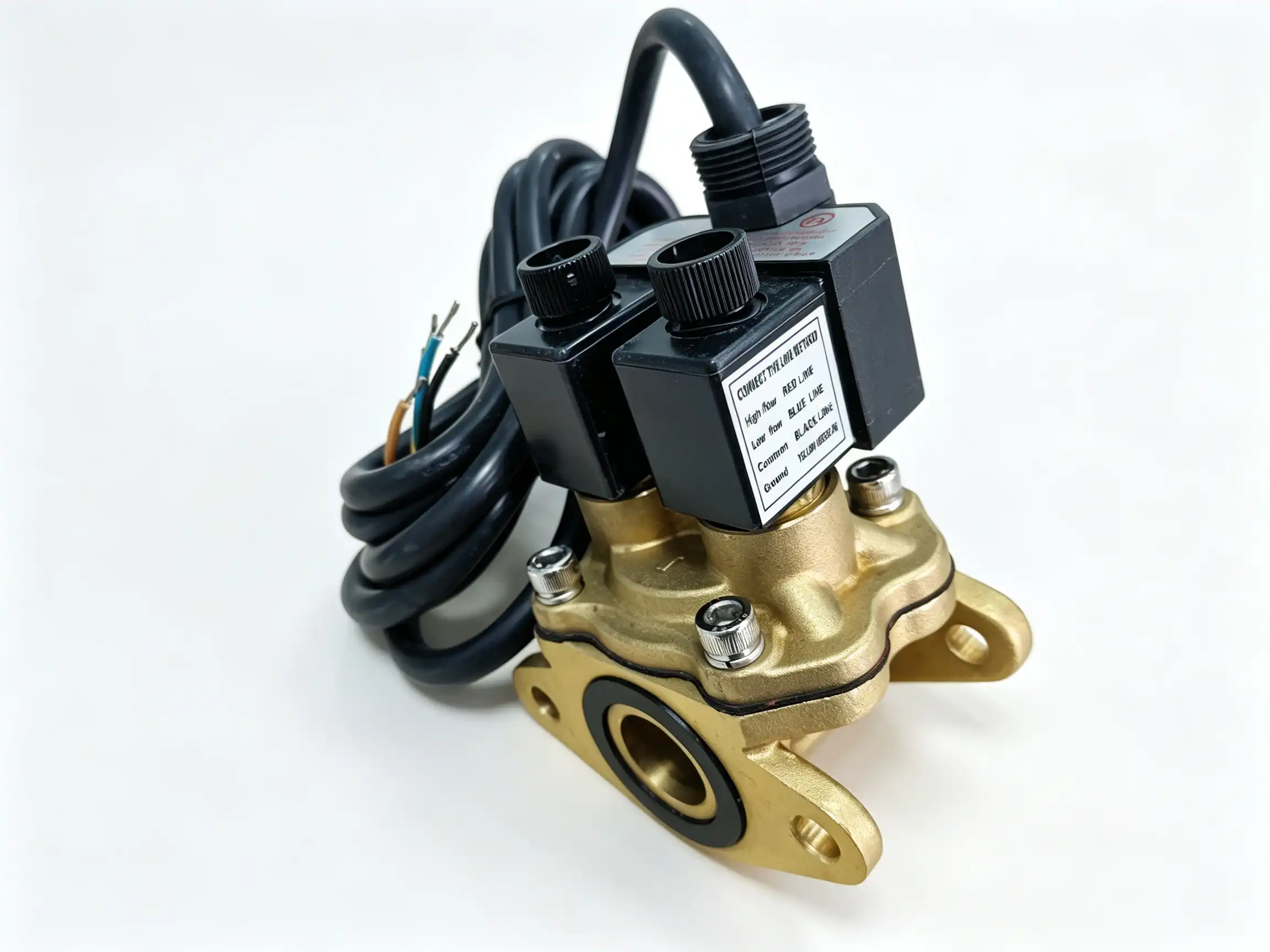
Before purchasing a replacement fuel dispenser solenoid valve, check its electrical rating, connection structure, flow capacity, fuel compatibility, explosion protection, and dispenser model.
The following table summarizes the reference specifications and compatibility information in this guide. These values are not universal standards for every dispenser. Confirm the exact requirements against the original valve label and manufacturer documentation.
| Parameter | Reference specification | Important notes |
|---|---|---|
| Common coil voltage | 24 V DC / 220 V AC; some models use 12 V DC | Voltage and coil type must match the original equipment. |
| Connection size and structure | 6-fen connection (DN20, G3/4), flange base, or flange-to-thread configuration | Connection structures are not automatically interchangeable. Verify dimensions and thread standards. |
| Reference flow range | Low flow: 2–4.5 L/min; high flow: 40–60 L/min | Confirm the actual flow requirements for the specific dispenser and valve. |
| Fuel compatibility | Gasoline, diesel, and kerosene, subject to the valve specification | Non-standard methanol-containing fuels may damage incompatible diaphragm and sealing materials. |
| Explosion protection | The source specification lists Ex mb II T3/T4 Gb | Verify the complete marking, certification, and suitability for the intended installation. |
| Dispenser compatibility | Hengxin, Beilin, Zhongsheng, Zhengxing, and other models listed in the source | Confirm the exact model, original part number, and connection and electrical specifications before replacement. |
Important: A reference specification is not sufficient to confirm compatibility. Always verify the original equipment requirements before ordering or installing a replacement valve.
5. How to Avoid Common Solenoid Valve Selection Mistakes
Incorrect replacement parts can cause electrical failures, installation problems, or unreliable fuel flow. Pay attention to the following issues when purchasing a fuel dispenser solenoid valve.
Choosing a valve without checking the voltage: A 24 V DC coil and a 220 V AC coil may look similar, but they are not interchangeable. An incorrect electrical rating can damage the coil or prevent the valve from operating properly.
Confusing connection types: A flange-base valve, a flange-to-thread valve, and a double-threaded valve may have different installation requirements. Check the original dimensions, thread standards, and mounting arrangement before ordering.
Using an unsuitable valve: A standard water valve or an industrial hydraulic valve without the required fuel compatibility and explosion protection should not be substituted for a suitable fuel dispenser valve.
Ignoring the flow-control design: A single-stage valve cannot automatically perform the same low-flow finishing function as a two-stage valve designed for that purpose. Match the replacement to the original dispenser configuration.
For assistance with fuel dispenser spare parts and equipment sourcing, you can contact our team with the dispenser model, valve specifications, and photos of the existing component.
6. Routine Maintenance to Reduce Solenoid Valve Failures
Fuel contamination and insufficient maintenance can contribute to solenoid valve problems. A regular maintenance program helps reduce avoidable faults.
- Replace fuel dispenser filters according to the manufacturer’s schedule and actual operating conditions to limit the entry of contaminants into the valve.
- Inspect the valve core and seat at the intervals specified by the manufacturer. Clean internal components and replace aged diaphragms or seals only through approved maintenance procedures.
- Inspect and secure electrical terminals according to the equipment service instructions to reduce intermittent connection problems caused by vibration.
- If faults recur, investigate fuel cleanliness and the wider supply system instead of repeatedly replacing the same components.
Preventive maintenance should follow the original equipment manufacturer’s recommendations. Do not disassemble the valve or adjust pressure settings unless the relevant procedure permits it.
7. Frequently Asked Questions About Fuel Dispenser Solenoid Valve Problems
Q1: Does slow fuel dispensing always mean the solenoid valve is faulty?
No. A clogged filter, insufficient pump pressure, restricted piping, a kinked hose, or a sticking flow meter can also reduce the dispensing rate. Follow a systematic diagnostic sequence before deciding to replace the valve.
Q2: Can a fuel dispenser solenoid valve be repaired, or must it be replaced?
Many faults may be repairable when the valve design and manufacturer permit component-level servicing. A defective coil may be replaced separately, an approved diaphragm repair kit may address certain sealing problems, and permitted cleaning procedures may resolve some sticking issues. A cracked valve body or severe wear may require replacement of the complete valve.
Q3: Can solenoid valves from different fuel dispenser brands be used interchangeably?
Some models from Hengxin, Beilin, Zhongsheng, Zhengxing, and other manufacturers may share compatible configurations. However, brand names alone do not establish interchangeability. Confirm that the voltage, connection dimensions, flow specifications, valve design, and required safety approvals match before installing a replacement.
8. Solenoid Valve Selection and After-Sales Support
If you need assistance with fault diagnosis, model identification, voltage verification, or compatibility checks, contact us with your dispenser model and the symptoms you have observed.
Xing Zhong Yuan Energy supports fuel station equipment sourcing and supply chain coordination, including fuel dispenser two-stage explosion-protected solenoid valves, compatible diaphragm repair kits, replacement coils, and other fuel station equipment.
Provide the existing valve’s model, electrical rating, connection details, and photos where available. This information helps us assess compatibility and identify suitable parts for problems such as slow dispensing, no fuel delivery, continued flow after shutoff, and unstable metering.
Visit our Contact Us page to discuss your equipment and sourcing requirements.