
How to Choose Underground Fuel Storage Tanks: Steel vs Fiberglass vs S/F Double-Wall Tanks
News 2026年 10月 24日 46
Many of our partners often ask us: should underground fuel storage tanks be steel or fiberglass?
In this guide, we compare the pros and cons of mainstream underground storage tank materials on the market, with a focus on S/F double-wall tanks (steel inner tank with fiberglass outer shell), which are widely adopted for new gas station construction. We supply all three tank types. Your final choice depends on your project conditions, local regulations and budget.
Underground Fuel Storage Tanks: Material Comparison
| Comparison Item | Single-Wall Steel Tank | All-FRP Fiberglass Tank | S/F Double-Wall Tank (Steel Inner + Fiberglass Outer) |
|---|---|---|---|
| Basic Structure | Single-layer steel tank body | Fiberglass reinforced composite material | Steel inner tank, fiberglass outer shell |
| Corrosion Resistance | Depends on anti-corrosion coating and protection system | Fiberglass material is corrosion-resistant | Outer fiberglass shell provides an extra corrosion-resistant barrier |
| Structural Feature | Steel offers high mechanical strength | Performance depends on composite design and reinforcement | Combines structural advantages of steel inner tank and fiberglass outer shell |
| Secondary Containment Barrier | Single-layer design with no secondary tank wall | Depends on whether the tank itself is double-walled | Double-wall construction; interlayer design to be verified |
| Leak Detection | Suitable monitoring system required if local regulations mandate it | Depends on tank construction | Interlayer leak detection can be configured per design |
| Maintenance Requirement | Focus on corrosion protection and regular inspection | Follow inspection & maintenance requirements from manufacturer | Maintain per full double-wall system specifications |
| Initial Cost | Varies by size and anti-corrosion solution | Varies by capacity and structure | Varies by design, certification and accessory configuration |
| Key Considerations | Anti-corrosion measures and regulatory compliance | Composite design, site condition and installation requirements | Double containment protection, leak monitoring and system compatibility |
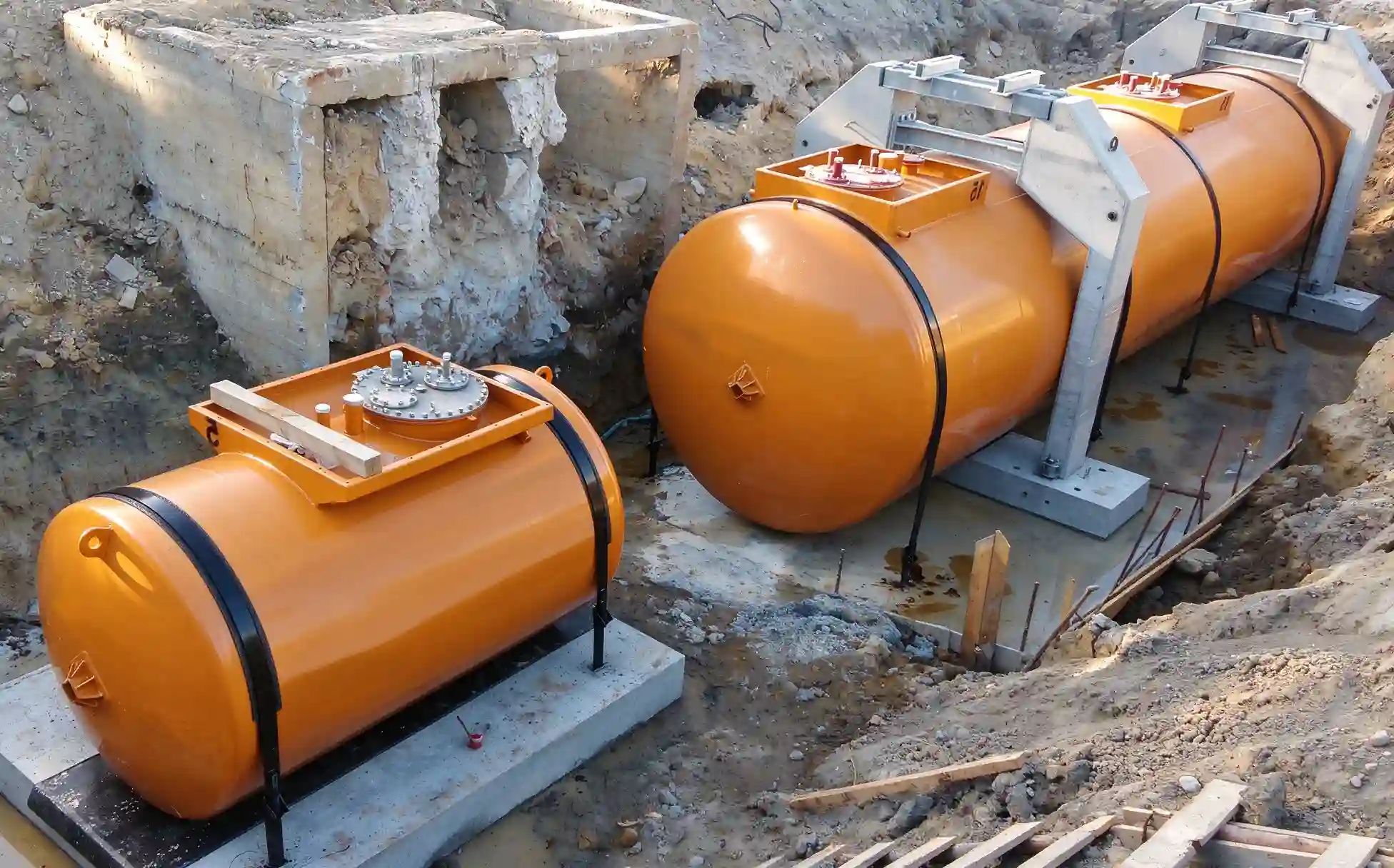
1.Single-Wall Steel Underground Fuel Storage Tanks
Single steel tanks are the traditional fuel storage solution.
- ✅ Advantages Low upfront cost, high structural strength, good pressure resistance, easy inspection and on-site repair
- ❌ Disadvantages Prone to underground rusting; frequent inspection of anti-corrosion coating is required, with inherent leakage risk
- 👉 Best for: Short-term temporary fuel storage, budget-limited projects with a formal ongoing maintenance plan
2. All-FRP Fiberglass Tanks
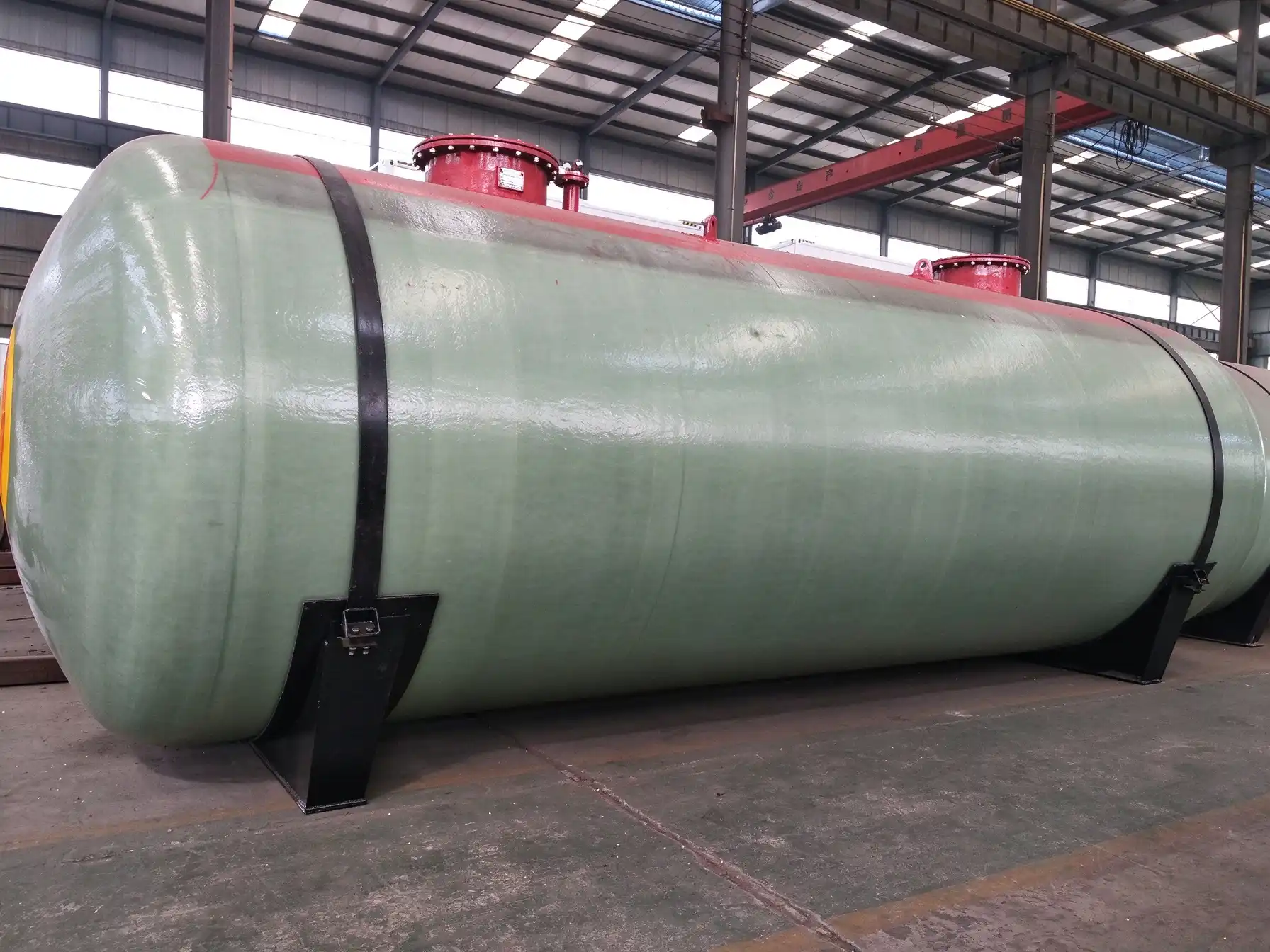
All-fiberglass (FRP) tanks are built primarily for corrosion resistance.
- ✅ Advantages Rust-free, excellent corrosion resistance, light weight and low routine maintenance workload
- ❌ Disadvantages Lower mechanical strength than steel; vulnerable to sharp impact and uneven backfill; higher cost than single steel tanks
- 👉 Best for: Sites with highly corrosive soil, long-term fuel storage and low risk of heavy physical impact
3. S/F Double-Wall Underground Fuel Storage Tanks(Steel Inner + Fiberglass Outer)
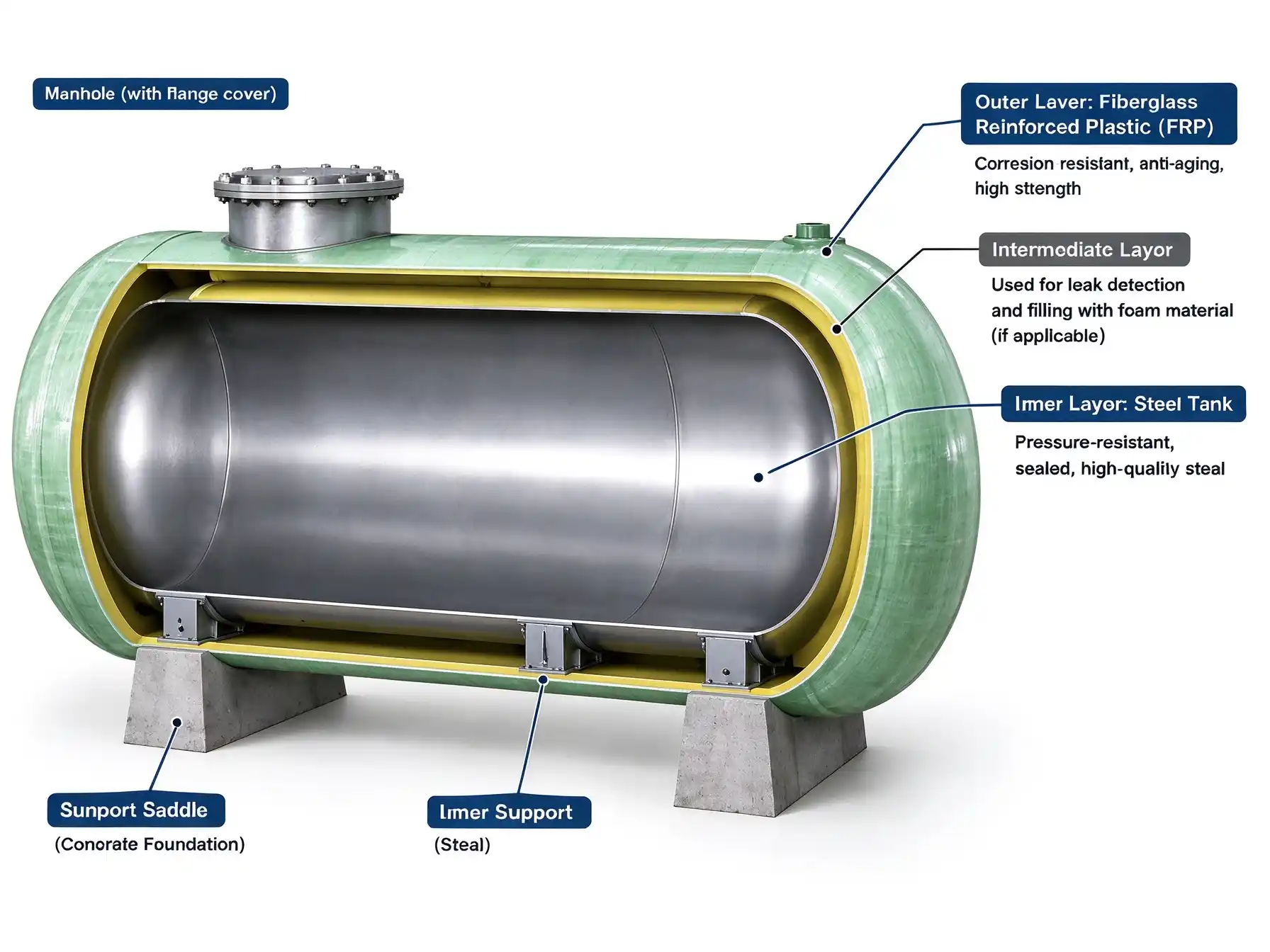
This is the mainstream solution for modern gas station projects. It combines the high strength of steel and the corrosion resistance of fiberglass.
- ✅ Advantages
- Service life up to 30 years, 5–10 times longer than ordinary single-wall tanks
- Double interlayer structure compatible with leak detection systems for improved safety and environmental protection
- Inner steel liner guarantees pressure-bearing strength; outer fiberglass shell isolates soil corrosion
- Much less maintenance: only visual inspection of the fiberglass outer shell once every 3 years
- Supports remote leak monitoring and digital inspection
- Minimizes risks of fuel leaks and soil contamination
- Simple installation to shorten construction schedules
- 👉 Best for: Permanent commercial gas stations, fuel dispensing sites, and projects subject to strict local environmental and safety rules
5 Factors for Choosing Underground Fuel Storage Tanks
Beyond material and structure, you need to evaluate these five critical points before purchasing:
- Fuel Type & Tank Capacity Confirm whether the tank will store gasoline, diesel or other fuels. Define tank capacity based on your station’s fuel demand, delivery frequency and compartment requirements.
- Soil & Groundwater Conditions Soil corrosivity, groundwater level, buoyancy and site load all affect tank design and installation. Foundations, anchoring and anti-flotation measures should be specified by your project engineer according to site survey data.
- Local Regulations & Product Certifications Countries and regions have different standards for underground fuel storage regarding structure, environmental protection and safety. Verify applicable standards, required certifications and technical documentation before ordering.
- Leak Monitoring & Supporting Equipment For double-wall tanks, confirm that the interlayer works with your chosen leak detection method, and check compatibility with level probes, leak sensors and monitoring panels. Please note: Tank level monitoring tracks fuel inventory inside the tank, while interlayer leak monitoring detects releases inside the containment space. These two systems cannot replace each other.
- Nozzle & Installation Interface Requirements Check specifications for manholes, inlet/outlet ports, submersible pumps, level gauges, vent lines and underground fuel piping before purchase. Confirm interfaces and layout in advance to avoid fitting conflicts during field installation.
You can also read our related article:to learn more about matching tanks with underground piping systems.
Final Conclusion
There is no universally “best” tank — only the best tank for your specific project.
- Limited budget + regular maintenance plan → Single-wall steel tank
- Highly corrosive soil + low impact risk → All-FRP fiberglass tank
- Long-running gas station with strict safety & environmental compliance → S/F steel-fiberglass double-wall tank (our top recommendation)
We supply all three types of underground fuel storage tanks. Share your required tank volume, fuel type, local certification standards and site conditions with us, and our team will recommend the proper solution and prepare a quotation for you.