
Flame Arrester Vent Blockage: Why Fuel Unloading Stops
News 2026年 11月 10日 22
Recently, a gas station owner called us with an urgent problem. A fuel tanker had arrived at the station, but the fuel could not flow into the underground storage tank. The unloading process had come to a complete stop, leaving the owner frustrated and worried.
After inspection, we discovered that the problem was caused by a small but often overlooked component on top of the tank: the flame arrester vent. Its internal flame arrester mesh had become almost completely blocked.
After replacing it with a new anti-clogging flame arrester vent, normal tank ventilation was restored, and fuel unloading was completed successfully.
Gas station operators usually pay more attention to major equipment such as fuel dispensers, automatic tank gauges (ATG), submersible pumps, and vapor recovery systems. However, the flame arrester vent installed on top of an underground tank is also important for maintaining proper tank ventilation and supporting normal fuel unloading.
A Real Case: Fuel Could Not Enter the Underground Tank
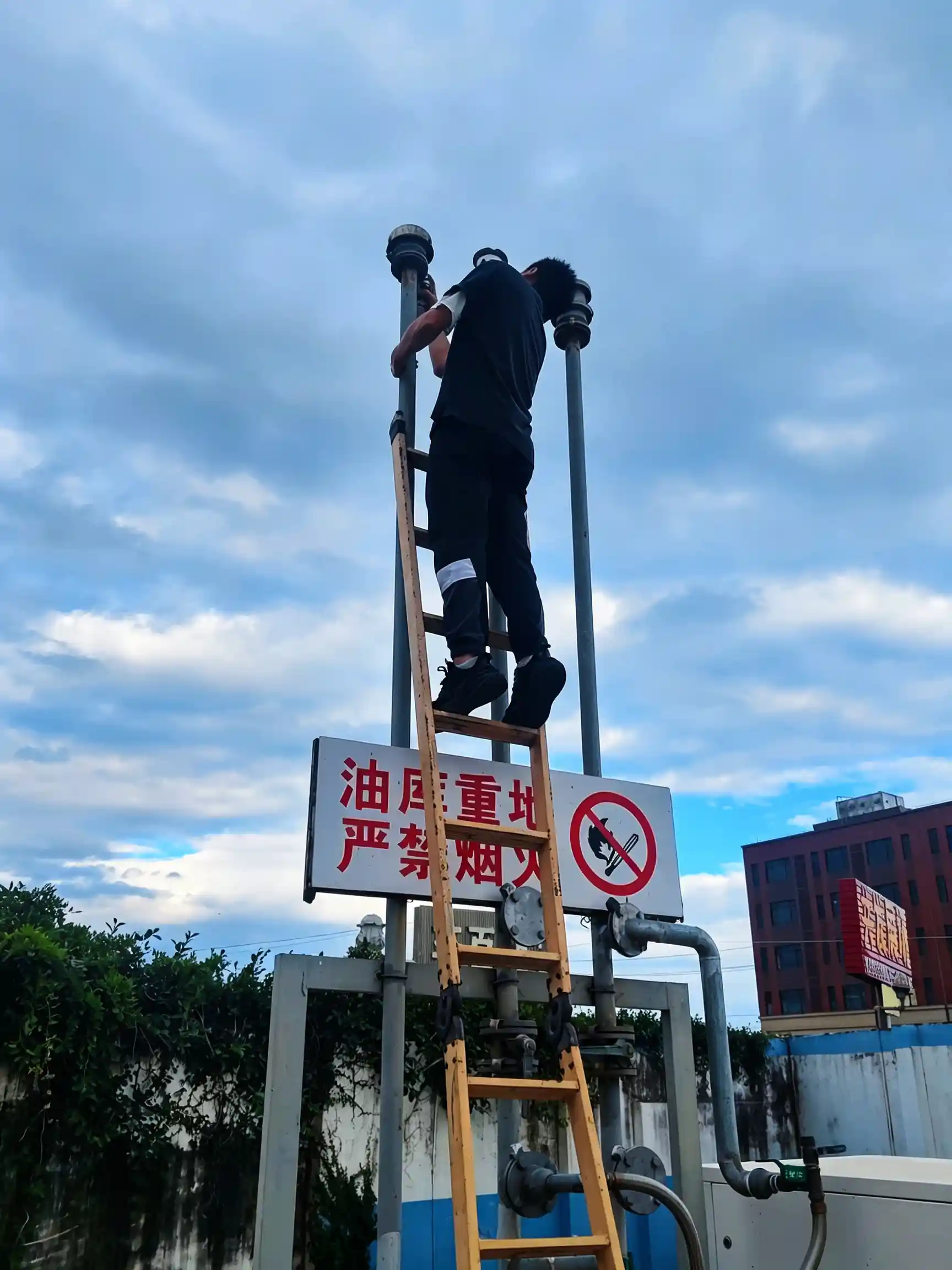
Early one morning, a local gas station owner called us in a hurry. A fuel tanker was already at the station, waiting to unload, but the fuel could not enter the underground storage tank.
The owner first checked the unloading hose, quick connectors, and overfill prevention valve. The tanker driver also inspected the truck’s equipment, but none of these checks solved the problem.
When our maintenance team arrived, we inspected the pipelines, valves, and tanker equipment step by step.
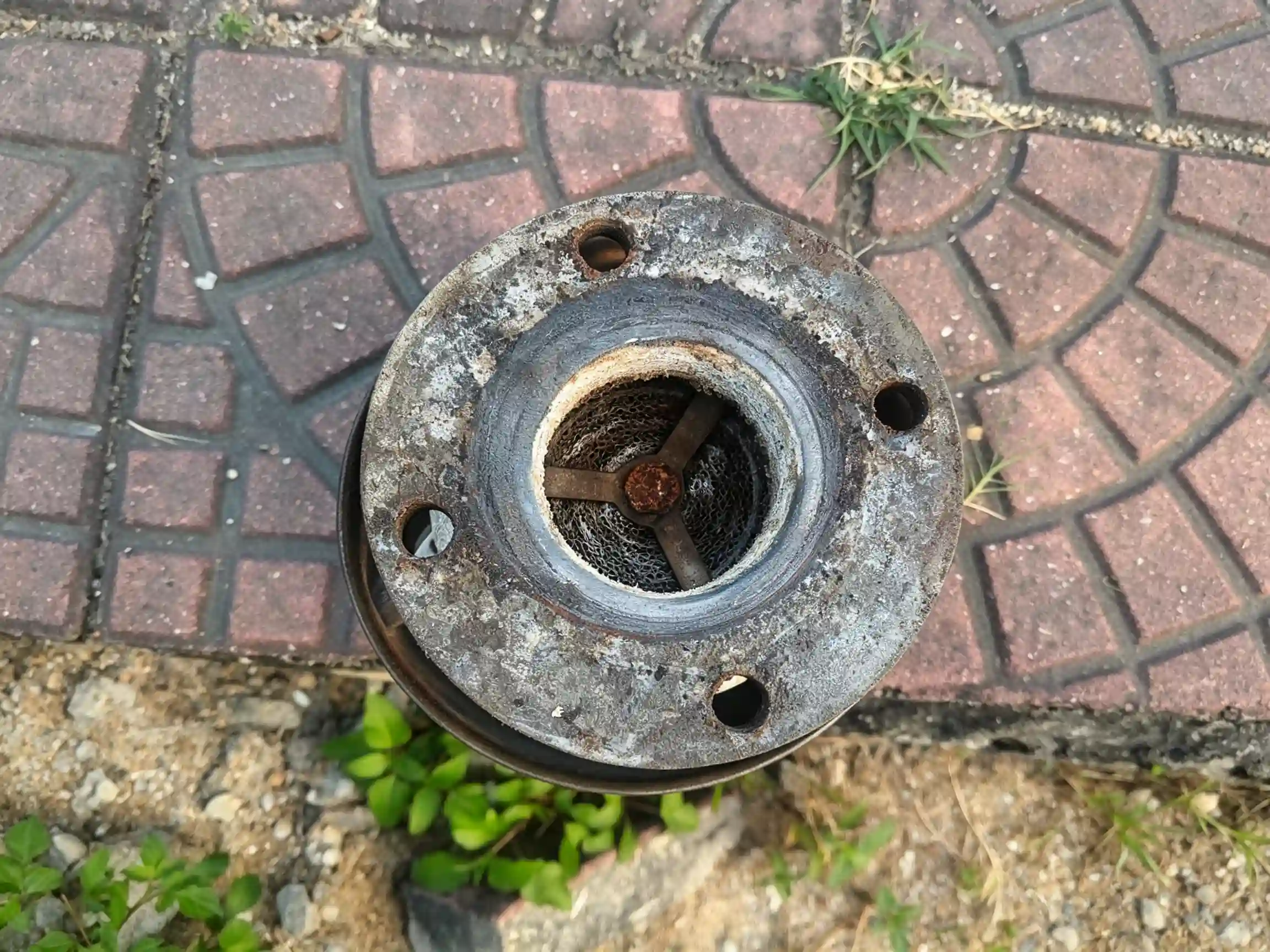
After ruling out these possible causes, we removed the flame arrester vent from the tank’s vent pipe. Finally, we found the problem.
The internal flame arrester mesh was heavily covered with oil deposits, dust, and rust particles. It was almost completely blocked, preventing air and vapor from passing through normally.
Why Can a Blocked Flame Arrester Vent Stop Fuel Unloading?
A flame arrester vent is exposed to outdoor conditions for long periods. Over time, several types of contaminants can affect its performance:
- Sticky oil deposits formed by condensed fuel vapors.
- Dust and debris entering from the surrounding environment.
- Rust particles caused by moisture and corrosion.
These contaminants gradually accumulate on the flame arrester mesh. As the openings become blocked, airflow through the vent system is restricted.
During fuel unloading, a large volume of fuel enters the underground storage tank. The air and vapor already inside the tank must be discharged through the vent pipe.
If the flame arrester vent becomes blocked, the displaced air and vapor cannot escape properly. Tank pressure may increase, restricting the incoming fuel flow and potentially causing the unloading process to stop.
This type of problem is easy to overlook during daily operations. Many station owners do not expect such a small component on top of a tank to affect the entire fuel receiving process.
For more information about underground tank protection and containment, see our guide to underground fuel tank secondary containment.
Why We Replaced the Flame Arrester Vent Instead of Cleaning It
The owner initially asked whether the old flame arrester vent could simply be removed, cleaned, and reused.
However, after disassembly, we found that the flame arrester mesh was not only heavily clogged but also corroded and deformed.
Even if we managed to remove the deposits, it would be difficult to guarantee that the original ventilation capacity and flame-arresting performance could be maintained.
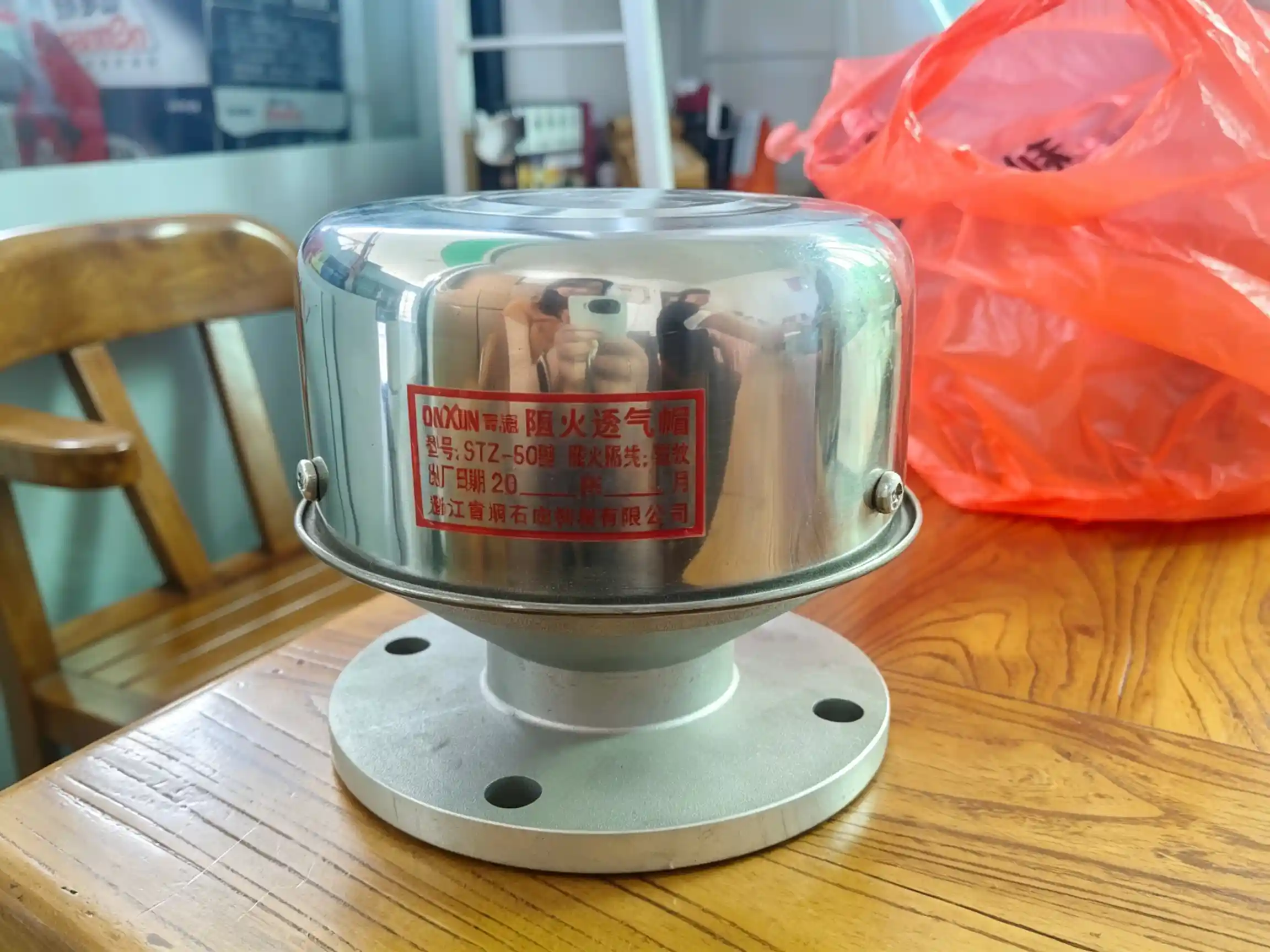
After discussing the options, we decided to replace it with a new anti-clogging flame arrester vent.
The new product features several structural improvements designed to address common blockage problems in traditional vent caps:
Higher Ventilation Capacity: Improves airflow and vapor discharge to meet the ventilation requirements of the tank system.
Corrosion-Resistant Flame Arrester Core: Improves resistance to corrosion and supports long-term outdoor operation.
Reduced Dirt Accumulation: An optimized structure helps reduce the accumulation of oil deposits and dust.
Easy Installation: When the flange dimensions match the existing pipeline, the unit can be replaced without major modifications to the original piping.
“Honestly, I never paid much attention to this small component. It was only when the tanker arrived and could not unload that I realized something was wrong. When we opened it, the inside was completely blocked.” — Gas Station Owner
Fuel Unloading Returned to Normal After Replacement
After the new flame arrester vent was installed, we checked the ventilation system on-site.
Normal ventilation was restored, and fuel from the tanker could flow into the underground storage tank successfully. The unloading process returned to normal.
This experience also reminded the owner that although a flame arrester vent looks like a minor accessory, it plays an important role in underground fuel storage and tank ventilation.
“Once the new unit was installed, the fuel started flowing into the tank again. It was a relief to get the problem solved.” — Gas Station Owner
Don’t Wait for a Blocked Flame Arrester Vent to Stop Your Gas Station Operations
A flame arrester vent usually does not become blocked overnight. Instead, its ventilation capacity gradually decreases as oil deposits, dust, and other contaminants accumulate.
At first, you may notice abnormal unloading speeds or unusual pressure changes during fuel delivery. If the problem is ignored, the blockage can become more severe and eventually interrupt the entire unloading process.
When a fuel tanker cannot unload properly, the station’s fuel inventory cannot be replenished on time. In serious cases, the gas station may even have to suspend fuel sales.
This can lead to lost business, tanker waiting charges, and additional maintenance costs.
We recommend regularly inspecting the flame arrester vent and its internal core. If you find blockage, corrosion, or deformation, arrange professional maintenance or replacement instead of waiting until fuel unloading is affected.
The inspection interval should follow the equipment manufacturer’s instructions and applicable local safety requirements.
Good Ventilation Must Never Compromise Flame Protection
Some gas station owners may ask: If ventilation capacity is improved, will flame protection performance be affected?
This is an important consideration when selecting a flame arrester vent.
A vent must provide sufficient airflow while also meeting the applicable flame-arresting safety requirements.
The flame arrester core must have the required flame-arresting performance, while the ventilation capacity must also meet the design requirements of the storage tank and its venting system.
The product should also be suitable for the intended fuel type and outdoor operating environment. Rain protection, dust resistance, and corrosion resistance are important factors to consider when choosing equipment.
Ventilation must be smooth, but fuel storage safety must always come first.
“Good ventilation is important, but there can be no compromise when it comes to flame protection and explosion safety.” — Gas Station Owner
Anti-Clogging Flame Arrester Vent for Underground Fuel Tanks
A flame arrester vent may look insignificant, but it plays an important role in tank ventilation, pressure balance, and normal fuel unloading.
The case above is a good example of how a small component can cause a major operational problem.
We supply flame arrester vents suitable for underground fuel tank vent pipes, subject to the required connection dimensions and system design specifications.
Designed to address common dirt accumulation and blockage issues in traditional products, our vent features an optimized structure and can be used with conventional fuels and biodiesel blends that meet the product’s compatibility requirements.
Key Features:
- Improves tank ventilation and helps reduce unloading interruptions caused by blockage.
- Optimized structure helps reduce the accumulation of oil deposits and dust.
- Designed to balance ventilation capacity with flame-arresting safety requirements.
- Available with compatible flange connections for convenient replacement.
If your gas station is experiencing poor tank ventilation, difficult fuel unloading, or you are planning to replace an old flame arrester vent, feel free to send us the existing flange dimensions, site photos, and equipment requirements.
We can help you identify a suitable replacement solution for your underground fuel tank system.