
Static Grounding Alarm: Explosion-Proof Selection, Use and Troubleshooting Guide
News 2026年 10月 7日 12
During fuel loading and unloading, static electricity is an invisible but important safety risk. Tanker trucks, storage tanks and other metal equipment can accumulate static charges as fuel moves through pipes, pumps and loading systems.
If the grounding connection is poor, static electricity may not be discharged effectively. In an environment containing flammable fuel vapors, an uncontrolled static discharge can become an ignition hazard.
This is why many gas stations, oil depots, chemical plants and tanker loading areas use a static grounding alarm to monitor the grounding circuit.
But how does a static grounding alarm work? What is the difference between fixed and mobile models? How should the grounding clamps be connected? And what should you do if the alarm keeps beeping?
This guide covers the key points for equipment selection, operation and troubleshooting.
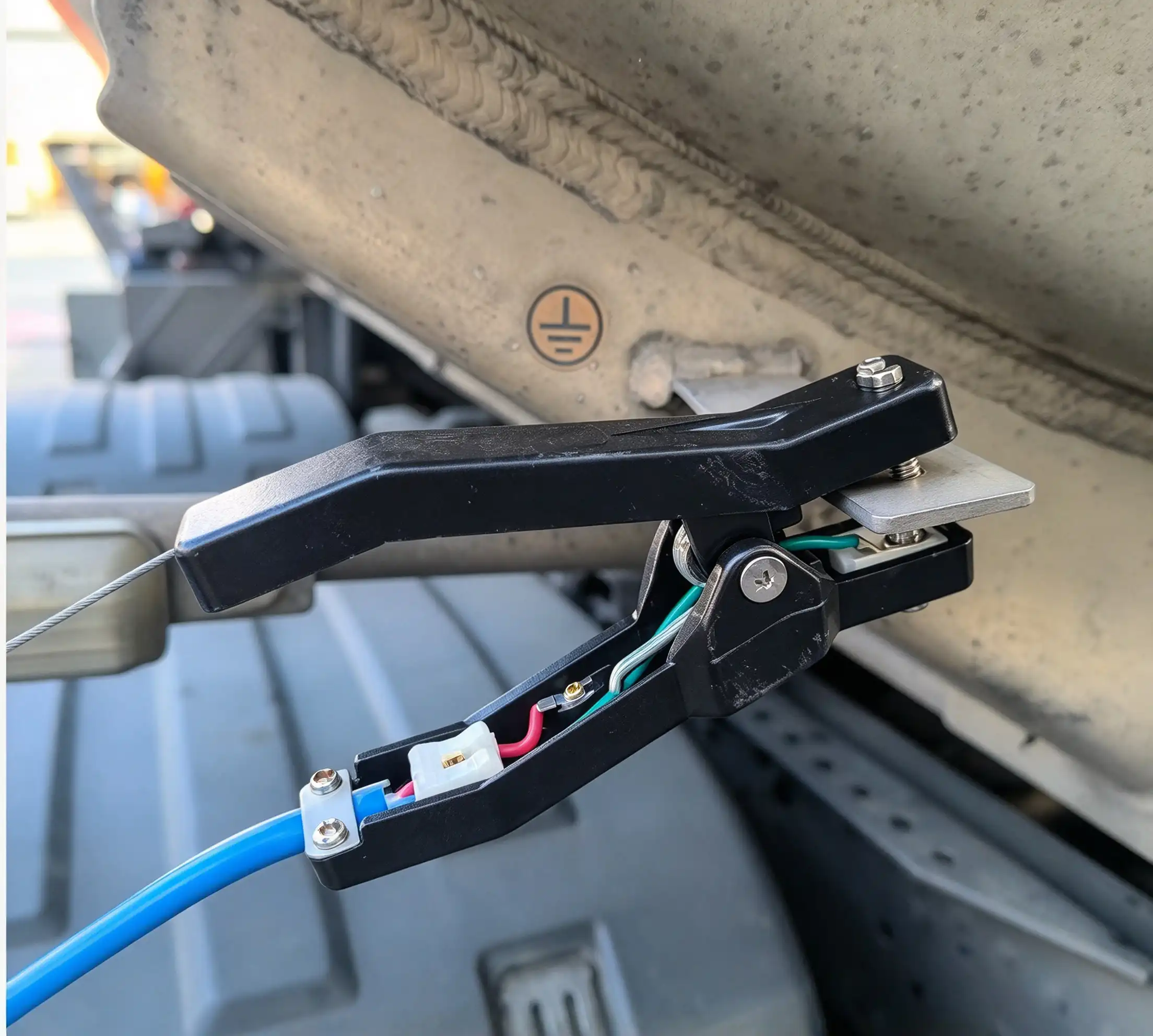
1. What Is a Static Grounding Alarm?
A static grounding alarm is a monitoring device designed to check the electrical condition of a grounding circuit during fuel and hazardous-liquid loading operations.
A typical system uses two grounding clamps:
- One clamp connects to the designated grounding point or grounding stake.
- The second clamp connects to the metal body of the tanker or tank.
- The alarm continuously monitors the grounding circuit.
- If the grounding condition is normal, the alarm remains in its normal state.
- If the circuit becomes disconnected or the monitored resistance exceeds the specified threshold, the system activates an audible and visual alarm.
The basic grounding path is:
Tanker → Grounding Clamp → Alarm Monitor → Grounding Point → Earth
This is different from using an ordinary grounding clamp alone. A conventional clamp provides a physical electrical connection, while a grounding alarm provides additional monitoring of the grounding circuit.
For applications where the tanker surface is painted or contaminated with oil and rust, the clamp tip should establish reliable metal-to-metal contact.
2. Why Is Grounding Monitoring Important During Fuel Loading?
A common misconception is:
“The grounding clamp is connected, so the tanker is safely grounded.”
Not necessarily.
A grounding connection can become unreliable because of:
- Paint or coating on the tanker surface
- Rust or oxidation
- Oil contamination
- Worn clamp tips
- Loose terminal screws
- Damaged cables
- Weak clamp pressure
- Corrosion at the grounding point
These problems may not always be obvious from a visual inspection.
For example, a clamp may appear to be securely attached while its contact tip is actually pressing against paint rather than bare metal.
A static grounding alarm provides an additional safety indication by monitoring the grounding circuit and warning the operator when the monitored condition is abnormal.
This makes grounding monitoring particularly useful in:
- Gas stations
- Oil depots
- Fuel tanker loading areas
- Chemical plants
- Pharmaceutical plants
- Hazardous-liquid transfer facilities
During tanker loading and unloading, grounding is only one part of the overall tanker safety system. You can also learn more about Fuel Tanker Pressure Vacuum Vent Valve and its role in tanker venting.
3. How Does a Static Grounding Alarm Work?
The working principle is relatively simple.
When the grounding clamps are correctly connected, the grounding circuit forms a conductive path between the tanker and the grounding system. The alarm detects the normal condition and stops the warning signal.
If the grounding circuit becomes disconnected or the monitored resistance exceeds the alarm setting, the device activates an audible and visual alarm.
For JDB/JDBL series models, key specifications include:
- Response time: <1 second
- Working current: <5 mA
- Alarm mode: Audible and visual
- Grounding resistance alarm threshold: 100 Ω
- Explosion protection: Intrinsically safe
- Explosion-proof marking: Ex ia IIB T4 / Ex ib IIC T4 Gb
- Alarm volume: ≥90 dB
The exact grounding requirements for a project should always be confirmed according to applicable local regulations, project specifications and the design of the site’s grounding system.
If you are selecting a static grounding alarm for a gas station, oil depot or tanker loading project, Contact Us with your application, installation method and project requirements. We can help you confirm the suitable model and configuration.
4. Fixed vs. Mobile Static Grounding Alarm
The correct model depends largely on how and where the equipment will be used.
Fixed Static Grounding Alarm: JDB-2 / JDBL-2
Fixed models are designed for permanent installation.
Typical applications include:
- Gas station unloading areas
- Fixed oil depot loading points
- Chemical plant filling stations
- Permanent tanker loading facilities
The alarm can be wall-mounted or installed on a suitable fixed support.
The main advantage is a stable installation with organized cable routing and a dedicated grounding point.
Mobile Static Grounding Alarm: JDB-1 / JDBL-1
Mobile models are designed for applications where grounding equipment needs to be moved between different working locations.
Typical applications include:
- Mobile fuel tankers
- Temporary loading areas
- Construction sites
- Multiple loading positions
A carrying handle makes the unit easier to transport and position at different workstations.
JDB vs. JDBL: Which Power Supply?
The series can also be differentiated by power supply:
JDB: Dry-battery version
Suitable for general applications where conventional battery operation is preferred.
JDBL: Lithium-battery version
Suitable for applications requiring longer operating periods or frequent use.
The final selection should consider operating frequency, installation conditions and maintenance requirements.
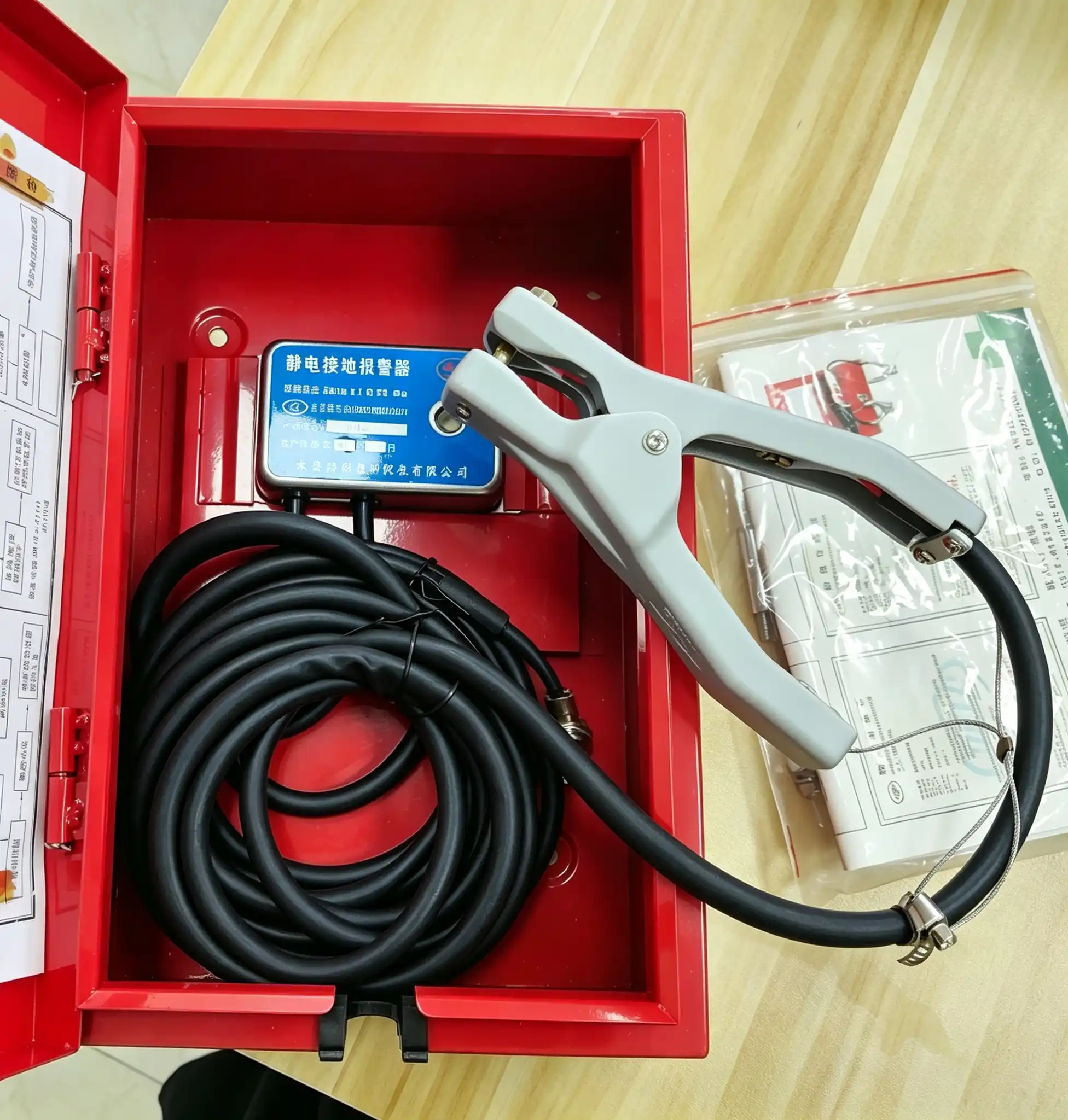
5. How to Use a Static Grounding Alarm Correctly
Correct operation is essential for reliable grounding.
Step 1: Connect the grounding clamp to the grounding point
Attach one clamp securely to the designated grounding stake or grounding connection.
Step 2: Connect the second clamp to the tanker
Attach the other clamp to the metal body of the tanker.
The clamp tip should make reliable electrical contact with the metal surface. If necessary, it should penetrate the paint or surface coating.
Step 3: Confirm the alarm condition
Once the grounding circuit is correctly established, the alarm should stop.
Do not begin fuel loading until the grounding condition has been confirmed.
Step 4: Disconnect after loading
After loading or unloading is complete, disconnect the grounding connection according to the site’s operating procedure and store the clamps properly.
For other tanker loading and unloading connections, see our practical guide to Aluminum Camlock Coupling for Tanker
Critical safety rule
The two grounding clamps must be connected separately: one to the grounding point and one to the tanker. Never connect both clamps to the same metal component.
6. Common Static Grounding Alarm Problems
Problem 1: The alarm keeps beeping after connection
Check the following:
Grounding clamp:
Inspect the clamp tip for oil, rust, contamination or excessive wear.
Terminal connections:
Check whether terminal screws are loose or wires have pulled out.
Cable:
Inspect the PU spiral cable for cuts, damage, excessive stretching or internal conductor failure.
Grounding point:
Check the grounding stake and connection points for corrosion or poor contact.
If these external conditions are normal but the alarm continues, further inspection should follow the manufacturer’s service procedure.
Problem 2: The alarm does not sound or becomes very quiet
A weak alarm sound can indicate low battery power.
Other possible causes include:
- Buzzer failure
- Cable problems
- Loose wiring
- Clamp circuit failure
- Circuit board failure
Battery replacement and internal maintenance should be performed only in a safe area, not inside a hazardous location.
Problem 3: The alarm works intermittently
Intermittent alarms are often related to unstable electrical contact.
Check:
- Spiral cable fatigue
- Internal cable breakage
- Loose terminals
- Weak clamp pressure
- Worn springs
- Oil or rust on the contact surface
Regular inspection is especially important for equipment that is frequently moved or stretched.
7. Static Grounding Alarm Maintenance
A grounding alarm should be treated as safety equipment rather than a disposable accessory.
Regular inspections should include:
- Grounding clamp condition
- Clamp tips
- Cable condition
- Terminal connections
- Alarm function
- Battery condition
- Enclosure condition
- Grounding system condition
Keep the clamp tips clean and free from oil contamination.
Do not exceed the specified power supply voltage, as excessive voltage may damage the alarm.
For hazardous-area equipment, never open the enclosure or replace batteries in a hazardous location. Follow the manufacturer’s maintenance procedure and applicable site safety requirements.
8. FAQ About Static Grounding Alarms
What is the grounding resistance alarm threshold?
For the JDB/JDBL series described here, the grounding resistance alarm threshold is 100 Ω. Project-specific grounding requirements should also be checked against applicable standards and site requirements.
Can both clamps be connected to the same tanker?
No. One clamp should connect to the grounding point and the other to the tanker or tank requiring grounding.
Should the clamp penetrate the tanker paint?
The clamp should establish reliable electrical contact with the metal body. Where paint or coating prevents proper contact, the clamp’s contact tip should penetrate the coating as designed.
Why does the alarm become quieter?
Low battery power is one possible cause. Check and replace the battery in a safe area when necessary.
Can the enclosure be made from stainless steel?
Standard models can use a carbon-steel powder-coated enclosure. Stainless-steel housing can be considered for applications requiring additional corrosion resistance.
Can the spiral cable be customized?
The standard configuration uses two 5-meter oil-resistant PU spiral cables. Special cable lengths can be discussed for project requirements and bulk orders.
9. Conclusion
A grounding clamp being physically attached does not necessarily mean that the grounding connection is reliable.
Paint, rust, oil contamination, worn clamp tips, loose terminals and damaged cables can all affect the grounding circuit.
A static grounding alarm provides continuous monitoring and gives operators an audible and visual warning when the grounding condition becomes abnormal.
For gas stations, oil depots, tanker loading areas and chemical facilities, selecting the appropriate fixed or mobile explosion-proof grounding alarm and maintaining the grounding system properly can provide an additional layer of operational safety.
If you are planning a complete fuel station equipment package, you can also explore our Global Fuel Dispenser Projects for examples of equipment coordination in overseas projects.
If you are sourcing static grounding alarms for a gas station, oil depot, tanker loading project or chemical facility, contact us for product specifications, explosion-proof documentation, configuration options and bulk equipment sourcing support.