
Fuel Tanker Breather Valve: Pressure, Vacuum, Sizes & Selection Guide
News 2026年 9月 29日 28
When a fuel tanker is being loaded, unloaded, or exposed to temperature changes, the pressure inside the tank can rise or fall. If this pressure cannot be properly released or balanced, the tanker may experience poor venting, abnormal pressure, leakage, or other operating problems.
A fuel tanker breather valve is designed to manage these pressure changes by providing positive-pressure exhaust and negative-pressure air intake. However, choosing the correct valve is not simply a matter of selecting DN40 or DN50. Thread type, dimensions, pressure settings, mounting interface, and working medium must also match the tanker.
This guide explains the working principle, specifications, available sizes, common problems, inspection points, and selection requirements for fuel tanker breather valves.
1. Why Does a Fuel Tanker Need a Breather Valve?
A fuel tanker is a closed or semi-closed fuel storage and transportation system. During loading, unloading, fuel movement, and temperature changes, the volume and pressure of the air-vapor space inside the tank can change.
Without proper pressure and vacuum control, excessive positive or negative pressure may develop inside the tanker.
The breather valve helps manage these changes through two basic functions:
- Positive-pressure exhaust: releases gas or vapor when internal pressure becomes too high.
- Negative-pressure air intake: allows air to enter when internal pressure becomes too low.
While the breather valve manages pressure changes, a complete fuel storage system may also require reliable liquid level monitoring to track the amount of fuel inside the tank.
2. How Does a Fuel Tanker Breather Valve Work?
The working principle is relatively simple.
Positive Pressure: Exhaust
When the pressure inside the tanker increases and reaches the valve’s positive-pressure opening setting, the positive-pressure valve opens and allows gas or vapor to escape.
For this product, the positive-pressure opening range is:
+6 to +12 kPa
This helps prevent excessive internal pressure from building up inside the tanker.
Negative Pressure: Air Intake
When the pressure inside the tanker decreases below the negative-pressure setting, the negative-pressure side opens and allows outside air to enter.
The negative-pressure opening range is:
-2 to -4 kPa
This helps reduce excessive vacuum inside the tank.
The actual opening pressure should always be selected according to the tanker’s design requirements and application conditions.
3. Fuel Tanker Breather Valve Structure
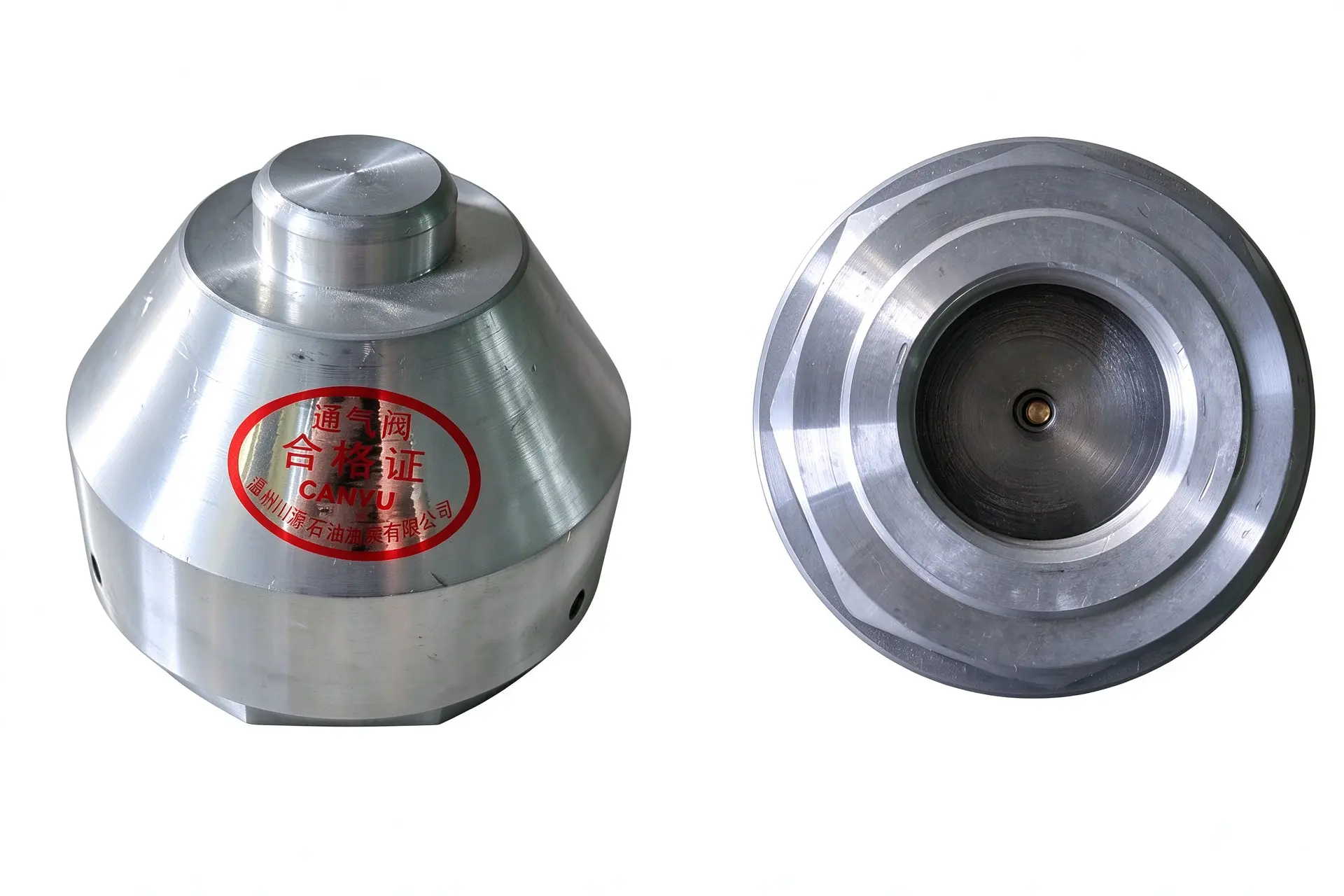
The valve is designed for installation at the top of the tanker, through the manhole cover port.
The main body is made of aluminum alloy, providing a lightweight structure suitable for tanker applications.
The internal valve mechanism controls the pressure and vacuum functions. Depending on the configuration, the valve must maintain reliable sealing while opening when the preset positive or negative pressure is reached.
For replacement applications, the external dimensions and connection type are especially important because the new valve must physically match the existing mounting interface.
4. Fuel Tanker Breather Valve Specifications
The main specifications of this fuel tanker breather valve are:
| Specification | Value |
|---|---|
| Body Material | Aluminum Alloy |
| Opening Positive Pressure | +6 to +12 kPa |
| Opening Negative Pressure | -2 to -4 kPa |
| Air Flow Capacity | Approx. 600 L/min |
| Operating Temperature | -20°C to +70°C |
| Mounting Position | Tanker top, manhole cover port |
| Working Medium | Diesel / Gasoline / Kerosene |
| Function | Positive pressure exhaust + Negative-pressure air intake |
The pressure setting is one of the most important specifications. A valve with the wrong opening pressure may not match the tanker’s design requirements, even if its nominal size and thread appear correct.
5. Fuel Tanker Breather Valve Sizes and Connections
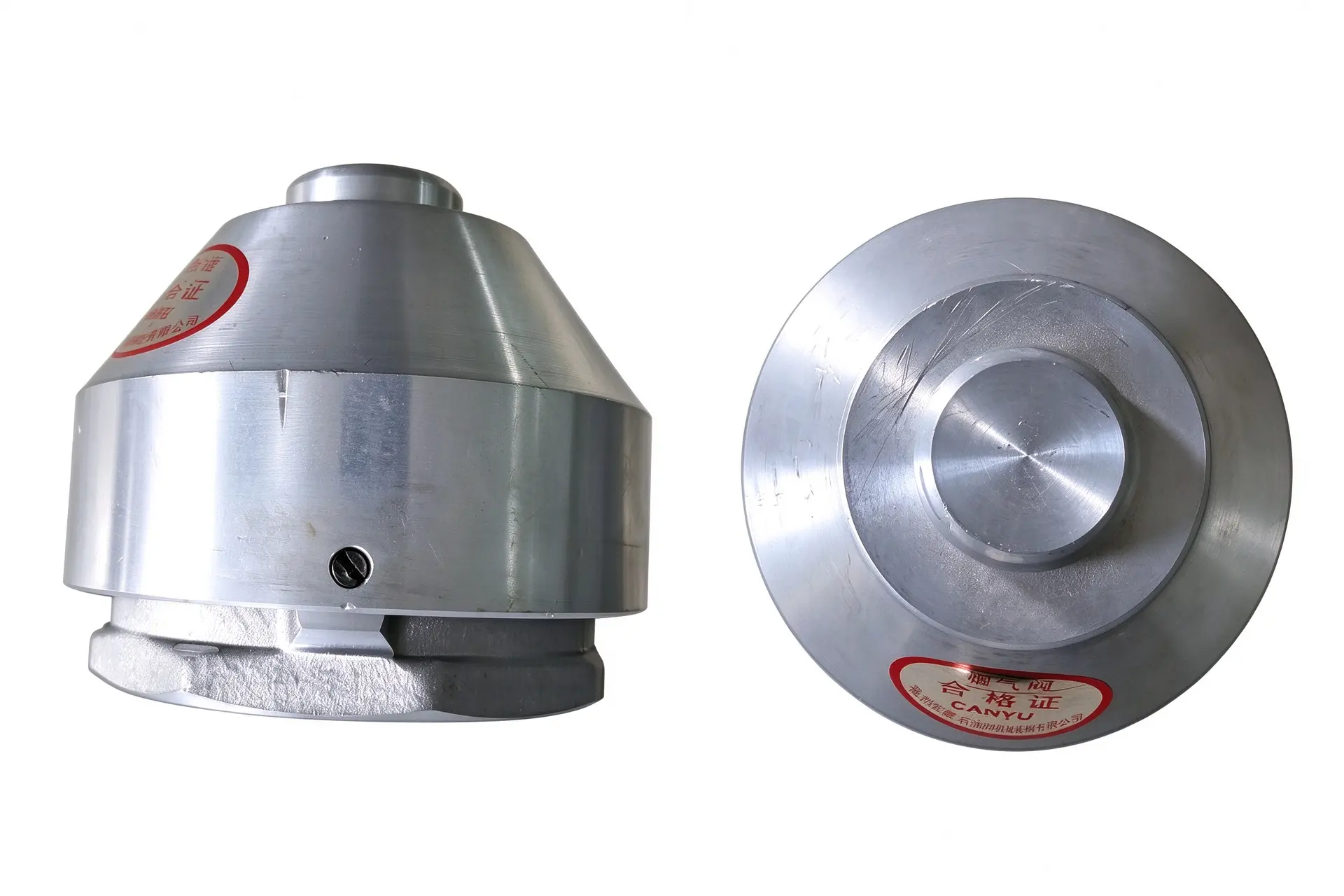
Fuel tanker breather valves are available in different nominal sizes and connection configurations.
| Nominal Size | External Thread | Max. Outer Diameter | Overall Height | Net Weight |
|---|---|---|---|---|
| DN40 | M48×2 | 98 mm | 86 mm | 0.60 kg |
| DN50 | M60×2 | 110 mm | 95 mm | 0.75 kg |
| DN45 | 1-5/8-12 UN | 110 mm | 95 mm | 0.74 kg |
| DN50 | G2″ male thread | 112 mm | 96 mm | 0.77 kg |
| DN50 | NPT 2″ male thread | 112 mm | 96 mm | 0.78 kg |
DN50 is one of the more commonly used sizes for fuel tanker breather valves, while DN40 is also commonly used on smaller tankers. The actual size should always be confirmed against the existing mounting interface and connection dimensions.
Why Can Two DN50 Breather Valves Have Different Connections?
This is an important point when replacing an existing valve.
DN50 only describes the nominal size. It does not mean that every DN50 breather valve has the same connection.
For example, DN50 configurations may use:
- M60×2
- G2″ male thread
- NPT 2″ male thread
They can also differ in external diameter, overall height, pressure settings, and mounting requirements.
Therefore, simply ordering another “DN50 breather valve” may result in an incompatible replacement.
Before ordering, confirm the actual thread, dimensions, mounting interface, and pressure requirements.
Not sure which tanker breather valve size or connection you need? Send us your existing valve photo, connection dimensions, and tanker information for specification confirmation.
6. Common Fuel Tanker Breather Valve Problems
A breather valve can develop problems during long-term tanker operation or when the wrong replacement valve is installed.
Common problems include:
Valve Does Not Open Properly
Possible causes include contamination, mechanical damage, damaged sealing components, or incorrect pressure settings.
Poor Venting During Loading or Unloading
If the valve cannot provide sufficient air flow or the opening mechanism is restricted, pressure may not be released or balanced effectively.
The rated air flow capacity of this product is approximately 600 L/min, but the actual application must be evaluated according to the tanker system.
Leakage Around the Valve
Leakage may be related to damaged seals, incorrect installation, connection mismatch, or a damaged valve body.
Wrong Replacement Valve
A common purchasing mistake is selecting a replacement based only on nominal size.
For example, an existing DN50 valve using M60×2 should not automatically be replaced with a DN50 valve using G2″ or NPT 2″.
7. How to Check a Fuel Tanker Breather Valve
Before replacing a breather valve, start with a basic inspection.
Check:
- Valve body condition
- External thread and connection type
- Overall diameter and height
- Mounting interface
- Sealing condition
- Positive-pressure opening setting
- Negative-pressure opening setting
- Working medium
- Valve cleanliness and visible contamination
For an existing tanker valve, taking clear photos from several angles and measuring the connection can significantly reduce the risk of ordering the wrong configuration.
Replacing an existing tanker breather valve? Send us the old valve photos, model number, and key dimensions before ordering. We can help check the required configuration.
8. Frequently Asked Questions
8.1 What is the opening pressure of this fuel tanker breather valve?
The positive-pressure opening range is +6 to +12 kPa, while the negative-pressure opening range is -2 to -4 kPa.
The valve must be selected according to the tanker’s design pressure requirements and actual application.
8.2 My old valve is DN50. Can I simply buy any DN50 valve as a replacement?
No.
DN50 is only the nominal size. DN50 breather valves can have different external thread specifications, including M60×2, G2″, and NPT 2″.
They may also have different external dimensions and pressure settings. Before ordering, always check the thread, dimensions, mounting interface, and pressure parameters.
8.3 What information should I prepare when purchasing a replacement breather valve?
Please provide:
- Clear photos of the existing valve
- Thread specification
- Key external dimensions
- Required positive-pressure opening setting
- Required negative-pressure opening setting
- Working medium, such as diesel, gasoline, or kerosene
Providing this information can greatly reduce the risk of receiving an incorrect replacement valve.
8.4 Can a fuel tanker breather valve be interchanged with a PV valve used on an underground fuel tank at a gas station?
No. They are designed for different applications and should not be treated as interchangeable.
This product is designed for mobile fuel tankers, with its corresponding external-thread connection and operating pressure requirements. Underground fuel storage tank PV valves are generally designed for low-pressure tank ventilation and may incorporate integrated flame-arresting functions according to their specific design.
The valve type must therefore be selected according to the equipment, installation environment, pressure requirements, and applicable local safety standards.
8.5 Can this breather valve be used for both gasoline and diesel?
Yes. The specified working media for this product include diesel, gasoline, and kerosene.
For gasoline applications, an external flame-arresting device may be required depending on the tanker design and applicable local safety regulations. The final configuration should be confirmed according to the local requirements before installation.
9. How to Choose the Right Fuel Tanker Breather Valve
When selecting a fuel tanker breather valve, do not choose based on nominal size alone.
Check the following points:
9.1 Confirm the Nominal Size
Determine whether the tanker requires DN40, DN45, DN50, or another configuration.
9.2 Confirm the Thread Type
Check whether the existing connection is:
- M48×2
- M60×2
- 1-5/8-12 UN
- G2″ male thread
- NPT 2″ male thread
9.3 Check the Dimensions
Compare the external diameter, overall height, and mounting interface with the existing valve.
9.4 Confirm Pressure and Vacuum Settings
Make sure the positive-pressure and negative-pressure opening ranges match the tanker’s design requirements.
9.5 Confirm the Working Medium
Check whether the valve will be used with gasoline, diesel, kerosene, or another compatible medium.
9.6 Consider Local Safety Requirements
For gasoline and other flammable-liquid applications, the complete tanker ventilation and safety configuration should comply with the applicable local requirements.
The breather valve is only one component of a tanker system, and other tanker valves and fittings also need to match the required connection and application.
10. Sourcing Fuel Tanker Breather Valves from China
For international buyers, sourcing a tanker breather valve is not only about finding a product with the correct nominal size.
The more important issue is specification matching.
As a fuel station equipment supply chain service provider in China, we can help coordinate:
- Product specification confirmation
- Model and connection matching
- Existing valve replacement matching
- Supplier coordination
- Technical information confirmation
- Quality inspection coordination
- Packaging and shipment support
Depending on the fuel-handling system, other components such as explosion-proof flexible connections may also need to be matched with the overall installation requirements.
If you are purchasing tanker breather valves in different sizes or for different markets, providing the existing valve information before quotation can make the sourcing process more efficient.
Looking for fuel tanker breather valves or other tanker equipment from China? Contact us for product sourcing, specification confirmation, supplier coordination, and shipment support.