
Fuel Dispenser Shear Valve: Working Principle, Safety, Structure & FAQs
News 2026年 10月 11日 14
If a vehicle strikes a fuel dispenser and knocks it off its island, what happens to the underground fuel supply line? Could fuel continue flowing under pressure even after the dispenser has been damaged?
This is a critical safety concern for gas station owners, construction contractors, equipment importers, and maintenance teams. A damaged dispenser can also damage its connected piping, potentially allowing fuel to escape and increasing the risk of fire and environmental contamination.
A fuel dispenser shear valve, also known as a base-mounted emergency shutoff valve, is designed to help prevent this situation. Installed beneath the dispenser, it can automatically shut off fuel flow when the dispenser is displaced or when a fire activates its thermal release mechanism.
However, a shear valve is not the same as a hose breakaway valve. While both are important fuel dispensing safety components, they protect different parts of the system.
In this guide, we explain how a fuel dispenser shear valve works, its internal structure, its safety mechanisms, common installation mistakes, and the key considerations when selecting valves for international gas station projects.
1. What Is a Shear Valve on a Fuel Dispenser?
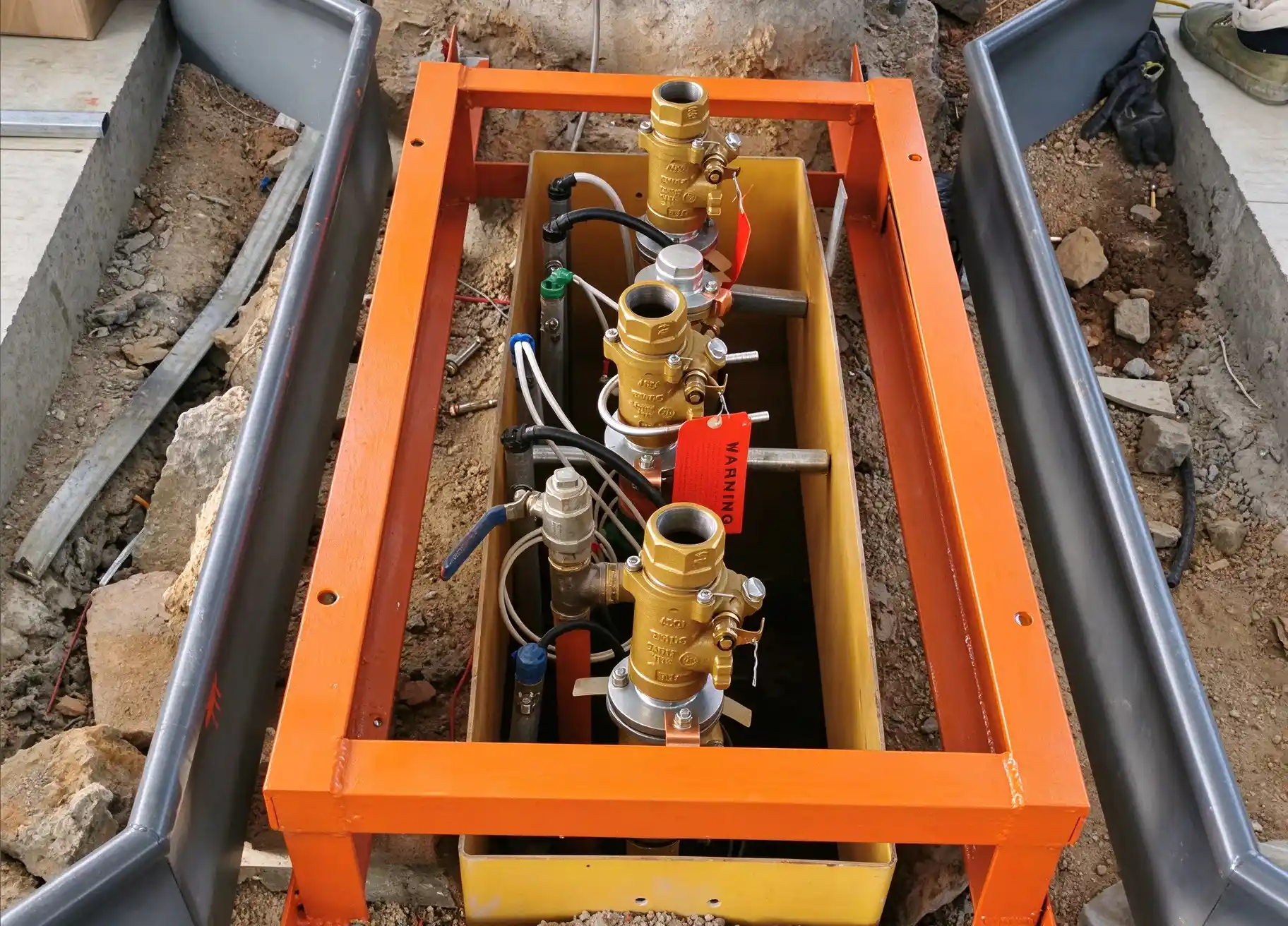
A fuel dispenser shear valve is a mechanical safety device installed beneath a fuel dispenser, typically between the underground fuel supply piping and the dispenser’s inlet connection.
Its primary purpose is to stop fuel flow if the dispenser is knocked off its mounting position or if a fire activates the valve’s thermal release mechanism.
Unlike electrically controlled equipment, a mechanical shear valve does not depend on an external electrical power supply to perform its mechanical shutoff function.
Its main safety functions include:
- Helping prevent uncontrolled fuel release if a dispenser is struck, displaced, or pulled away from its mounting position.
- Automatically shutting off fuel flow when the thermal release mechanism activates under fire conditions.
- Protecting the underground fuel supply connection rather than relying solely on a hose-mounted safety device.
The Petroleum Equipment Institute (PEI) discusses emergency shutoff valves as devices designed to stop fuel flow when a dispenser is knocked over or exposed to fire. Proper installation is essential to their performance.
For new gas station construction and dispenser replacement projects, the applicable fire code, local regulations, piping arrangement, and valve manufacturer’s installation instructions should all be considered.
2. Internal Structure of a Standard Shear Valve
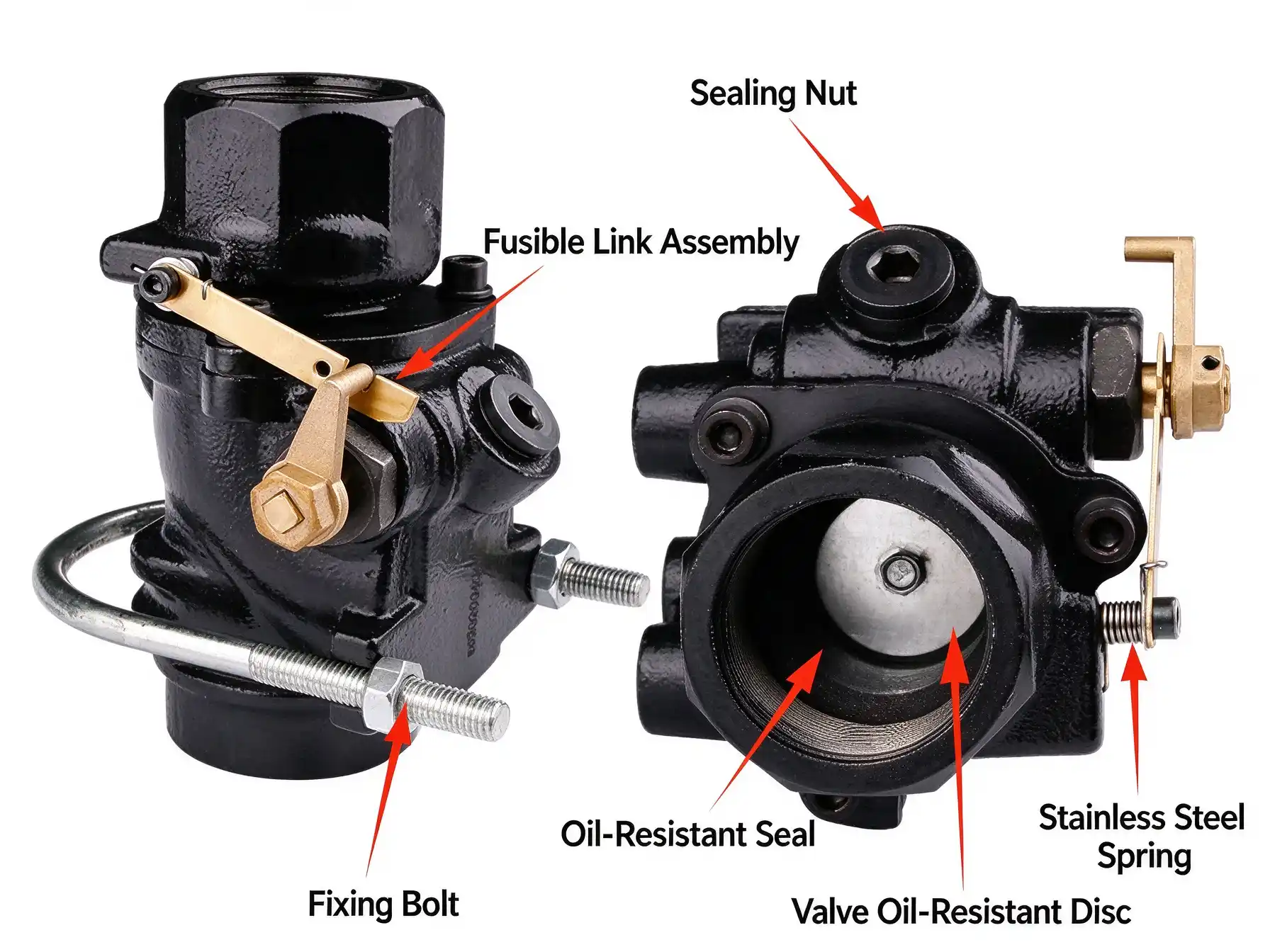
The performance of a fuel dispenser shear valve depends on its mechanical design, materials, sealing components, and correct installation. Depending on the model, its main components may include the following.
2.1 Upper and Lower Valve Body
The valve body contains the internal shutoff mechanism and connects to the fuel piping. Materials, pressure ratings, connection sizes, and corrosion resistance vary by manufacturer and model.
Before ordering a gas station shear valve, confirm its rated working pressure, fuel compatibility, and connection specifications against the requirements of the intended installation.
2.2 Shear Section
The shear section is a specially designed part of the valve that allows the valve to separate at a predetermined location if the dispenser is displaced by an impact.
Correct positioning is important. If the shear section is installed at the wrong height or the valve is improperly supported, the intended safety function may be compromised.
The required shear characteristics depend on the specific product design and should be confirmed through the manufacturer’s technical documentation.
2.3 Internal Shutoff Mechanism and Springs
Many emergency shutoff valves use a spring-loaded internal mechanism to close the fuel passage when the valve is activated.
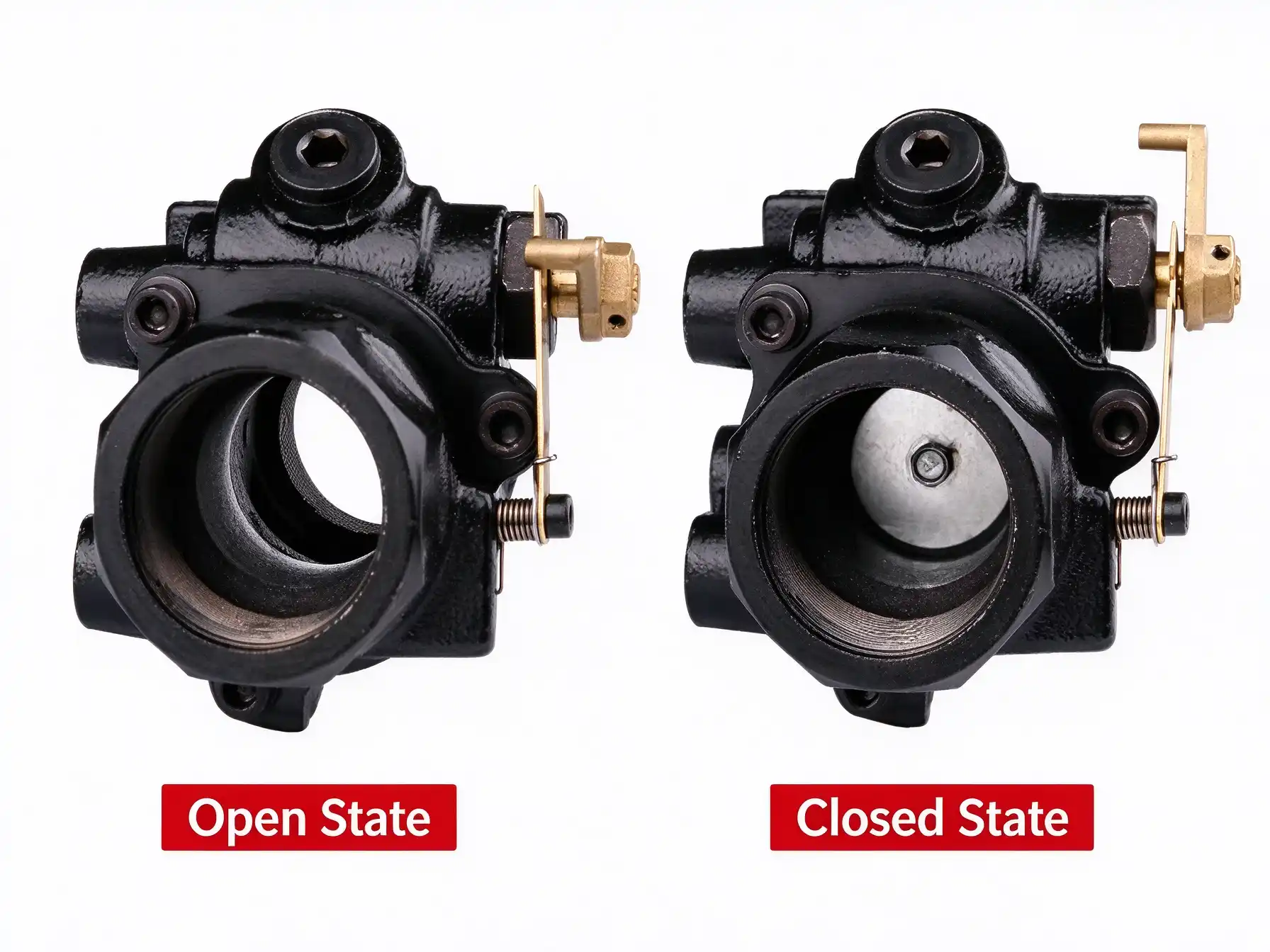
When the valve separates or its thermal release mechanism activates, the internal components move into the closed position to stop fuel flow.
The exact internal arrangement and operating mechanism vary between valve designs. Always refer to the relevant product drawing and technical specifications.
2.4 Fusible-Link Assembly
Some fuel dispenser shear valves incorporate a fusible link designed to release the shutoff mechanism when exposed to sufficiently high temperatures.
During a fire, the link releases, allowing the valve’s spring-loaded mechanism to close and isolate the fuel supply.
The activation temperature and tolerances must be confirmed from the manufacturer’s specifications. Do not assume every shear valve uses the same thermal release temperature.
2.5 Seals and Fuel-Compatible Materials
Seals help prevent leakage during normal operation and after the valve has closed.
Their compatibility with gasoline, diesel, and any applicable ethanol-blended fuels must be verified for the specific product. FKM and other elastomers may have different compatibility limits depending on the fuel composition, formulation, and operating conditions.
Selecting the correct sealing materials is important for long-term reliability, especially when sourcing equipment for different fuel markets.
3. How Does a Fuel Dispenser Shear Valve Work?
A fuel dispenser shear valve is designed to provide protection against two different situations: physical damage to the dispenser and excessive heat caused by fire.
3.1 Mechanical Shear Activation: Vehicle-Collision Protection
During normal operation, the valve remains in its operating position and allows fuel to pass through the supply line.
If a vehicle strikes the dispenser or the dispenser is pulled away from its mounting position, the connected piping may be subjected to damaging forces.
A correctly selected and installed shear valve is designed to separate at its designated shear section under the conditions specified by the manufacturer. Its internal shutoff mechanism then closes to stop fuel flow.
This helps reduce the possibility of an uncontrolled fuel release from the underground supply line.
However, the actual outcome depends on the valve design, installation, fuel system configuration, and condition of the equipment. A shear valve should not be treated as a guarantee that all leakage will be eliminated.
After a valve has activated through physical separation, it must not simply be rejoined and returned to service. Follow the manufacturer’s replacement and inspection requirements.
3.2 Thermal Activation: Fire Protection
Some fuel dispenser shear valves include a fusible-link mechanism that responds to elevated ambient temperatures.
When the surrounding heat reaches the specified activation condition, the fusible link releases the internal mechanism, allowing the valve to close and stop fuel flow from the supply line.
This function is particularly important because an electrical power failure during a fire should not prevent a properly functioning mechanical shutoff mechanism from operating.
The thermal activation rating is product-specific. Confirm the specified temperature, certification or test documentation, and replacement requirements before selecting a valve for a gas station project.
For more information about related dispenser safety components, see our guide to fuel dispenser breakaway valves, which explains another important part of the fuel dispensing safety system.
4. Shear Valve vs. Hose Breakaway Valve: What’s the Difference?
A common mistake when selecting fuel dispenser safety equipment is assuming that a shear valve and a hose breakaway valve perform the same function.
They do not. Their installation positions and primary safety purposes are different.
| Comparison Item | Fuel Dispenser Shear Valve | Hose Breakaway Valve |
|---|---|---|
| Typical mounting position | Beneath the dispenser, at the supply piping connection | In the dispensing hose assembly |
| Primary purpose | Helps shut off fuel flow at the dispenser supply connection | Separates the hose assembly when subjected to its designed pull force |
| Typical activation event | Dispenser displacement or thermal activation, depending on the model | Excessive tensile force during a drive-off event |
| Main area of protection | Fixed fuel supply connection and associated piping | Hose assembly and dispensing equipment |
| Key selection consideration | Valve type, installation position, piping arrangement, and applicable codes | Hose compatibility, connection type, and breakaway operating specifications |
Key takeaway: A hose breakaway valve is not a substitute for a properly specified base-mounted shear valve. A hose breakaway is designed to address separation of the hose assembly, while a shear valve is intended to shut off the fuel supply at the dispenser connection.
Both components may be needed in the same gas station, depending on the equipment configuration and applicable safety requirements.
If you are planning a new dispenser installation or replacement, review the complete system arrangement rather than selecting individual components in isolation. Our guide to fuel dispenser system design provides additional context on how dispensing equipment fits into the wider installation.
5. Common Shear Valve Installation Mistakes
Even a correctly specified fuel dispenser shear valve may not perform as intended if it is installed incorrectly. The following issues deserve particular attention during construction, inspection, and maintenance.
5.1 Incorrect Installation Position
The shear section must be positioned according to the manufacturer’s instructions and the applicable installation requirements.
For example, PEI’s guidance on underground liquid storage system installation addresses the positioning and support of shear valves. The exact requirements should be checked against the applicable edition and the specific installation.
An incorrectly positioned shear section may not separate as intended if the dispenser is displaced.
5.2 Inadequate Anchoring or Support
The valve must be firmly anchored to the designated structural support in accordance with the manufacturer’s instructions.
Poor support or built-in mechanical stress can interfere with the intended operation of the shear mechanism. The installer should verify the support arrangement, valve alignment, and connection to the dispenser island.
5.3 Incorrect Thread or Connection Type
Thread compatibility should be confirmed before ordering or installing a replacement valve.
NPT and BSPP connections use different thread forms and sealing methods. They should not be treated as interchangeable simply because their nominal sizes appear similar.
Confirm the existing piping connection, required adapters if permitted, and the manufacturer’s approved installation method before procurement.
5.4 Reusing a Damaged or Activated Valve
A shear valve that has separated during an incident should not be reassembled and reused without an explicitly approved manufacturer procedure.
The shear section and internal components may no longer meet the original operating requirements. Replace the valve as directed by the manufacturer and inspect the associated piping and dispenser connections before returning the equipment to service.
5.5 Choosing Components Without Checking Fuel Compatibility
Low purchase price alone is not a reliable measure of suitability.
The body material, seal compound, rated pressure, fuel compatibility, and operating specifications must match the intended application. A product that is suitable for one fuel or installation may not be suitable for another.
5.6 Ignoring Inspection and Testing Requirements
Visual inspection alone may not establish that an emergency shutoff valve functions correctly.
Inspection and functional testing should follow the applicable regulations, the relevant technical standard, and the manufacturer’s procedures. Do not deliberately activate a valve using a flame, impact, or other improvised method.
Correct installation, suitable materials, and appropriate maintenance all contribute to the reliable operation of a fuel dispenser shear valve.
6. Frequently Asked Questions (FAQs)
Q1: Can I reuse a shear valve after separation?
A: No. Once separated by impact, the shear valve cannot be reused. Replace the entire valve and inspect connected piping per PEI standards. Follow manufacturer instructions.
Q2: What is the activation temperature of shear valves?
A: Most standard fusible-link shear valves trigger at 74°C (165°F). Special models can be rated 100°C (212°F). Check the product datasheet. Triggered fusible links are disposable.
Q3: Does a fuel dispenser shear valve need electricity?
A: No. Standard mechanical shear valves work without power. Only hybrid electronic emergency shutoff valves require wiring.
Q4: What sizes and thread types are available?
A: Common sizes: 1.5″ and 2″. Main threads: NPT and BSPP. They are not interchangeable. Confirm pipe thread before ordering.
Q5: What fuels can the shear valve handle?
A: FKM seal versions support gasoline (E10/E15), diesel and B20 biodiesel. Not suitable for E85, methanol or LPG.
Q6: Can a shear valve prevent all spills during an accident?
A: No. It stops large pressurized fuel release from underground tanks. Minor residual fuel inside short pipes may still leak. It reduces fire and contamination risks.
7. Sourcing Reliable Shear Valves for International Gas Station Projects
For fuel dispenser importers, gas station construction contractors, equipment distributors, and maintenance operators, a shear valve is a small component with an important safety function.
When sourcing a fuel dispenser shear valve, look beyond the unit price. Check the rated working pressure, valve configuration, connection size and thread type, seal materials, thermal activation specifications where applicable, installation requirements, and supporting technical documentation.
For international projects, it is also important to confirm that the selected equipment is suitable for the destination market and complies with the applicable local requirements.
At Xing Zhong Yuan Energy, we focus on fuel station equipment supply chain services for overseas projects. We help customers coordinate equipment sourcing and review product specifications for fuel dispensers, dispenser parts, pumps, piping accessories, valves, and related station equipment.
If you are sourcing shear valves or coordinating equipment for a new gas station project, our team can help you clarify product requirements and coordinate the relevant technical information.
Contact us with your target market, required specifications, connection type, and estimated order quantity to discuss your project requirements.