
Gas Station Electrical System: Power Distribution, Wiring & Safety Guide
News 2026年 9月 8日 99
Introduction
A gas station electrical system is not simply a matter of connecting power to fuel dispensers.
Before construction starts, the project needs to answer several practical questions:
- How much electrical power does the station need?
- Which systems need UPS backup?
- Where should power cables be routed?
- Which areas are hazardous?
- Which electrical equipment must be explosion-proof?
- Does a remote station need a generator?
- How should the system be checked before commissioning?
A mistake in any of these areas can lead to redesign, equipment replacement, commissioning delays or unnecessary safety risks.
This guide focuses on gasoline stations and follows the actual project sequence from power supply and cable routing to hazardous-area equipment selection and final inspection.
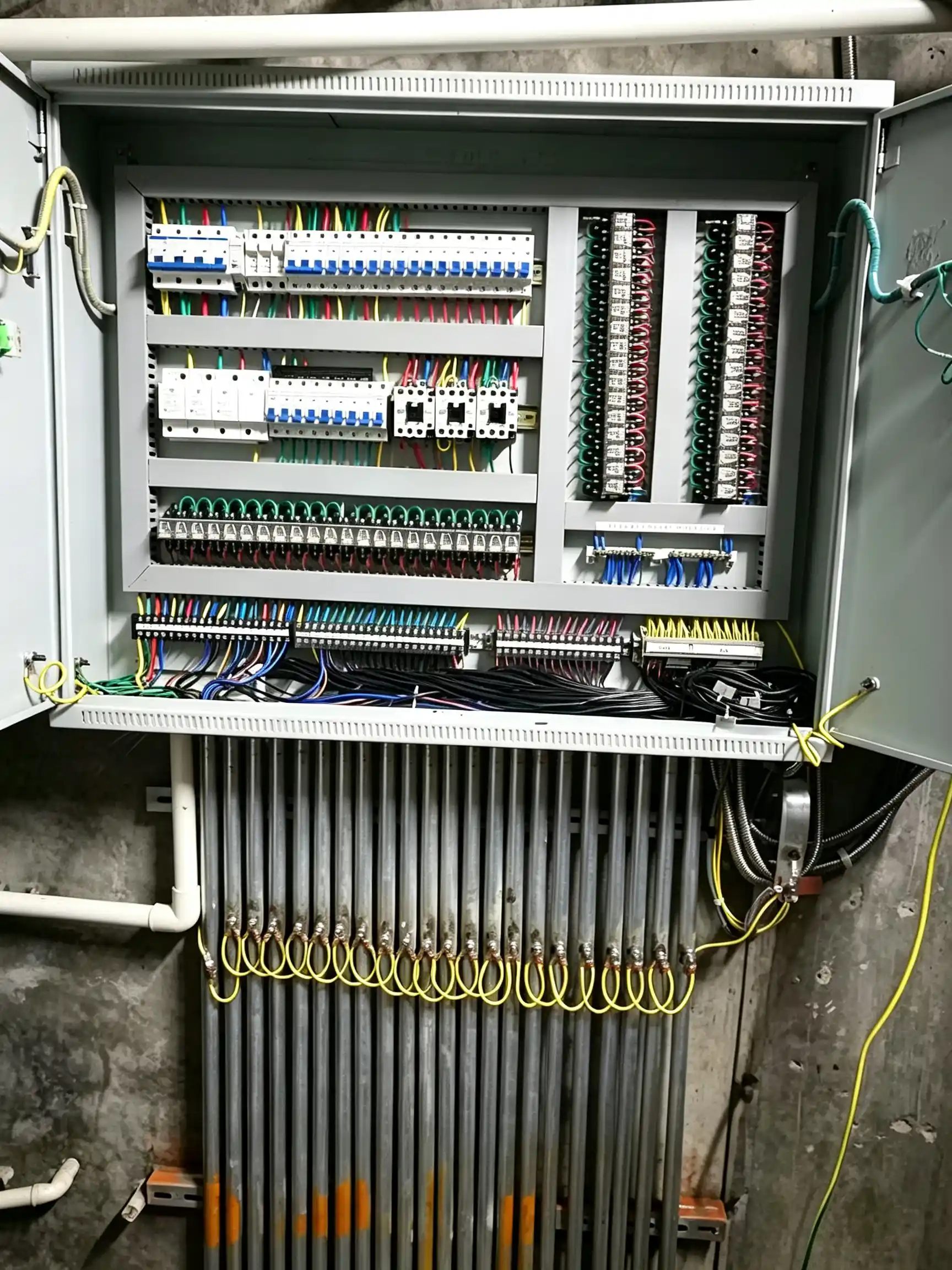
1. Power Supply: Start With the Total Electrical Load
Most ordinary gas stations use a 380/220V low-voltage power supply.
However, the electrical system should not be designed around the fuel dispensers alone.
A complete station may include:
| Electrical Load | Main Function |
|---|---|
| Fuel dispensers | Fuel dispensing |
| Submersible pumps | Fuel delivery |
| Automatic tank gauge | Tank level monitoring |
| Leak detection system | Fuel leak monitoring |
| POS system | Sales and payment |
| CCTV | Security monitoring |
| Canopy lighting | Site illumination |
| Emergency lighting | Emergency evacuation |
| Communication equipment | Data transmission |
| Fire and safety systems | Safety protection |
The first step is therefore:
Incoming Power → Total Load → Distribution Board → Individual Circuits
UPS System
Critical information and monitoring systems should have UPS backup.
Typical UPS loads include:
- Automatic tank gauge system
- Leak detection system
- POS system
- Security cameras
- Communication and data equipment
The UPS is designed to maintain critical information and monitoring functions during a power interruption.
It is not intended to supply high-power equipment such as fuel dispensers or submersible pumps.
For the electrical connection, grounding and safety requirements of the dispenser itself, see our [Fuel Dispenser Installation Guide].
Before construction, confirm these four parameters:
Voltage → Phase → Frequency → Available Power Capacity
For example:
380V / 3 Phase / 50Hz / Available Capacity
These parameters should be confirmed before electrical equipment is purchased.
Planning a New Gas Station?
If you already know your station size, dispenser quantity, fuel types and incoming power, send us the project details. We can help you review the equipment configuration before you place an order.
2. Emergency Lighting: Check the 90-Minute Backup
Emergency lighting should be installed in important areas such as:
- Sales room
- Canopy area
- Fire pump room
- Evacuation passages
The emergency lighting duration should be no less than 90 minutes after power failure.
The actual test should be:
Power failure → Emergency lighting starts → Required areas remain illuminated → ≥90 minutes
This is more useful than simply checking whether an emergency lamp can turn on.
Canopy Lighting
Most canopy areas are outside explosion-hazardous zones.
Therefore, explosion-proof lighting is not automatically required for every canopy light.
However, canopy lighting fixtures should achieve at least:
IP44
IP44 protects against solid objects larger than 1 mm and water splashes from different directions.
For gas station canopies exposed to rain, humidity and routine cleaning, the environmental protection rating should therefore be considered during equipment selection.
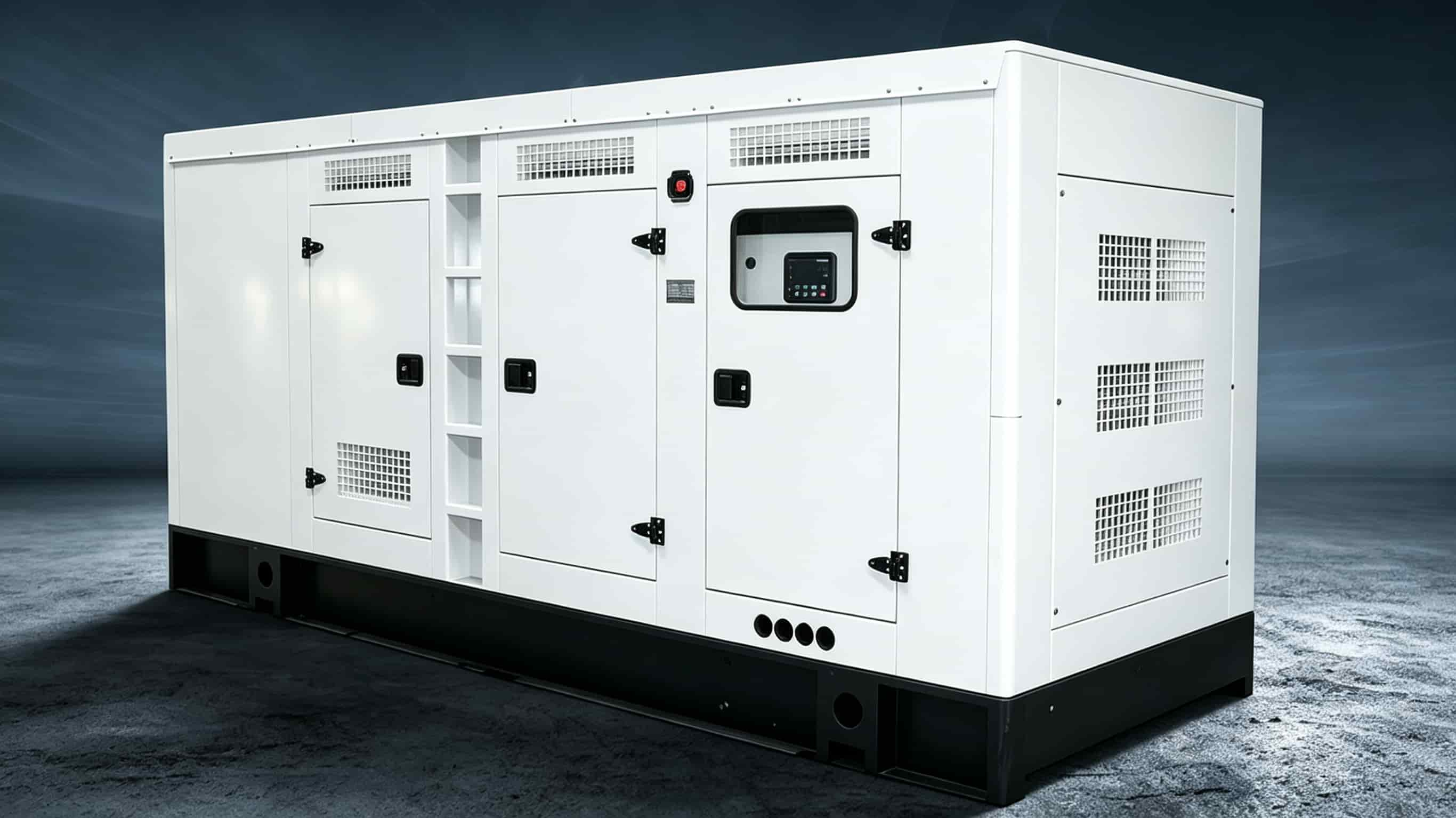
3. Remote Gas Stations: When Is a Generator Needed?
For remote gas stations where municipal power is unavailable or unreliable, a backup generator may be required.
Generator selection involves more than calculating the electrical capacity.
The exhaust system and installation location are also important.
The generator exhaust pipe should be equipped with a flame arrester to reduce the possibility of sparks becoming an ignition source.
The following reference values can be used for the horizontal safety distance between the exhaust outlet and hazardous areas:
| Exhaust Height | Horizontal Safety Distance |
|---|---|
| ≤4.5 m | ≥5 m |
| ≥4.5 m | ≥3 m |
Before installing the generator, check:
- Generator capacity
- Exhaust pipe arrangement
- Exhaust height
- Flame arrester
- Distance from hazardous areas
- Ventilation
- Fuel supply
- Transfer arrangement
A generator can operate normally and still have an unsuitable installation arrangement.
4. Cable Routing: Plan the Route Before Construction
Cable routing should be determined before construction begins.
Common installation methods include:
- Direct burial
- Steel pipe protection
- Cable trenches
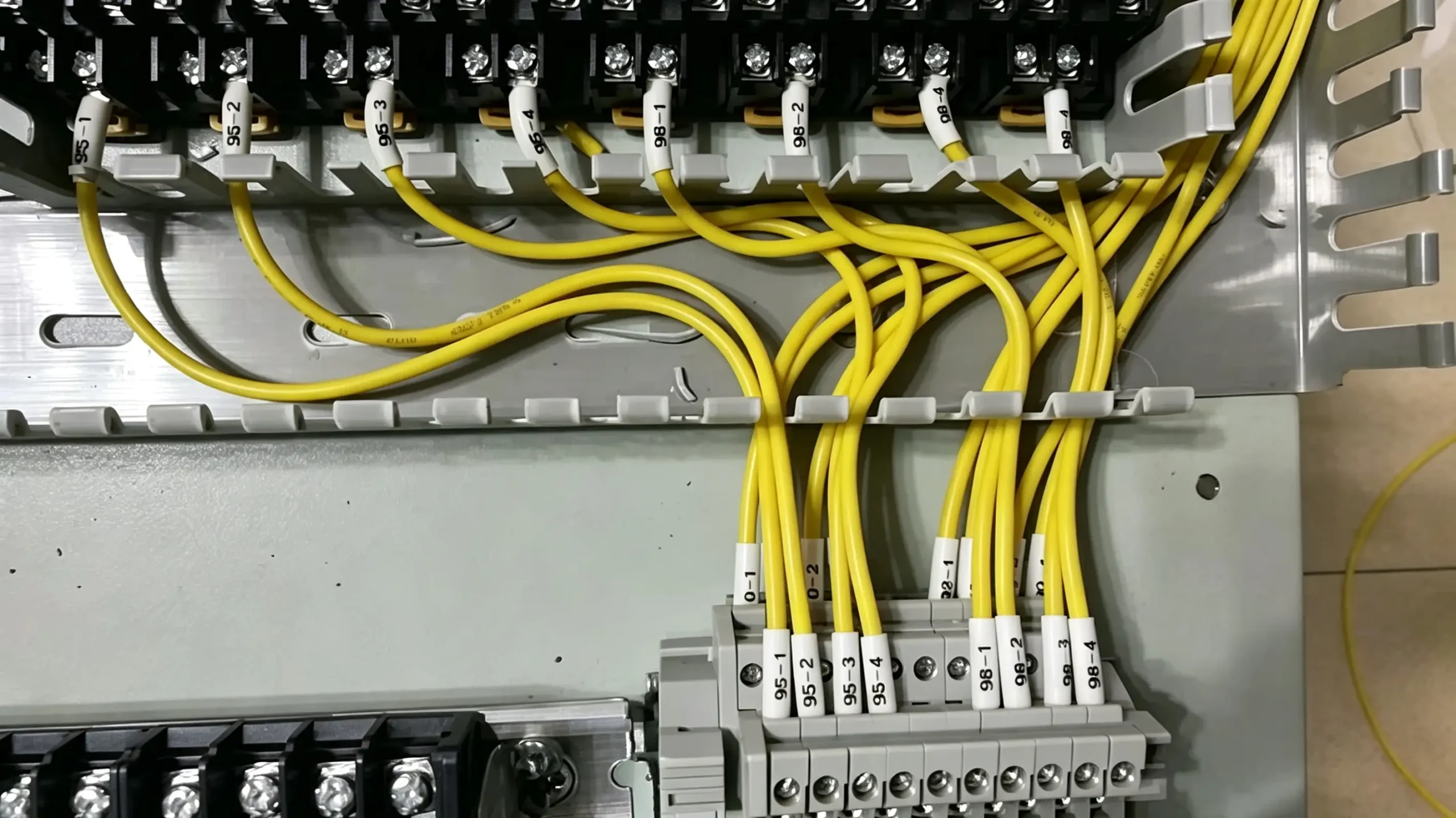
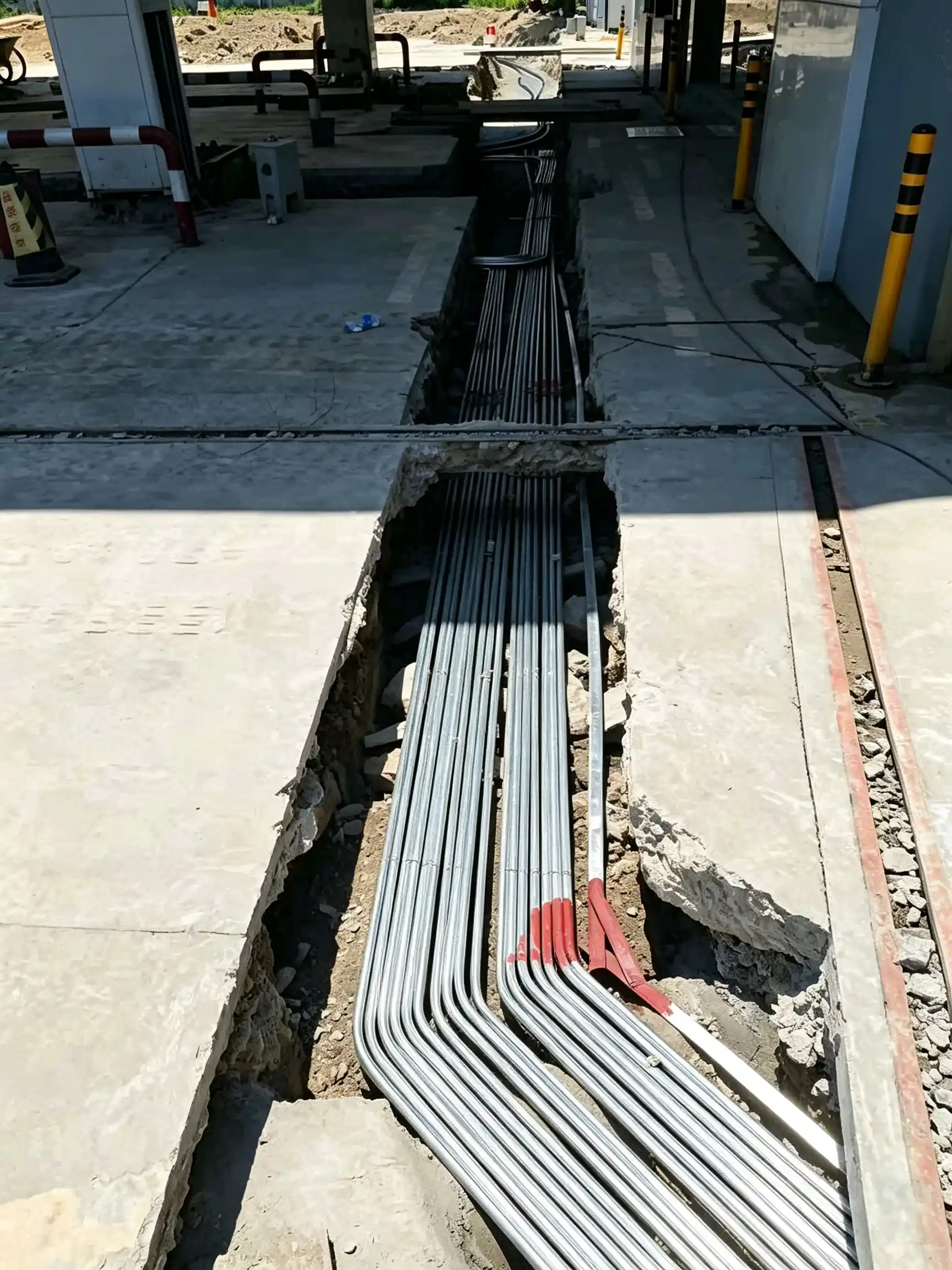
Cables crossing vehicle driveways should be protected by steel pipes or other suitable mechanical protection.
Cable Trench Requirements
If cable trenches are used, trenches inside hazardous working areas should be fully filled with fine sand.
Hollow trenches should not be left as enclosed spaces.
Gasoline vapor is heavier than air and can accumulate in low-lying or enclosed areas.
Therefore, the cable trench should not become an unnecessary space where flammable vapor can collect.
Keep Power Cables Away From Fuel Pipelines
Power cables should not share the same trench with:
- Fuel pipelines
- Heat pipelines
The basic principle is:
Electrical system ≠ Fuel pipeline system
Keeping them separately routed also makes inspection and future maintenance easier.
For fuel pipeline routing, pipe sizing, burial depth and underground installation, see our [Gas Station Underground Fuel Piping Guide].
5. Hazardous Area Classification: Know Where You Can Use Electrical Equipment
A gas station is different from an ordinary commercial building because gasoline vapor can create explosive atmospheres.
Hazardous areas are generally classified as:
Zone 0 → Zone 1 → Zone 2
according to the likelihood and duration of an explosive atmosphere being present.
Zone 0
Typical example:
Inside the gasoline tank vapor space
Equipment installed in this area must be suitable for the applicable hazardous environment.
Zone 1
Typical examples include areas associated with fuel release sources, such as:
- Tank manhole areas
- Fuel unloading areas
- Other locations where gasoline vapor may be released during normal operation
Electrical equipment installed in these areas must meet the applicable explosion-proof requirements.
Zone 2
These are areas where an explosive atmosphere is not expected during normal operation but may occur temporarily.
Parts of the area surrounding fuel dispensers may fall into Zone 2 depending on the specific hazardous-area classification.
The correct sequence is:
Hazardous Area Classification
↓
Electrical Equipment Selection
↓
Wiring Method
↓
Installation
↓
Inspection
Do not reverse this sequence.
6. Explosion-Proof Electrical Equipment: What Should You Check?
Once the hazardous areas have been identified, electrical equipment can be selected accordingly.
Do not check only the fuel dispenser.
The equipment list may also include:
- Explosion-proof junction boxes
- Cable glands
- Switches
- Sockets
- Distribution equipment
- Lighting fixtures
- Sensors
- Communication equipment
- Conduits and fittings
- Emergency electrical equipment
Ordinary household sockets should not be installed within hazardous areas.
Temporary maintenance sockets must also be suitable for the area where they are used.
A practical selection method
Before purchasing any electrical component, ask:
Where will this equipment be installed?
Then determine:
Hazardous Zone → Protection Type → Certification → Installation Method
This prevents a common procurement mistake:
Buying the equipment first and discovering the hazardous-area requirements later.
7. UPS, Emergency Lighting and Generator: Don’t Treat Them as One System
These three systems have different purposes.
| System | Main Purpose | Typical Loads |
|---|---|---|
| UPS | Uninterrupted short-term backup | Tank monitoring, data, POS, CCTV |
| Emergency lighting | Maintain emergency illumination | Sales room, canopy, evacuation routes |
| Generator | Backup power for selected loads | Pumps, lighting and other designated loads |
For example, during a power failure:
Mains Power Fails
↓
UPS Maintains Critical Monitoring
↓
Emergency Lighting Starts
↓
Generator Starts, If Installed
↓
Selected Loads Are Restored
This sequence helps the designer determine exactly which equipment needs which type of backup power.
8. How to Plan the Electrical System Before Equipment Procurement
This is the point where a gas station project moves from “what equipment do I need?” to “how should the whole system be configured?”
Step 1 — Confirm the Incoming Power
Determine:
- 220/380V
- Single-phase or three-phase
- 50/60Hz
- Available electrical capacity
Step 2 — List All Electrical Loads
Prepare a complete list of:
- Fuel dispensers
- Submersible pumps
- Tank monitoring
- Leak detection
- Lighting
- POS
- CCTV
- Communication equipment
- Emergency systems
Step 3 — Mark the Hazardous Areas
Identify:
Zone 0 / Zone 1 / Zone 2
Then determine which equipment requires hazardous-area protection.
Step 4 — Plan Cable Routes
Determine:
- Cable routes
- Cable trenches
- Steel pipe protection
- Vehicle crossing protection
- Separation from fuel pipelines
Step 5 — Determine Backup Power
Decide whether the project requires:
UPS / Emergency Lighting / Generator
Each system should have a clearly defined purpose.
Step 6 — Select Equipment
Only after the previous steps are confirmed should you finalize:
Distribution Equipment → Lighting → UPS → Monitoring → Explosion-Proof Equipment → Generator → Fuel Dispenser/Pump
This sequence can significantly reduce equipment mismatch during construction.
9. Pre-Commissioning Electrical Checklist
Before the gas station starts operation, inspect the electrical system as a complete chain.
| Check Item | What to Verify |
|---|---|
| Incoming power | Voltage and available capacity |
| Distribution system | Circuit allocation and protection |
| UPS | Backup operation |
| Emergency lighting | ≥90 min |
| Canopy lighting | ≥IP44 |
| Cable routing | Correct route and mechanical protection |
| Cable trenches | Proper protection and sand filling |
| Fuel pipeline routing | Separate from power cables |
| Hazardous-area equipment | Correct protection and certification |
| Generator | Exhaust arrangement and safety distance |
| Grounding | Continuity and resistance |
| Emergency shutdown | Functional test |
| Tank monitoring | Alarm and data functions |
| Leak detection | Alarm function |
| CCTV/POS | Backup and communication |
The key is not to ask only:
“Does every device work?”
Instead ask:
“Does the entire electrical safety chain work together?”
FAQ
Q1: What are the basic electrical requirements for a gas station?
A gas station normally requires an appropriate power supply, distribution system, grounding, emergency lighting, backup power for critical systems and suitable electrical equipment for hazardous areas.
Q2: Does a gas station need a UPS?
UPS is used for critical monitoring and information systems such as automatic tank gauging, leak detection, POS and security systems. It is not intended to power fuel dispensers or high-power pumps.
Q3: How long should gas station emergency lighting last?
Emergency lighting should remain operational for at least 90 minutes after power failure.
Q4: Can normal LED lights be installed under a gas station canopy?
Where the canopy area is outside the hazardous zone, non-explosion-proof lighting may be used, but the lighting fixture should meet the required environmental protection level, with IP44 or higher as the stated minimum.
Q5: Can power cables share a trench with fuel pipelines?
Power cables and fuel pipelines should be routed separately to reduce electrical, mechanical and maintenance risks.
Conclusion
A gas station electrical system should not be planned equipment by equipment.
The correct approach is to build the system from the site requirements:
Power Supply → Total Load → UPS & Backup Power → Cable Routing → Hazardous Area → Electrical Equipment → Installation → Commissioning
If you are building a new station, these decisions should be made before electrical equipment and fuel station equipment are purchased.
If you are renovating an existing station, start by checking the same chain:
Is the power capacity sufficient? Are the cable routes correct? Are hazardous areas properly identified? Are the installed electrical components suitable? Do the backup and emergency systems actually work?
Once these questions are answered, equipment selection becomes much clearer—and the risk of redesign, replacement and commissioning delays is greatly reduced.
Building or Renovating a Gas Station?
Don’t select equipment one item at a time. Share your station layout, fuel types, dispenser quantity and power requirements with us, and we can help you review the complete equipment configuration.