
Gas Station Fire Protection Equipment Requirements: Extinguishers, Fire Sand and Emergency Safety
News 2026年 8月 21日 100
Introduction
Gas station fire protection is not simply a matter of installing a few fire extinguishers. The equipment quantity, fire-water requirements, spill control and emergency shut-off system should be considered together.
For gasoline stations, several practical parameters are particularly important, including the number and type of extinguishers, the required amount of fire sand and fire blankets, and whether a dedicated fire-water system is necessary.
The following requirements are based primarily on GB 50156-2021. For projects outside China, the final design should also be checked against local fire codes and authority requirements.
1.Gas Station Fire Protection: Fire Extinguisher Requirements
The quantity and type of fire extinguishers should be determined according to the equipment and station configuration.
| Gas Station Area | Minimum Fire Protection Equipment |
|---|---|
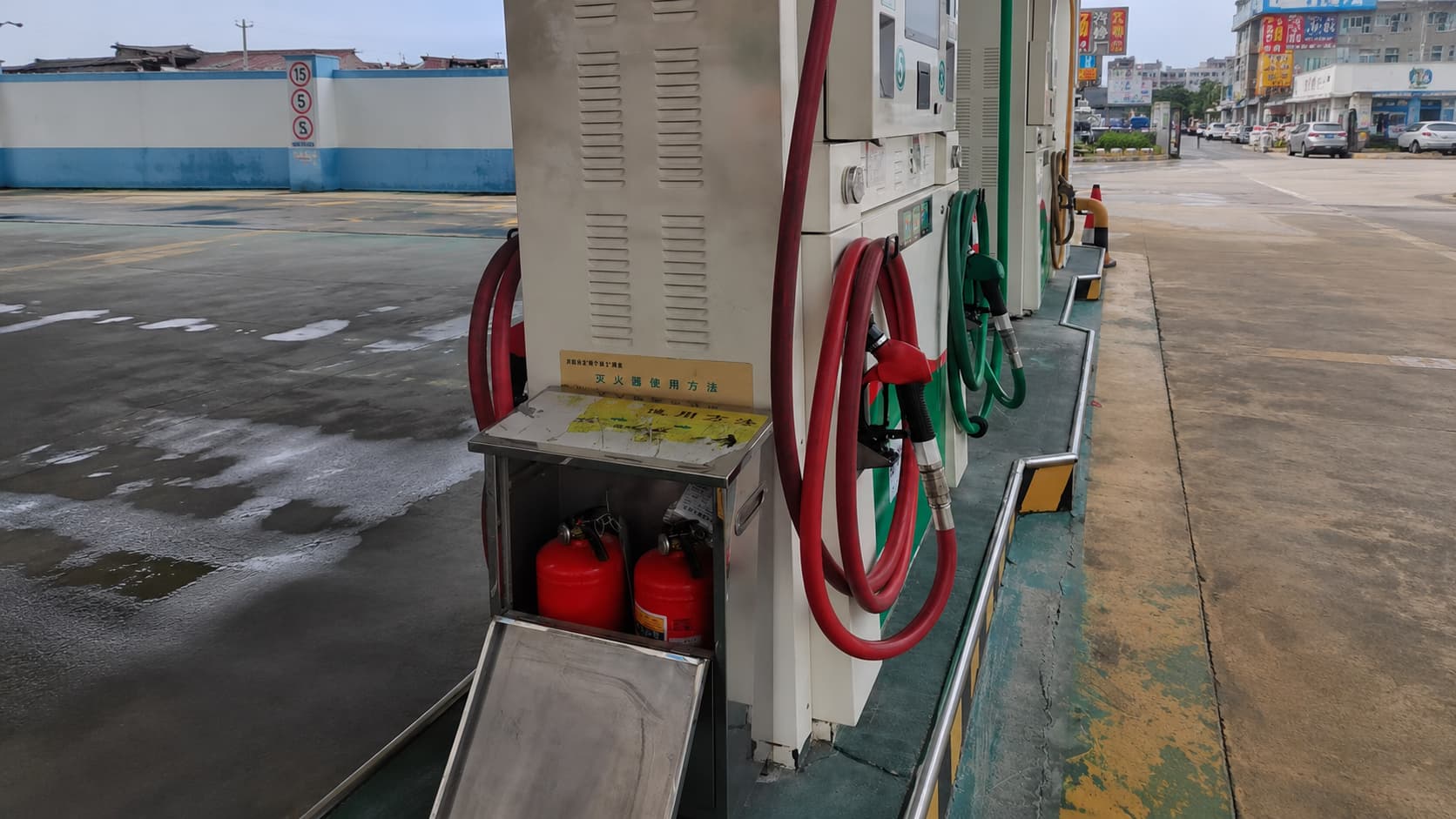
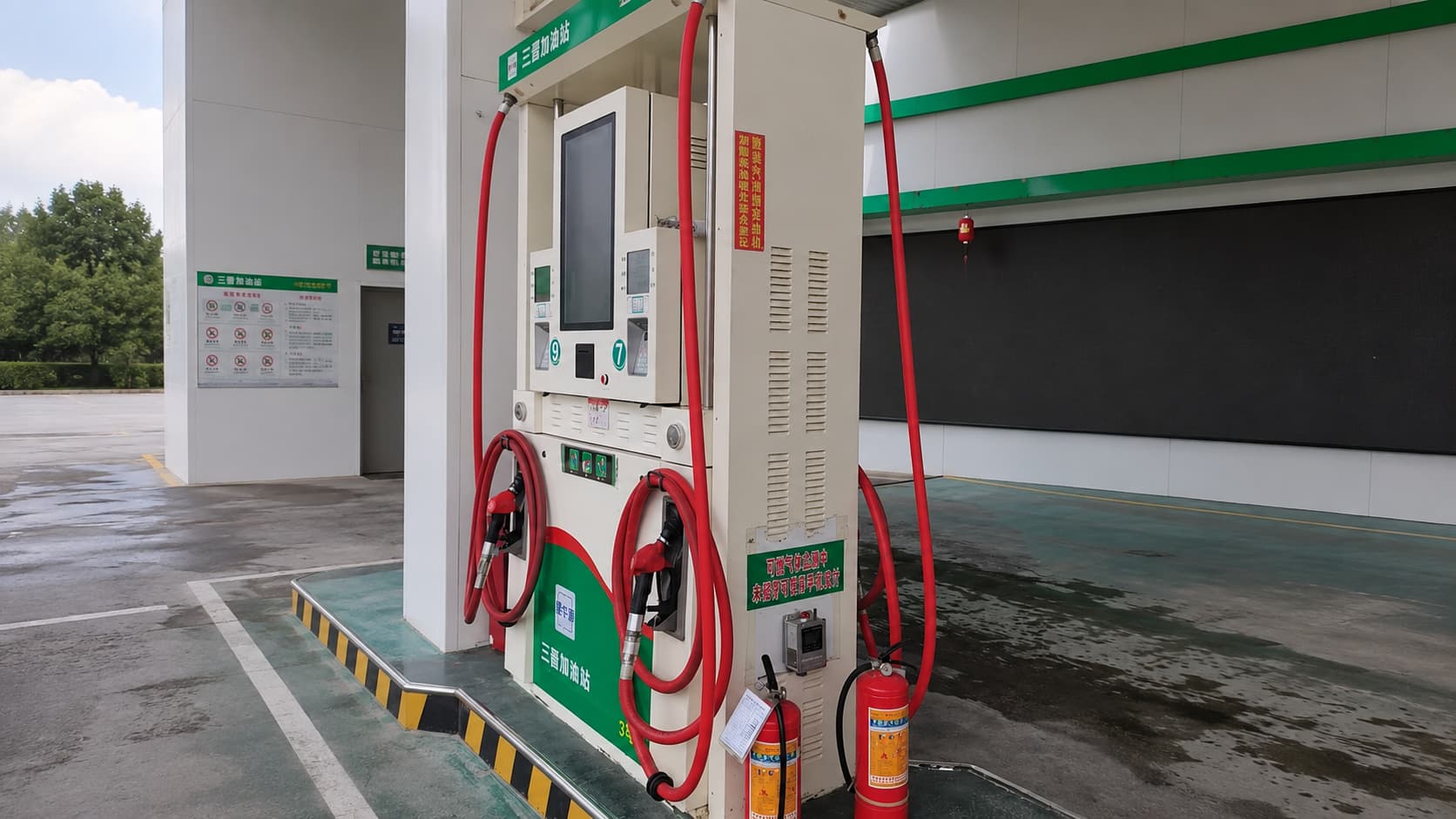
| Every 2 fuel dispensers | 2 × 5 kg portable dry powder extinguishers, or 1 × 5 kg dry powder extinguisher + 1 × 6 L foam extinguisher |
| Fewer than 2 fuel dispensers | Calculated as 2 dispensers |
| Underground fuel tank | 1 × ≥35 kg wheeled dry powder extinguisher |
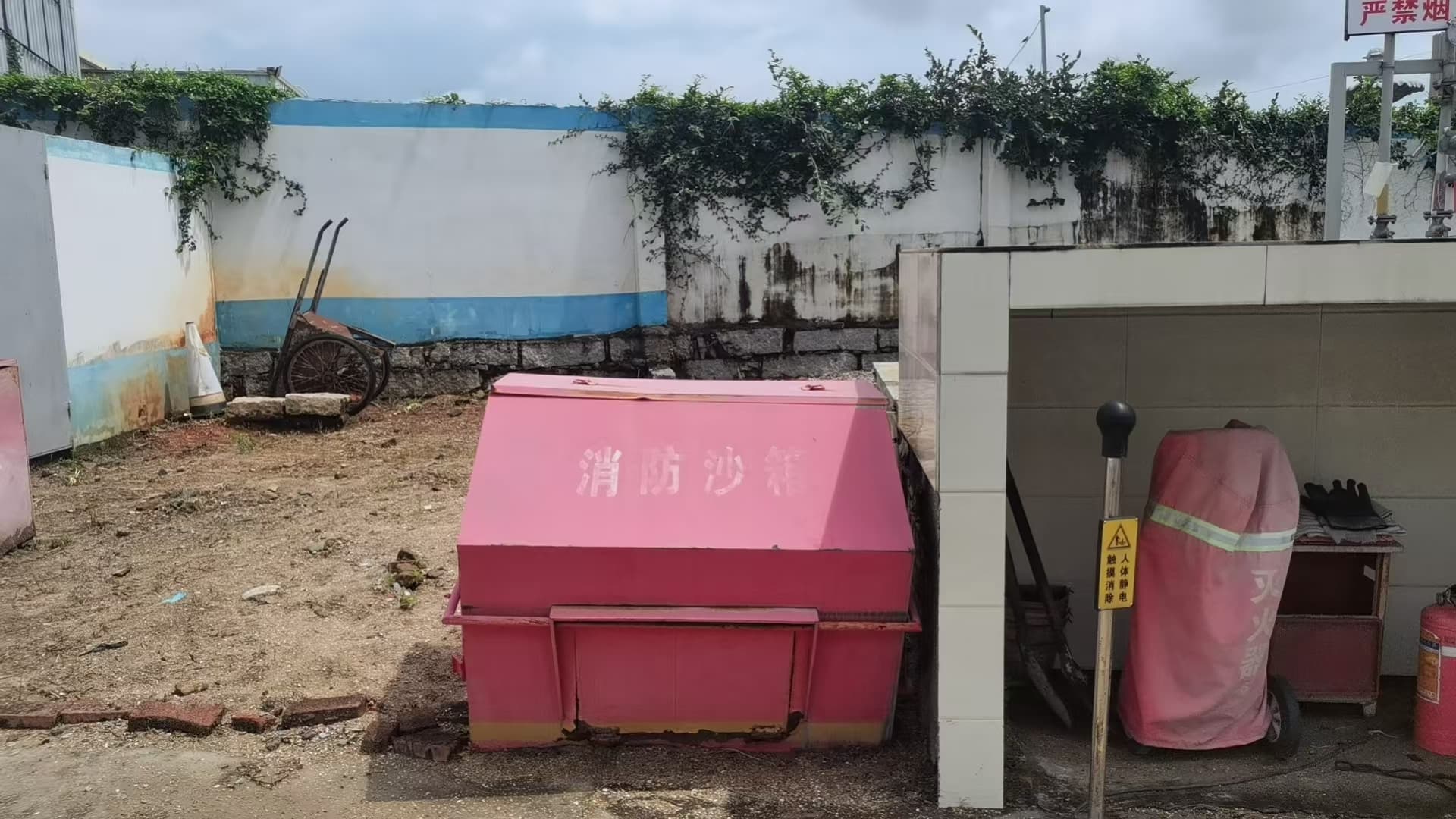
| Grade I & II gas stations | 5 fire blankets + 2 m³ fire sand |
| Grade III gas stations | ≥2 fire blankets + 2 m³ fire sand |
For example, a station with four fuel dispensers should provide at least 4 portable 5 kg dry powder extinguishers, or an equivalent combination of dry powder and foam extinguishers according to the applicable requirements.
Fire extinguishers should be positioned where operators can reach them quickly without entering an area affected by a fire or major fuel spill.
2. Fire Sand and Fire Blankets
Fire sand and fire blankets are supplementary fire-control equipment for handling small fires or localized fuel incidents.
Under GB 50156-2021:
- Grade I and Grade II stations: 5 fire blankets and 2 m³ of sand
- Grade III stations: at least 2 fire blankets and 2 m³ of sand
The key point is that fire sand and blankets should not be treated as substitutes for portable or wheeled extinguishers.
A practical fire-protection arrangement is therefore:
Portable Extinguisher → Initial Fire Control
Fire Sand → Localized Fuel Spill / Fire Control
Fire Blanket → Appropriate Small-Fire Situations
3. When Is a Fire-Water System Required?
A dedicated fire-water system is not automatically required for every gasoline station.
Under GB 50156-2021, requirements become more specific for LPG, LNG and hydrogen facilities.
Some important reference values include:
| Facility | Fire-Water Requirement |
|---|---|
| Above-ground LPG storage | ≥20 L/s |
| Underground LPG storage — Grade I | ≥15 L/s |
| Underground LPG storage — Grade II/III | ≥10 L/s |
| Grade I LNG facility where a fire-water system is required | ≥20 L/s |
| Grade II LNG facility where a fire-water system is required | ≥15 L/s |
| Mobile water gun / fixed cooling water outlet pressure | ≥0.2 MPa |
For certain LNG installations, a dedicated fire-water system may be omitted when the station is within 150 m of a municipal fire hydrant and the available water supply meets the applicable flow requirement.
Therefore, fire-water design should be checked according to fuel type, storage arrangement, station grade and local fire regulations, rather than applying one fixed water-flow value to every station.
4. Fire Protection During Fuel Unloading
Fuel unloading is one of the critical operating stages because it combines fuel transfer, vapor release, static electricity and connection risks.
Fire protection should therefore be coordinated with:
- Emergency shut-off system
- Static grounding
- Fuel unloading connections
- Vapor recovery system
- Spill containment and drainage
A simplified emergency sequence is:
Fire or Major Fuel Leak → Emergency Shut-Off → Stop Fuel Transfer → Control Initial Fire → Evacuate
The emergency shut-off system should remain accessible during normal operation and should be tested as part of commissioning and routine maintenance.
5. Drainage and Fuel Spill Control
Fire protection also includes controlling the movement of spilled fuel and contaminated water.
For gas stations covered by the applicable requirements:
- Water seal height: ≥0.25 m
- Sediment section height: ≥0.25 m
- Drainage pits and rainwater inlets should not be located in operating areas or locations where leaked fuel may flow.
- Cleaning wastewater from fuel tanks should be collected and treated rather than discharged directly into drainage systems.
- Gas stations should not use drainage arrangements prohibited by the applicable standard.
These requirements help prevent spilled fuel from spreading through the drainage system and reduce the risk of secondary fire or environmental contamination.
For more information about controlling underground fuel leakage, see our guide to [Gas Station Secondary Containment: Double-Wall Tanks and Leak Detection Systems].
6. Emergency Shut-Off and Fire Protection
Fire extinguishers are only one part of a complete gas station fire-protection system.
When a serious leak or fire occurs, the first priority is to stop fuel transfer before attempting to control the incident.
A basic protection sequence is:
Detect → Shut Off Fuel → Isolate the Hazard → Extinguish / Control → Evacuate
Emergency shut-off devices should therefore be integrated with the fuel dispenser, pumps and fuel supply system rather than treated as an independent safety device.
Proper fuel dispenser installation should also coordinate piping, electrical, grounding and emergency safety connections.
Need help coordinating fuel dispensers, pumps, piping and emergency safety systems? Contact our team for technical support and equipment configuration.
7.FAQ
1. How many fire extinguishers are required for a gas station?
Under GB 50156-2021, every 2 fuel dispensers should be equipped with at least 2 × 5 kg portable dry powder fire extinguishers, or 1 × 5 kg dry powder extinguisher + 1 × 6 L foam extinguisher. If fewer than 2 dispensers are installed, the requirement is still calculated based on 2 dispensers.
2. How much fire sand and how many fire blankets does a gas station need?
Grade I and Grade II gas stations should be equipped with 5 fire blankets and 2 m³ of fire sand. Grade III stations should have at least 2 fire blankets and 2 m³ of fire sand.
3. Does every gas station need a dedicated fire-water system?
No. A dedicated fire-water system is not automatically required for every gasoline station. The requirement depends on the fuel type, storage arrangement, station grade and applicable regulations. LPG, LNG and hydrogen facilities may have additional fire-water requirements.
4. What are the key fire-water requirements for LPG and LNG facilities?
Depending on the facility and station grade, the required fire-water flow can range from 10 L/s to 20 L/s. Where applicable, the outlet pressure for mobile fire hoses or fixed cooling systems should be at least 0.2 MPa.
5. What drainage requirements are important for fuel spill control?
For applicable gas station drainage systems, the water seal height should be at least 0.25 m, and the sediment section height should also be at least 0.25 m. Drainage pits and rainwater inlets should not be located where leaked fuel could flow, helping prevent fuel or contaminated water from spreading through the drainage system.
8. Gas Station Fire Protection Checklist
Before commissioning a gas station, the following items should be checked:
| Check Item | Key Requirement |
|---|---|
| Portable extinguishers | Correct type and quantity |
| Wheeled extinguisher | Provided for underground tanks where required |
| Fire blankets | Quantity meets station grade |
| Fire sand | Required quantity available |
| Fire-water system | Checked according to fuel type and applicable code |
| Drainage | Spill-control and water-seal requirements satisfied |
| Emergency shut-off | Accessible and functional |
| Fire equipment | Clearly accessible and regularly inspected |
Conclusion
Effective gas station fire protection depends on more than the number of extinguishers installed.
For a typical gasoline station, the most important reference values include 2 × 5 kg extinguishers for every 2 dispensers, a ≥35 kg wheeled extinguisher for underground fuel tanks, 2 m³ of fire sand, and the required number of fire blankets according to station grade.
For LPG and LNG facilities, additional fire-water requirements may apply, including flow rates of 10–20 L/s and minimum outlet pressure of 0.2 MPa under the applicable conditions.
At the same time, drainage and spill-control details such as a 0.25 m water seal should not be overlooked. A well-designed gas station should integrate fire extinguishing, emergency shut-off, spill control, drainage and fuel containment into one coordinated safety system.
For more practical gas station engineering guides and industry updates, see our gas station news and technical articles.
Planning a new gas station or upgrading an existing one? Contact us for fuel dispensers, pumps, underground fuel system equipment and complete gas station equipment supply.