
Fuel Tank Bottom Valve Problems: What Happens When a Fuel Dispenser Loses Prime?
News 2026年 9月 14日 67
Your fuel dispenser was working normally yesterday. This morning, when you picked up the nozzle to refuel, it took two or three minutes before fuel started flowing. When you restarted the dispenser a few minutes later, the pump had to run for a while before fuel reached the nozzle.
Fuel tank bottom valve problems can cause a fuel dispenser to lose prime, but how can you tell whether the bottom valve is actually the cause?
Is the pump failing?
Is air entering the suction line?
Or is the bottom valve inside the underground tank no longer able to maintain the fuel column in the suction line, allowing the fuel to flow back into the tank?
This type of failure can easily lead troubleshooting in the wrong direction. A fuel dispenser that cannot deliver fuel does not necessarily have a pump problem.
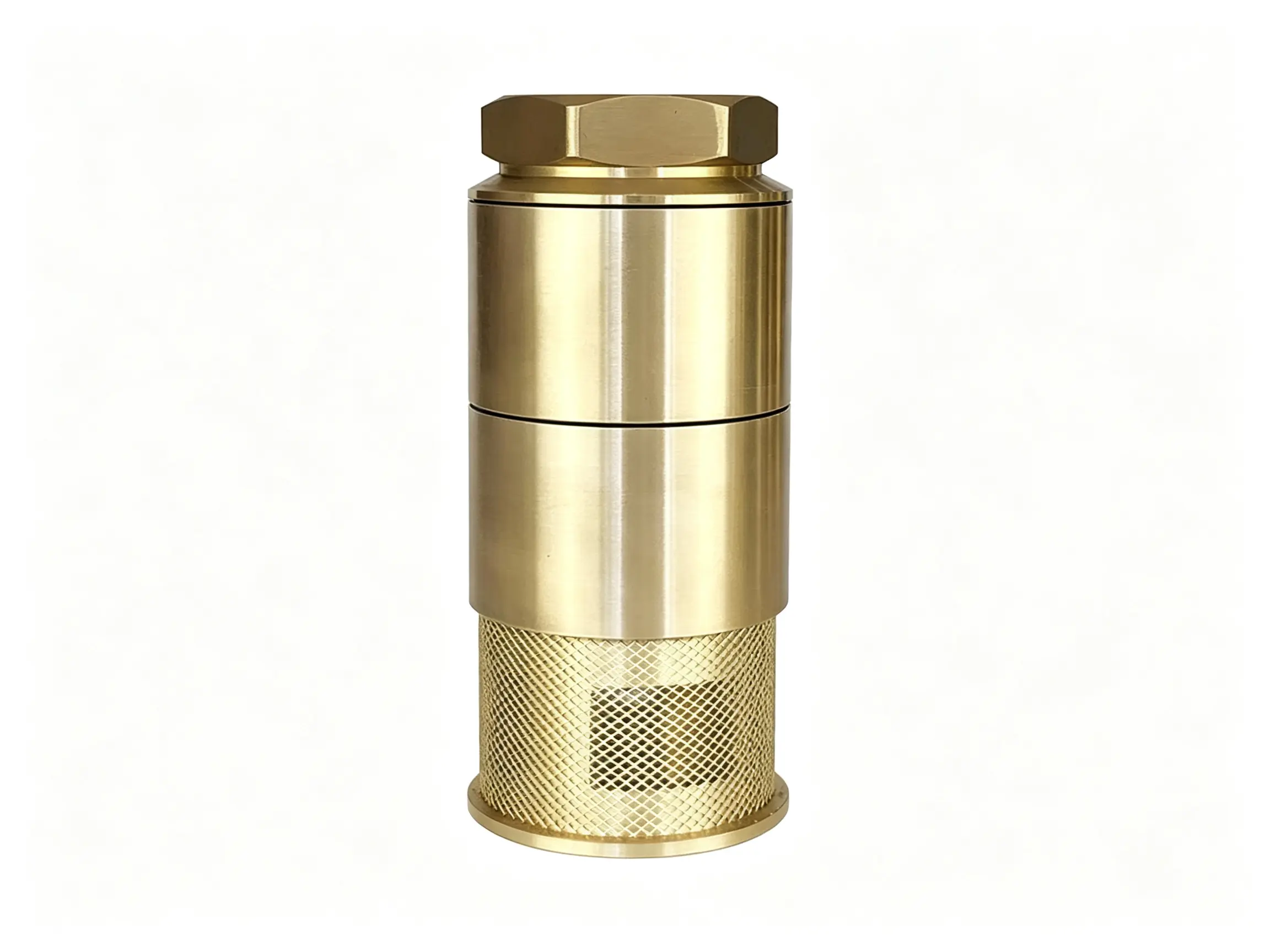
In a suction fuel system, the bottom valve is installed at the bottom of the suction pipe inside the underground storage tank. Its function is to help keep the suction line filled with fuel after the pump stops. Franklin Electric describes this type of component as helping maintain suction in fuel systems, while a double-poppet design provides additional protection against loss of prime.
Therefore, the first question should be:
If the pump has to run for a while before fuel reaches the nozzle after the dispenser has been stopped for several minutes, how can you determine whether the bottom valve is causing the loss of prime?
This article follows a practical troubleshooting process to identify the actual cause.
1. What Happens When a Fuel Dispenser Loses Prime?
A typical suction fuel system follows this path:
Underground Storage Tank → Bottom Valve → Suction Pipe → Pump → Fuel Dispenser
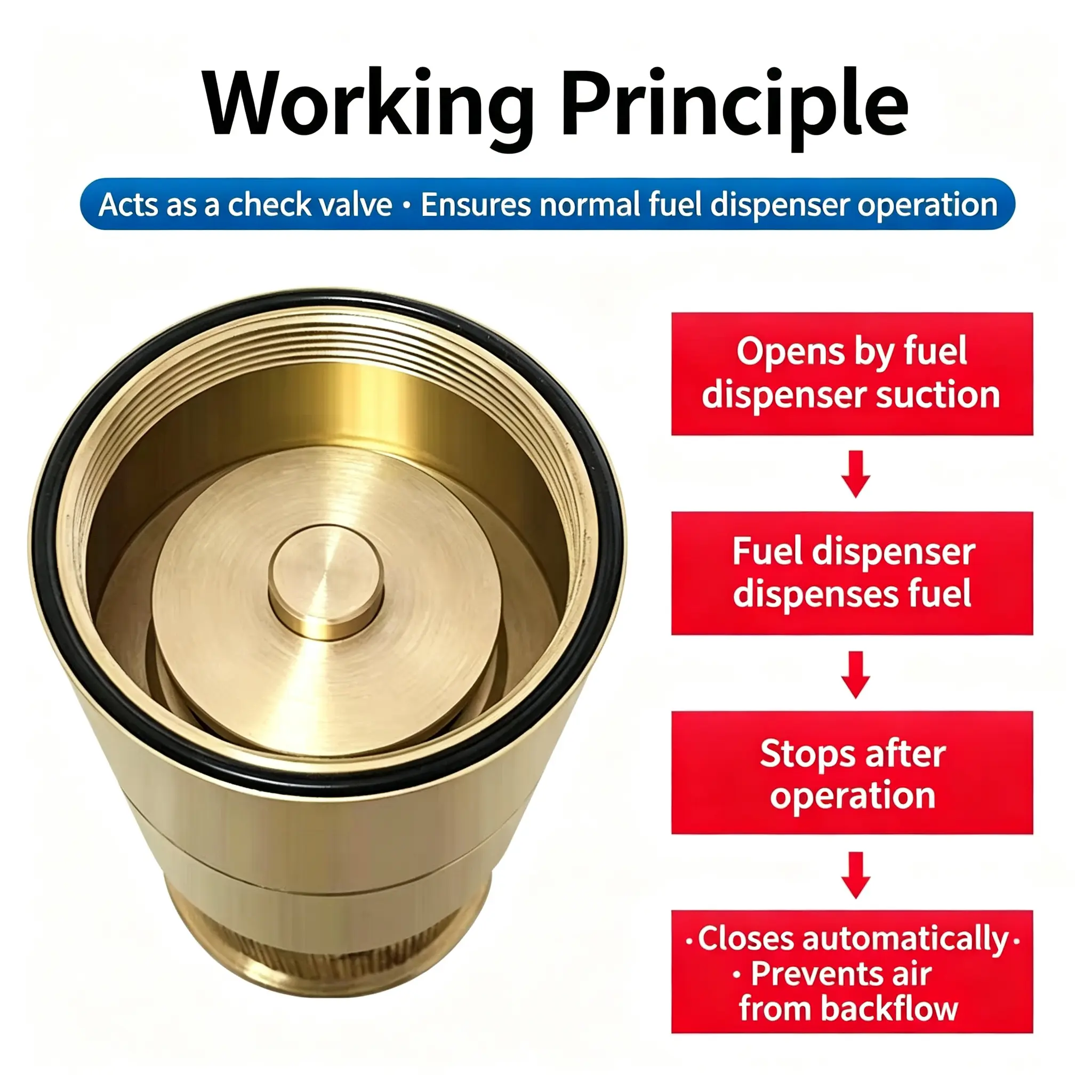
After the pump stops, the bottom valve helps keep the suction line filled with fuel. If the valve cannot seal correctly, fuel can flow back into the underground tank.
When the dispenser starts again, the pump must refill the suction line before fuel reaches the nozzle.
Common Symptoms
| Symptom | Possible Cause |
|---|---|
| Loss of prime after shutdown | Bottom valve or suction-line air leakage |
| Fuel returns to tank | Damaged seat, poppet, or debris |
| Repeated re-priming | Bottom valve or air leakage |
| Low initial flow | Suction condition or filter restriction |
| Unstable flow | Air ingress or pipe resistance |
| Problem after tank cleaning | Debris affecting seat or screen |
Important: fuel tank bottom valve problems are not the only cause of prime loss. Air entering the suction line, damaged seals, restricted filters, other check valves, and excessive pipe resistance can produce similar symptoms.
2. How a Fuel Tank Bottom Valve Causes Prime Loss
The bottom valve is installed at the bottom of the suction pipe inside the underground storage tank.
Its function is to allow fuel to flow toward the pump while helping prevent reverse flow after shutdown.
If the poppet cannot fully close because of dirt, foreign material, a damaged sealing surface, wear, corrosion, damaged seals, or mechanical problems, fuel may gradually return to the tank.
A common field symptom is:
The dispenser works normally after priming, but after several minutes of shutdown, the pump has to run again before fuel reaches the nozzle.
This indicates that the system should be checked for loss of prime before the pump is replaced.
If you are unsure whether the problem is caused by the bottom valve or the suction line, send us a photo of the existing valve and its installation condition for a preliminary check.
3. Double Poppet Foot Valve: Design and Specifications
Different manufacturers may use terms such as:
- Double Poppet Foot Valve
- Double Poppet Bottom Valve
- Double Door Bottom Valve
- Bottom Check Valve
- Foot Valve
These names do not necessarily mean that all valves have identical internal construction.
Franklin Electric Foot Valve Specifications
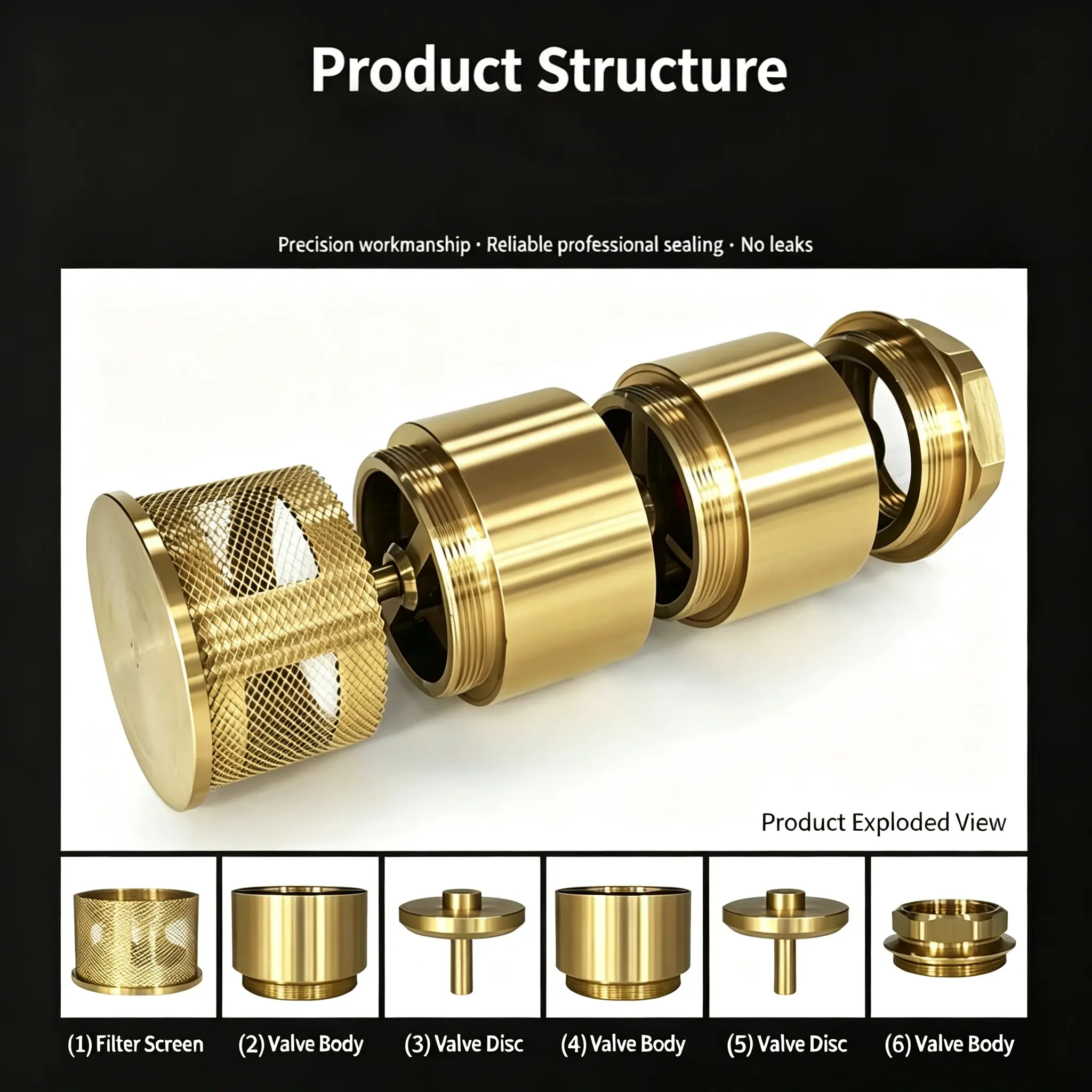
Franklin Electric brass foot valves are available in ½”, ¾”, 1″, 1½”, and 2″ sizes, with both single-poppet and double-poppet designs.
The referenced designs use:
- Brass body
- Brass poppet
- 24-mesh screen
- Metal-to-metal sealing
- Pressure testing
The double-poppet design provides additional protection against loss of prime.
4. Preferred Utilities Model 22: Key Dimensions
The Preferred Utilities Model 22 is another double-poppet foot valve design.
Its construction includes a 20-mesh Monel screen, flat poppet, raised seat, lapped sealing surfaces, and a stem-guided poppet.
The Model 22 specifies a maximum static head of 34 ft.
| Size | Outside Diameter | Height | Weight |
|---|---|---|---|
| ¾” | 2″ | 2″ | 1.2 lb |
| 1″ | 2⅛” | 4⅜” | 1.9 lb |
| 1½” | 2 11/16″ | 6″ | 4.3 lb |
| 2″ | 3¾” | 6⅝” | 6.3 lb |
These dimensions matter when selecting a replacement.
Do not choose a valve by nominal pipe size alone.
Connection type, materials, screen design, fuel compatibility, overall dimensions, and system configuration must also be checked.
5. How to Troubleshoot a Fuel Dispenser Losing Prime
Follow this practical troubleshooting sequence.
5.1 Confirm When the Problem Occurs
Determine whether the dispenser:
- loses prime only after shutdown;
- has low initial flow;
- requires repeated priming;
- or has continuously restricted flow.
The timing of the failure is an important diagnostic clue.
5.2 Check for Air Leakage
Inspect:
- threaded connections;
- pipe joints;
- gaskets;
- seals;
- pump inlet connections;
- suction piping.
Even a small air leak on the suction side can cause prime loss.
Proper fuel dispenser installation and piping connections are also important when troubleshooting suction-side air leakage.
5.3 Check Filters and Flow Restrictions
If the system maintains prime but flow remains low, inspect:
- filter condition;
- suction pipe resistance;
- foreign material;
- other flow restrictions.
A dirty filter does not automatically mean the bottom valve has failed.
For practical filter inspection and maintenance, see our guide to Fuel Dispenser Filter Cleaning.
5.4 Inspect the Bottom Valve
Check the:
- screen;
- poppet;
- seat;
- sealing surfaces;
- seals;
- corrosion;
- debris;
- mechanical damage.
Debris between the poppet and seat can prevent complete closure.
5.5 Check the Suction Pipe and Other Check Valves
A damaged suction pipe or another faulty check valve can create symptoms similar to bottom valve failure.
5.6 Evaluate the Pump Last
Only after the suction system, filter, bottom valve, and other possible causes have been checked should the pump itself be considered the primary fault.
For other fuel dispenser components and replacement parts, see our Fuel Dispenser Parts category.
6. Clean or Replace the Fuel Tank Bottom Valve?
A contaminated valve does not always require replacement.
If debris prevents the poppet from sealing, cleaning may restore normal operation.
Replace the Valve When:
- the poppet is damaged;
- the sealing seat is worn;
- deep scratches are present;
- the screen is damaged;
- severe corrosion is present;
- mechanical damage is found;
- the system repeatedly loses prime after cleaning.
A dirty screen alone does not prove that the complete valve has failed.
7. Fuel Tank Bottom Valve vs. Emergency Shut-Off Valve
These two components are sometimes confused during maintenance or purchasing.
A fuel tank bottom/foot valve is installed at the bottom of the suction pipe inside the underground storage tank. Its main function is to help maintain prime in a suction system.
An OPW 10 Series emergency shut-off/shear valve is installed below the dispenser near the ground-level fuel supply piping.
Its purpose is to shut off fuel if the dispenser is struck, pulled over, or displaced.
For applicable models, the fusible element closes at 165°F (74°C).
Therefore, a bottom valve and an emergency shut-off valve are different components with different installation locations, functions, and failure modes.
The installation location should be checked together with the overall underground fuel tank installation and piping arrangement.
8. What to Check Before Bottom Valve Replacement
Before ordering a replacement fuel tank bottom valve, confirm:
- Valve type — single or double poppet
- Nominal size — ¾”, 1″, 1½”, 2″, etc.
- Connection type — NPT, BSPT, or other
- Body material
- Poppet material
- Screen mesh and material
- Fuel type — gasoline, diesel, ethanol blends, biodiesel, etc.
- System type — suction or pressure
- Overall dimensions — outside diameter and height
- Pressure/static head rating
- Installation location
The most useful information for checking compatibility is:
Existing valve photos + dimensions + connection type + fuel type + installation information.
For complete fuel dispensing equipment, see our Fuel Dispensers category.
9. Do Not Replace the Pump Too Early
A fuel dispenser that takes several minutes to deliver fuel does not always have a failed pump.
If the system loses prime after shutdown and fuel returns to the underground tank, investigate the bottom valve, suction line, and air leakage first.
If prime is maintained but flow remains low, investigate the filter, suction pipe resistance, and other flow restrictions.
The correct troubleshooting sequence can prevent unnecessary pump replacement and help identify the actual source of the problem.