
Aluminum Camlock Coupling for Tanker: Types, Selection & Leak Prevention
News 2026年 9月 30日 39
Aluminum camlock coupling for tanker applications require the right connection type, size, seal material, and installation method to maintain a reliable fuel transfer connection. Fuel tank trucks, gas stations, and oil depots need quick and leak-resistant hose connections, especially during frequent loading and unloading operations.
Traditional threaded pipe fittings can be time-consuming to install and remove. This is why aluminum camlock coupling for tanker systems are widely used for fuel transfer applications involving gasoline, diesel, and kerosene.
In this guide, we will explain the most common camlock types, how to select the right size and connection, and how to prevent common leakage problems.
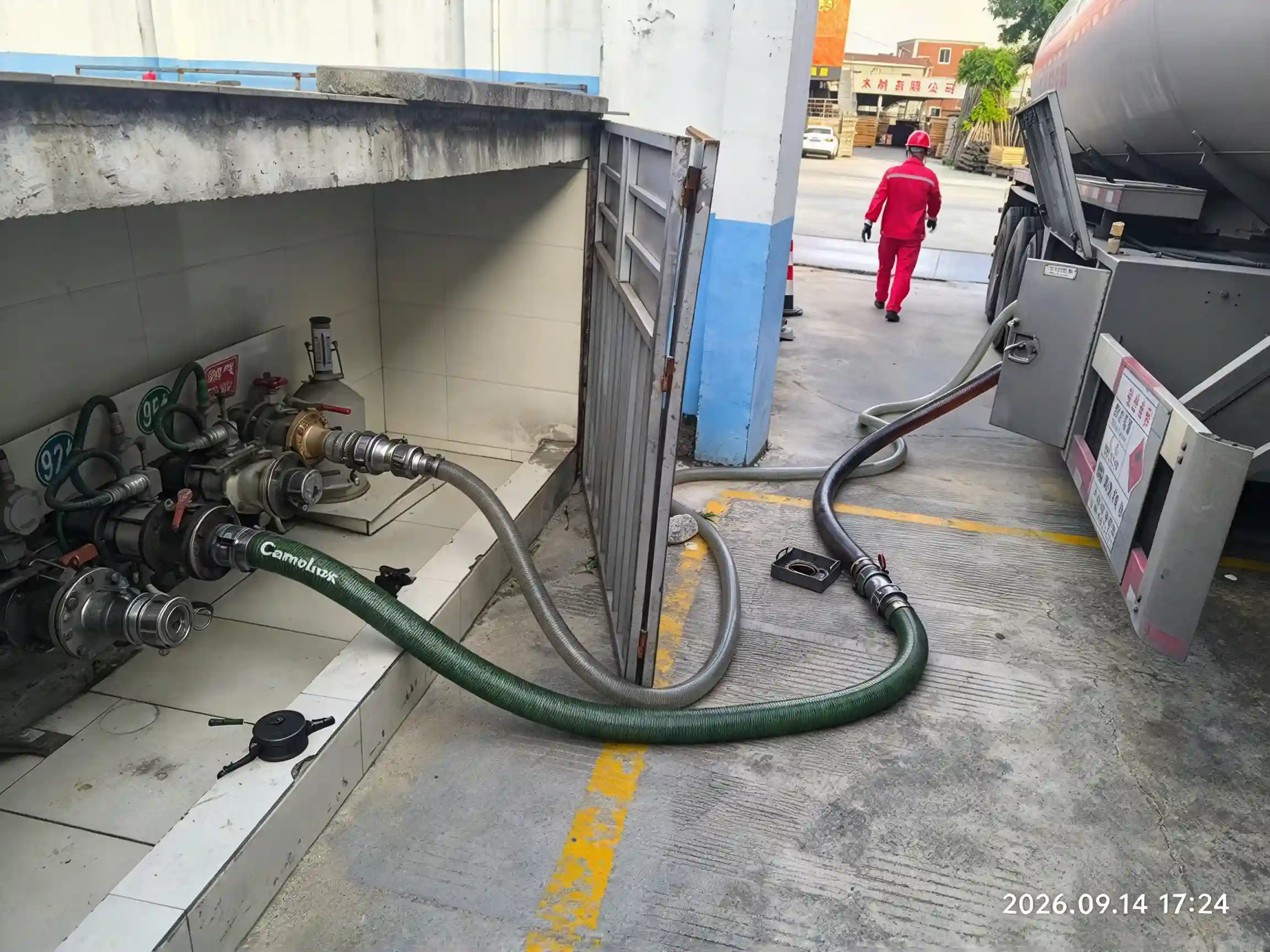
1. What Is a Camlock Coupling?
A camlock coupling is a fast connect/disconnect fitting widely used for liquid transfer applications, including petroleum fuels such as gasoline, diesel, and kerosene when the coupling material and seal are suitable for the specific fuel.
For an aluminum camlock coupling for tanker, the main components normally include the aluminum coupling body, cam arms, adapter, and sealing gasket.
Our fuel-grade aluminum camlock features:
- Lightweight aluminum alloy die-cast body
- Durable brass cam levers for repeated switching
- Oil-resistant NBR rubber seal
- Tool-free connection and disconnection
- Corrosion-resistant design suitable for outdoor tanker and station applications
Compared with ordinary threaded fittings, camlock couplings allow workers to connect and disconnect hoses quickly, making them practical for high-frequency loading and unloading operations.
For other tanker connection components, you can also see our fuel tanker aluminum ball valve for fuel transfer and tanker pipeline applications.
Need help selecting the right tanker connection? Contact us with your hose size, connection type, and application.
2. 3 Most Common Aluminum Camlock Types for Fuel Tank Trucks
Choosing the correct camlock type is important for preventing connection problems, leakage, and installation delays. When selecting an aluminum camlock coupling for tanker applications, the connection type should match the hose, pipeline, and equipment interface.
The following three configurations are commonly used for fuel tanker and fuel transfer applications.
2.1 Type C Camlock (Female Coupler + Hose Shank)
Type C camlock is one of the most common configurations for flexible fuel hoses.
The hose shank can be inserted into a compatible rubber fuel hose and secured with an appropriate hose clamp or other suitable hose-retention method.
It is mainly used for movable discharge hoses on fuel tank trucks and other applications where the hose needs to be connected and disconnected frequently.
Application scenario: Tanker unloading hoses, mobile fuel delivery pipelines.
For customers looking for an aluminum camlock coupling for tanker hose assemblies, Type C is a practical option when the hose-shank connection matches the hose specification.
2.2 Type D Camlock (Female Coupler + Male Thread)
Type D camlock comes with a male threaded connection and is designed for connection to a compatible threaded port or pipeline fitting.
It can provide a convenient transition between a camlock connection and a threaded pipeline interface, making it practical for fixed fuel transfer systems where hoses or equipment need to be connected to threaded ports.
Application scenario: Fixed oil pipeline interfaces, fuel station pipeline connections, and equipment ports.
2.3 Reducing Camlock (Female to Reducing Male)
Different tankers, hoses, and pipeline systems may use different connection sizes, creating problems during equipment replacement or pipeline modification.
A reducing camlock can be used as a size transition fitting where the required connection configuration is compatible. It helps connect components with different nominal sizes without replacing the complete pipeline section.
Application scenario: On-site size conversion, old equipment replacement, pipeline modification, and fuel station renovation projects.
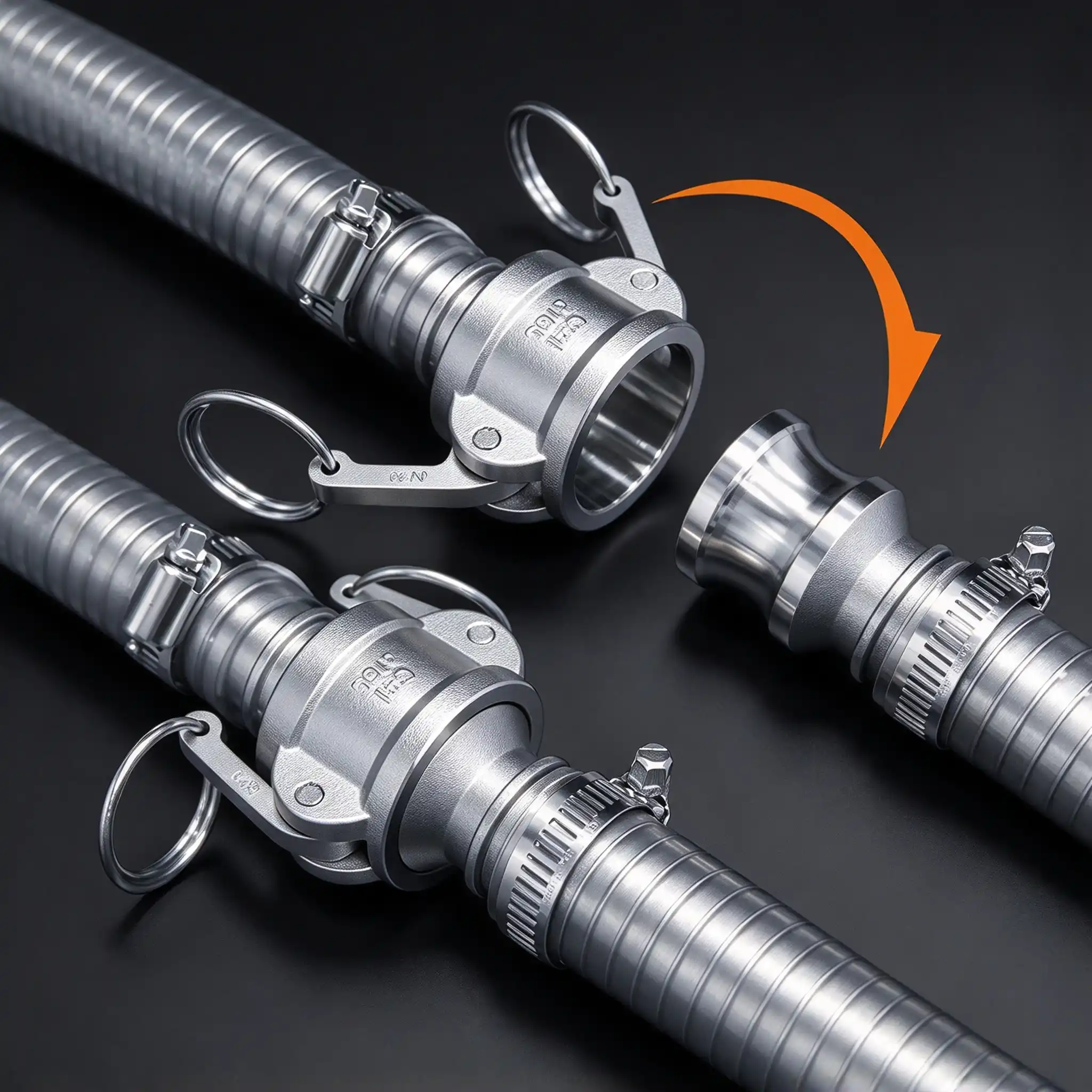
3. Aluminum Camlock Coupling for Tanker: Selection Guide
To avoid leakage, loose connections, and premature wear, consider the following factors when selecting an aluminum camlock coupling for tanker.
3.1 Material Selection
For gasoline and diesel transfer, aluminum body + NBR seal is a commonly used combination when it is compatible with the fuel, temperature, and pressure conditions.
The aluminum body provides a lightweight and corrosion-resistant construction, while the NBR seal offers good resistance to many petroleum-based fuels.
However, material compatibility should always be confirmed according to the actual fuel, operating temperature, pressure, and applicable local safety requirements.
3.2 Confirm the Working Environment
Camlock couplings used for fuel transfer should be selected according to the application environment and relevant safety requirements.
For petroleum applications, avoid selecting fittings simply based on low price or appearance. The coupling material, sealing material, pressure rating, connection size, and installation method should all match the fuel transfer system.
For potentially hazardous areas, the complete system should also comply with applicable explosion-protection, bonding, grounding, and static-control requirements.
3.3 Match Caliber and Connection Type
Before purchasing an aluminum camlock coupling for tanker, confirm:
- Hose inner diameter
- Nominal pipe size
- Male or female connection
- Hose shank or threaded connection
- Camlock type
- Working pressure
- Seal material
- Whether a reducing adapter is required
Wrong size or connection-type selection is one of the most common causes of installation delays and leakage problems.
Contact us if you are unsure whether Type C, Type D, or a reducing camlock is suitable for your tanker. Send us your required size and connection details for confirmation.
4. Installation & Maintenance Tips to Prevent Fuel Leakage
Most camlock leakage problems are not necessarily caused by the coupling body itself. Incorrect installation, damaged seals, contamination, mechanical wear, or incomplete locking can all affect sealing performance.
Proper installation is especially important for an aluminum camlock coupling for tanker because tanker hoses are frequently connected, disconnected, moved, and exposed to outdoor working conditions.
Follow these practices to improve service life and connection reliability:
- Check the NBR sealing ring before use. Replace aging, cracked, hardened, or deformed gaskets in time.
- Fully insert the male adapter into the female coupler. Make sure both cam levers are completely engaged and locked.
- Keep the connection surfaces clean. Dust, sand, fuel residue, and other foreign materials can affect proper sealing.
- Do not exceed the rated working pressure. The pressure rating of the coupling should match the actual fuel transfer system.
- Avoid excessive mechanical loading. Do not use the camlock connection to support the weight of a long or heavy hose.
- Store unused couplings correctly. Keep them in a clean and dry environment and protect sealing components from unnecessary aging.
For electrical and hazardous-area connections around fuel equipment, see our guide to explosion-proof flexible conduit.
5. Common Camlock Troubleshooting
Camlock Leaking
Possible reasons:
- Worn or damaged seal ring
- Incomplete locking
- Foreign matter on the sealing surface
- Incorrect coupling size
- Damaged sealing surface
- Excessive pressure or mechanical loading
Solution:
Replace the damaged gasket, clean the connection surface, confirm that the cam levers are fully locked, and check that the coupling is being used within its rated conditions.
If an aluminum camlock coupling for tanker continues to leak after replacing the seal, check the adapter, coupling body, connection size, hose movement, and operating pressure.
Stiff Cam Levers
Possible reasons:
- Dust accumulation
- Corrosion
- Mechanical wear
- Lack of appropriate maintenance
Solution:
Clean the movable parts and inspect the cam arms, pins, and locking mechanism. Replace worn components when necessary.
Interface Loosening
Possible reasons:
- Long-term high-frequency use
- Mechanical wear
- Hose movement or excessive external force
- Incorrect installation
Solution:
Inspect the coupling regularly and replace worn components according to actual operating conditions and working frequency.
6. Camlock Coupling for Fuel Tanker Applications
A fuel tanker camlock coupling is usually only one part of the complete tanker unloading system.
Depending on the system design, fuel transfer equipment may also include:
- Fuel delivery hoses
- Aluminum ball valves
- Tanker loading and unloading connections
- Emergency shut-off components
- Vapor recovery equipment
- Tanker breather valves
- Pipeline fittings and adapters
For tanker pressure and vapor management, our fuel tanker breather valve is another commonly used tanker accessory.
The correct combination of components depends on the tanker design, fuel type, connection size, operating pressure, and local regulations.
When purchasing an aluminum camlock coupling for tanker, it is therefore useful to consider the complete fuel transfer connection rather than selecting the coupling separately from the hose and pipeline.
7. FAQ: Aluminum Camlock Coupling for Tanker
Q1: Can aluminum camlock couplings be used for gasoline?
Yes, aluminum camlock couplings can be used for gasoline when the coupling body, seal material, pressure rating, and other specifications are suitable for the application.
Our aluminum camlock configuration with an NBR oil-resistant seal is designed for applications involving gasoline, diesel, and kerosene. Always confirm material compatibility and local safety requirements before use.
Q2: What is the difference between Type C and Type D camlock?
Type C is generally used for hose connections and features a hose shank. Type D has a female camlock connection on one side and a male threaded connection on the other side.
Therefore, Type C is commonly selected for flexible hose assemblies, while Type D is useful when connecting a camlock system to a threaded pipeline or equipment port.
Q3: How do I choose an aluminum camlock coupling for tanker applications?
First, confirm the hose diameter and nominal connection size. Then check the required camlock type, connection method, seal material, working pressure, and fuel compatibility.
If the tanker hose and pipeline use different sizes, a reducing camlock may also be required.
Q4: Do you support bulk wholesale and customized sizes?
Yes. We support full-size wholesale and customized processing for fuel tanker accessories, serving tanker manufacturers, engineering contractors, fuel equipment distributors, and spare parts distributors.
Q5: How long is the service life of a fuel camlock seal?
There is no fixed replacement period for every application. Seal life depends on fuel type, temperature, pressure, frequency of connection and disconnection, storage conditions, and installation quality.
Under frequent working conditions, seals may require regular inspection and replacement. Replace the sealing ring whenever it becomes cracked, hardened, deformed, or otherwise damaged.
8. Get Aluminum Camlock Coupling for Tanker Wholesale
We provide aluminum camlock couplings, oil-resistant seals, and fuel hose connection solutions for fuel tanker, gas station, oil depot, and fuel transfer applications.
Our camlock configurations can be selected according to connection size, hose type, thread specification, seal material, and application requirements.
We support small trial orders and large bulk wholesale for global clients, including customers in Africa, Southeast Asia, and the Middle East fuel equipment markets.
If you are sourcing aluminum camlock coupling for tanker, please provide:
- Required size
- Camlock type
- Hose diameter
- Thread specification
- Seal material
- Application
We can help you confirm the appropriate configuration according to your project requirements.
Contact us now for a quotation and product catalog. Send us your required size, camlock type, hose diameter, and application, and we will help you confirm the suitable configuration.