
Buy, Lease or Build? Three Ways to Enter the Gas Station Business in 2026
News 2026年 10月 27日 60
So you’ve decided to invest in a gas station. The next question is not “which equipment to buy” — it’s how to enter the business. There are three paths: buy an existing station, lease a dealership operation, or build one from the ground up. Each has a very different capital requirement, risk profile, time to revenue, and level of control.
If you’re deciding whether to buy, lease or build a gas station, understanding these differences can help you choose a path that fits your budget and long-term goals.
This guide compares all three paths for independent fuel retail investors in Nigeria, Kenya, the Philippines, Indonesia, Pakistan and Vietnam. It also explains which path makes the most sense depending on your budget, experience level, and long-term goals.
Planning note: All figures below are planning-level estimates, not formal quotations. Actual costs depend on location, station age, equipment condition, brand agreement terms and local regulations.
1. The Three Paths at a Glance
| Buy Existing Station | Lease / Dealership | Build New | |
|---|---|---|---|
| Upfront capital | High ($100K–$1.5M+) | Low–medium ($35K–$300K) | Medium–high ($25K–$600K+ land extra) |
| Time to open | 1–3 months | 1–2 months | 8–18 months |
| Proven fuel volume? | Yes (historical records) | Maybe (brand provides site) | No — unknown until opened |
| Existing licenses? | Yes (transfer required) | Yes (brand holds them) | No — you apply from scratch |
| Equipment condition | Usually aging, may need retrofit | Brand-owned or specified | Brand new, your choice |
| Asset ownership | You own land + station | You own nothing (operating lease) | You own everything (if you buy land) |
| Control over decisions | Full | Limited (brand rules) | Full |
| Best for | Experienced operators, fast entry | First-timers, low risk | Long-term builders, custom setup |
2. Path A: Buy an Existing Gas Station
Buying an existing, already-operating station is the fastest way into the fuel retail business. You walk into a business with customers, licenses, staff and cash flow on day one.
What you get
- Immediate revenue — the station is already selling fuel. You don’t wait 6–12 months for construction and licensing.
- Proven location — the traffic volume is real, not projected. You can review 12–24 months of sales records.
- Existing licenses and permits — most approvals transfer with the sale (though some require re-application or regulator approval).
- Trained staff and established supplier relationships.
What it costs
- Small operating station (rural/town): $80K–$300K (including inventory)
- Standard station on a busy road: $300K–$800K
- Prime highway or city station: $800K–$1.5M+
In Nigeria, a fully licensed operating station in Ogun State was listed at ₦500 million (~$320K) in 2026. In Lagos, prime locations can exceed ₦1.6 billion (~$1M+).
Risks and hidden costs
- Aging equipment. Most existing stations use 10–20 year old dispensers, pumps and tanks. Plan for a retrofit budget: new dispensers ($2K–$8K each), new submersible pumps, tank inspection and possibly double-wall tank upgrade.
- Tank integrity issues. Old single-wall tanks may have corrosion, leaks or groundwater contamination liability. Always do a proper tank integrity test and environmental audit before closing. For more information, see our guide to choosing underground fuel storage tanks.
- Why is the seller selling? Investigate thoroughly. Common reasons: retirement, illness, family relocation. Less common but important: declining margins, new competition nearby, regulatory problems, or under-the-meter fuel theft.
- License transfer delays. Some countries require the regulator (NMDPRA, EPRA, etc.) to approve the change of operator, which can take 2–6 months.
Who should buy?
- Experienced operators who know how to assess equipment and renegotiate supply contracts
- Investors who want immediate cash flow and can tolerate a higher purchase price
- Buyers who plan a medium-term hold (3–7 years) with equipment upgrade on day one
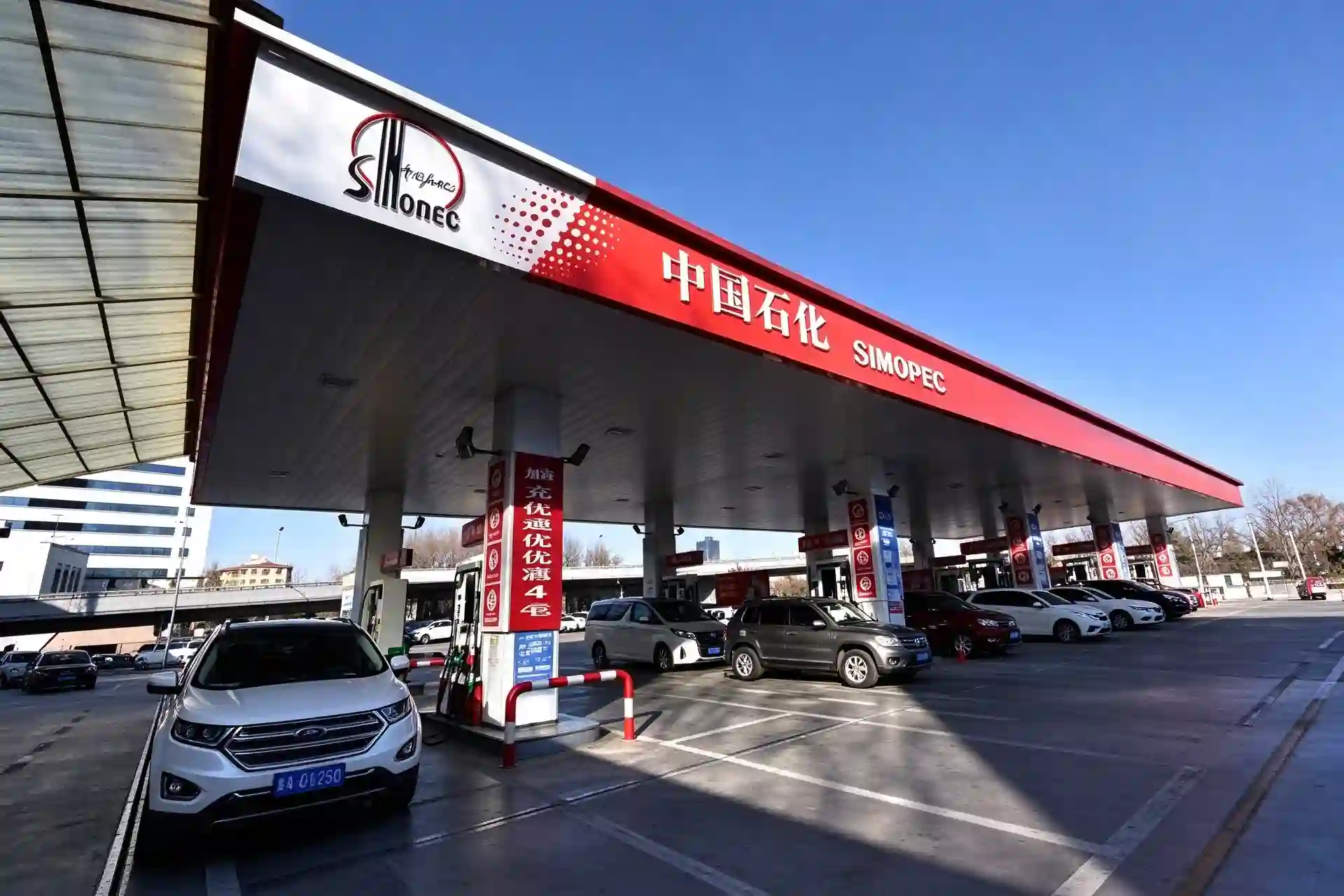
3. Path B: Lease / Dealer-Operated (CODO Model)
This is the lowest-risk entry path. In a CODO (Company-Owned, Dealer-Operated) arrangement, the oil company (Shell, Total, Phoenix, Caltex, Petron, etc.) owns the land, builds the station, and provides the equipment. You operate it and earn a commission or margin on fuel sales.
What you get
- Lowest upfront cost. In the Philippines, Shell CODO requires ₱5M–₱8M (~$85K–$138K) in operating capital. Phoenix CODO starts at ₱3.5M (~$60K). You don’t buy land, build, or purchase equipment.
- Brand recognition and customer trust. People pull into a Shell or Total station by habit.
- The brand handles licenses, construction, equipment supply and fuel delivery. You focus on operations and customer service.
- Lower risk. If the location underperforms, you exit without owning a white elephant asset.
What it costs
- Philippines CODO (Shell/Caltex/Phoenix): $60K–$170K operating capital
- Nigeria brand dealership: $50K–$200K (depends on brand and station size)
- Other markets: varies widely — some brands require a security deposit, others require you to fund working capital only.
Downsides
- You own nothing. No land, no building, no equipment. When the lease ends, you walk away with nothing tangible.
- Brand mandates. You must buy fuel from the brand, use their approved equipment (even if it’s more expensive), follow their branding standards, and accept their pricing rules. No freedom to import cheaper Chinese equipment.
- Lower margin per litre. The brand takes a cut. Your net per-litre margin is thinner than an independent station.
- The brand controls your site. They can non-renew the lease, change the operator, or rebrand at the end of the term.
Who should lease?
- First-time investors who want to learn the business without betting everything
- Operators with limited capital ($50K–$150K)
- People who want a stable operating income rather than long-term asset appreciation
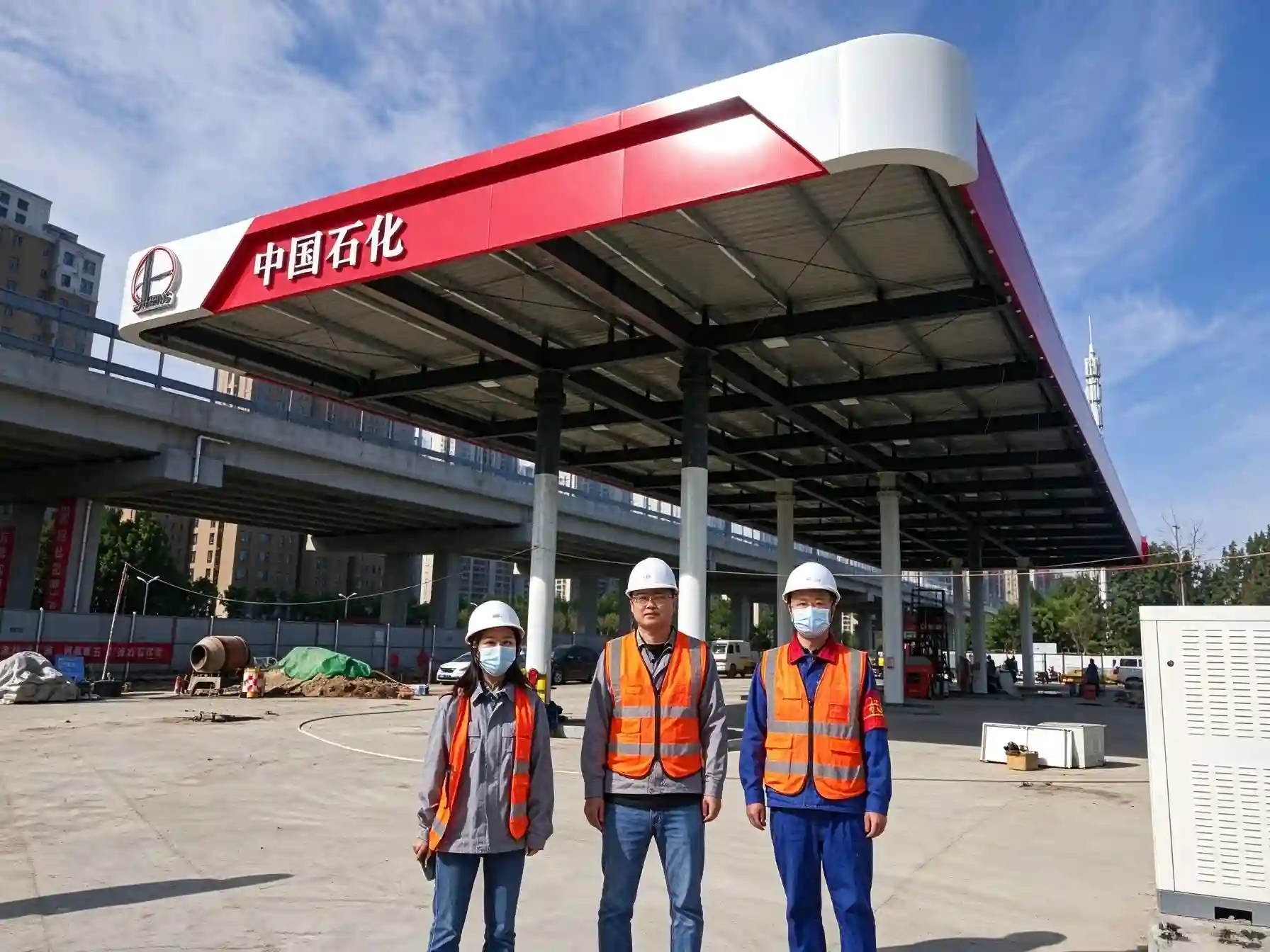
4. Path C: Build a New Station from Scratch
Building new gives you full control — your design, your equipment, your brand, your fuel suppliers. But it’s also the longest, most uncertain and most capital-intensive path.
What you get
- Custom design. You choose the number of pumps, tank sizes, convenience store layout, canopy size and payment system based on your projected traffic.
- Brand-new equipment. No aging dispenser problems, no corroded tanks. You can specify OIML-certified dispensers, double-wall SF tanks, modern ATG systems — and import them directly from China at 40–60% lower cost than local dealers.
- Full independence. You choose your fuel suppliers, set your own prices, and keep 100% of the profit. No franchise fees, no brand mandates.
- Asset appreciation. If you buy the land, you own a real asset that appreciates over time.
Before finalizing a site, investors should also review local gas station location requirements and applicable licensing and construction regulations.
What it costs
- Mini station (2–4 pumps): $25K–$120K equipment + construction (land extra)
- Standard independent station (4–8 pumps): $120K–$600K (land extra)
- Timeline: 8–18 months from land purchase to opening (licensing 2–6 months, construction 3–8 months, equipment installation 4–8 weeks)
For a more detailed breakdown of potential construction expenses, read our guide to the cost to build a gas station.
Risks
- Licensing uncertainty. Some countries (Vietnam, Indonesia) have tightened new station permits. You might spend 6 months and thousands on a site, only to find the regulator won’t approve a new station there.
- Unknown volume. You’re betting on projected traffic. There’s no sales history to verify.
- Longer time to revenue. You’re paying interest on construction loans for 12+ months before a single litre is sold.
For additional industry information on petroleum equipment and fuel handling practices, investors can consult the Petroleum Equipment Institute (PEI).
Who should build?
- Investors with long-term horizon (5+ years)
- Those who want full independence and control
- Operators who can import equipment directly and manage local construction
5. How to Choose: A Simple Decision Framework
If you’re comparing whether to buy, lease or build a gas station, ask yourself these four questions:
Q1: How much capital do you have?
- Under $50K → Lease / CODO
- $50K–$200K → Buy a small existing station or lease
- $200K+ → Buy existing or build new (depending on land availability)
Q2: How much experience do you have?
- First time → Lease (learn the business first)
- Some operations experience → Buy existing (retrofit and improve)
- Experienced with supply chain and construction → Build new
Q3: Do you want to own a long-term asset, or just operating income?
- Asset ownership and appreciation → Buy existing or build new (with land)
- Stable monthly operating profit, lower risk → Lease / CODO
Q4: How fast do you need cash flow?
- Within 3 months → Buy existing
- Within 1–2 months → Lease
- Within 12–18 months → Build new
6. The Equipment Angle: Why New-Build Investors Save the Most
If you choose to build new, or buy an existing station that needs equipment upgrade, this is where you have the biggest cost advantage.
| Equipment | Local/Western Brand | Direct from China | Savings |
|---|---|---|---|
| 2-nozzle dispenser | $15K–$25K | $2K–$4K | 80–90% |
| Submersible pump | $2.5K–$4K | $0.8K–$1.5K | 60–70% |
| 30,000L SF double-wall tank | $25K–$40K | $10K–$18K | 50–60% |
| ATG monitoring system | $5K–$10K | $1.5K–$3K | 70–80% |
For new-build investors, this means a standard station that would cost $200K+ in locally-sourced equipment can be built for $80K–$120K with direct imports — same OIML certification, same explosion-proof rating, same warranty.
For buyers of existing stations, a typical retrofit (replace 4 dispensers, 2 submersible pumps, install ATG) costs $8K–$20K imported from China, vs. $30K–$60K from local suppliers.
An automatic tank gauging system can also help operators monitor tank levels and manage fuel inventory. Learn more in our guide to the automatic tank gauging system (ATG).
For investors who need to replace or install dispensers, correct installation and safe piping and electrical connections are also important. See our fuel dispenser installation guide.
7. FAQ
Q: Is buying an existing station always better than building new?
A: Not always. An existing station might have a poor location, aging infrastructure, or hidden environmental liabilities. Building new gives you a clean slate but carries licensing and volume risk. The decision depends on the specific deal, not the general rule.
Q: Can I lease a station and later buy it?
A: Some brands offer a lease-to-own or DODO (Dealer-Owned, Dealer-Operated) conversion path. Read your dealership agreement carefully — not all brands allow this.
Q: What should I inspect before buying an existing station?
A: (1) Tank integrity test — check for corrosion, leaks, groundwater contamination. (2) Dispenser calibration accuracy — ensure meters are within legal tolerance. (3) Sales records for the past 12–24 months. (4) License validity and transferability. (5) Underground piping condition. (6) Environmental audit (soil and groundwater sample).
Q: How long does it take to transfer ownership of an existing station?
A: Typically 2–6 months. This includes regulator approval, license transfer, environmental audit, and final inspection. Some countries require the new owner to apply for a fresh license rather than transfer.
Q: If I build new, can I import equipment myself?
A: Yes. Most new-build investors in Africa and Southeast Asia import dispensers, submersible pumps, ATG systems and double-wall tanks directly from Chinese manufacturers. You handle customs clearance and import duties, but the 40–60% savings more than offset the logistics cost.
8. Talk to Us About Your Entry Strategy
Whether you’re planning to buy, lease or build a gas station, the equipment decision is the one you control most directly — and the one with the biggest cost-saving opportunity.
Xingzhongyuan (Quanzhou) Energy Co., Ltd supplies fuel dispensers, submersible pumps, double-wall tank systems, ATG gauging, piping and safety accessories for both new-build stations and retrofit projects across Africa and Southeast Asia.
Share these details:
- Which path are you considering: buy, lease, or build?
- Target country and town
- Station size and planned number of pumps
- Whether you need new equipment or retrofit existing ones
Contact us: Discuss Your Gas Station Equipment Requirements
Disclaimer
All cost ranges in this article are planning-level estimates for 2026. They are not property valuations, formal offers, or investment advice. Station purchase prices, lease terms, brand agreements, construction costs and licensing requirements vary significantly by country, region and specific site. Investors should conduct independent due diligence, environmental audits, regulatory verification and financial analysis before committing capital.