
Self-Service Fuel Dispensers in Nigeria: Market Trends & Equipment Guide
News 2026年 10月 31日 21
A self service fuel dispenser is becoming an increasingly important part of Nigeria’s evolving fuel retail industry. With the development of digital payment systems, smart fuel pumps and remote monitoring technology, more Nigerian fuel station operators are exploring self-service fueling solutions.
Although self-service fueling is not a completely new concept in Nigeria, its adoption remained limited for years due to digital payment infrastructure, network reliability, regulatory considerations and consumer habits.
Recently, major fuel marketers have started introducing smart fueling solutions, creating new opportunities for unmanned fuel stations and fuel station automation.
Understanding this market development can help station owners make better investment and equipment decisions.
Timeline of Self-Service Fueling in Nigeria
2016: Pinnacle Oil Introduces an Early Self-Dispensing Station in Lagos
In March 2016, Pinnacle Oil and Gas Limited commissioned a self-dispensing filling station in Lagos. The facility featured 28 dispensing nozzles and pump-generated POS receipts, allowing customers to purchase fuel without relying entirely on traditional attendants.
This was an early attempt to introduce self-service fueling into Nigeria’s retail market. However, the concept did not immediately become a widely adopted operating model.
Source: Vanguard – Self-dispensing filling station debuts in Lagos
January 2026: AA Rano Announces Unmanned Fuel Station Deployment
AA Rano partnered with Nigerian technology company Petrosoft to introduce automated and unmanned fuel station technology.
The project aimed to deploy Petrosoft’s SmartPump solution across AA Rano’s nationwide retail network of more than 200 outlets. The proposed system included digital payments, automated fuel dispensing and remote monitoring.
This announcement attracted significant industry attention and demonstrated growing interest in automated fuel retail operations.The growing adoption of the self service fuel dispenser is creating new opportunities for automated fuel retail businesses in Nigeria.
Source: The Punch – AA Rano unveils unmanned fuel stations
July–August 2026: Sunbeth Energies Launches a Self-Service Station in Lagos
Sunbeth Energies introduced its self-service fueling solution at its Ogba outlet in Lagos in July 2026, with further media coverage in August.
The system allows motorists to initiate, monitor and complete fuel purchases through a digital platform. Customers follow the instructions, make payment and dispense fuel independently.
Importantly, customer assistants remain available to provide guidance when needed. This demonstrates how a self-service model can operate alongside on-site customer support.
The Ogba location serves as a pilot for Sunbeth’s wider self-service expansion plans.
Source: TheCable – Sunbeth Energies launches Nigeria’s first self-service fuel station
September 2026: NNPC Introduces a Smart Self-Service Station in Abuja
On September 10, 2026, NNPC Retail commissioned a smart self-service station on Bill Clinton Drive in Abuja.
The facility combines self-service fuel dispensing with other services, including electric vehicle charging, LPG dispensing, a lubricant service bay and an automated car wash.
NNPC also announced plans to deploy between 50 and 70 smart self-service stations across Nigeria within the following six months.
The involvement of a major national oil company represents an important development in the country’s fuel retail automation market.
Source: NNPC – Official Smart Self-Service Station Announcement
Three Key Advantages of Self-Service Stations for Nigerian Operators
1. Reduce Labour Costs and Improve Operational Flexibility
Labour costs and staff management remain important considerations for Nigerian fuel station operators.
Self-service layouts can reduce the number of attendants required for routine dispensing operations. Depending on the operating model, stations can also extend service hours without relying entirely on traditional shift arrangements.
This creates opportunities to serve night-time motorists and long-distance transport customers.
However, operators should still consider security personnel, maintenance technicians and customer assistance staff when calculating total operating costs.
2. Improve Transaction Transparency and Reduce Disputes
Traditional fuel dispensing relies heavily on manual operations, which can create disputes over dispensing quantities, payments and transaction records.
A smart fuel pump connected to a digital payment and monitoring system can automatically record dispensing volumes, payment information and transaction history.
These records make it easier for station owners to review operations, identify suspicious transactions and investigate potential fuel losses.
Digital monitoring does not eliminate every form of fuel theft or equipment tampering, but it provides better operational visibility.
3. Improve Operational Flexibility During Fuel Supply Disruptions
Fuel supply interruptions can create challenges for station operators in Nigeria.
Self-service stations do not necessarily need to rely on the same staffing arrangements as conventional stations. When fuel is available, automated dispensing can help operators maintain service availability beyond traditional working hours.
Combined with an effective inventory management system, this approach can help station owners manage available stock more efficiently.
Important: You Need More Than Just Self-Service Fuel Dispensers
Many buyers mistakenly believe that building a self-service fuel station only requires purchasing smart fuel dispensers.
In reality, a reliable project requires several interconnected equipment systems.
Here are five important components to consider:
1. Smart Self-Service Fuel Dispensers
The dispenser is the core equipment of an automated fueling station.
Depending on the selected solution, it should support digital payment integration, user instructions, transaction recording and remote monitoring.
Operators should also check compatibility with the local payment system, network environment and station management software.
Learn more about fuel dispenser system design.
2. Safety Valves and Emergency Shutdown Accessories
Safety equipment is essential for both attended and unattended fuel stations.
Important components include:
- Shear valves installed at appropriate dispenser connections.
- Emergency shutoff devices.
- Suitable pipeline protection accessories.
- Emergency shutdown controls.
These components help reduce the consequences of vehicle collisions, equipment damage and fuel pipeline failures when correctly selected and installed.
For more information, see our guide to fuel dispenser installation and safety connections.
3. ATG Automatic Tank Gauging System
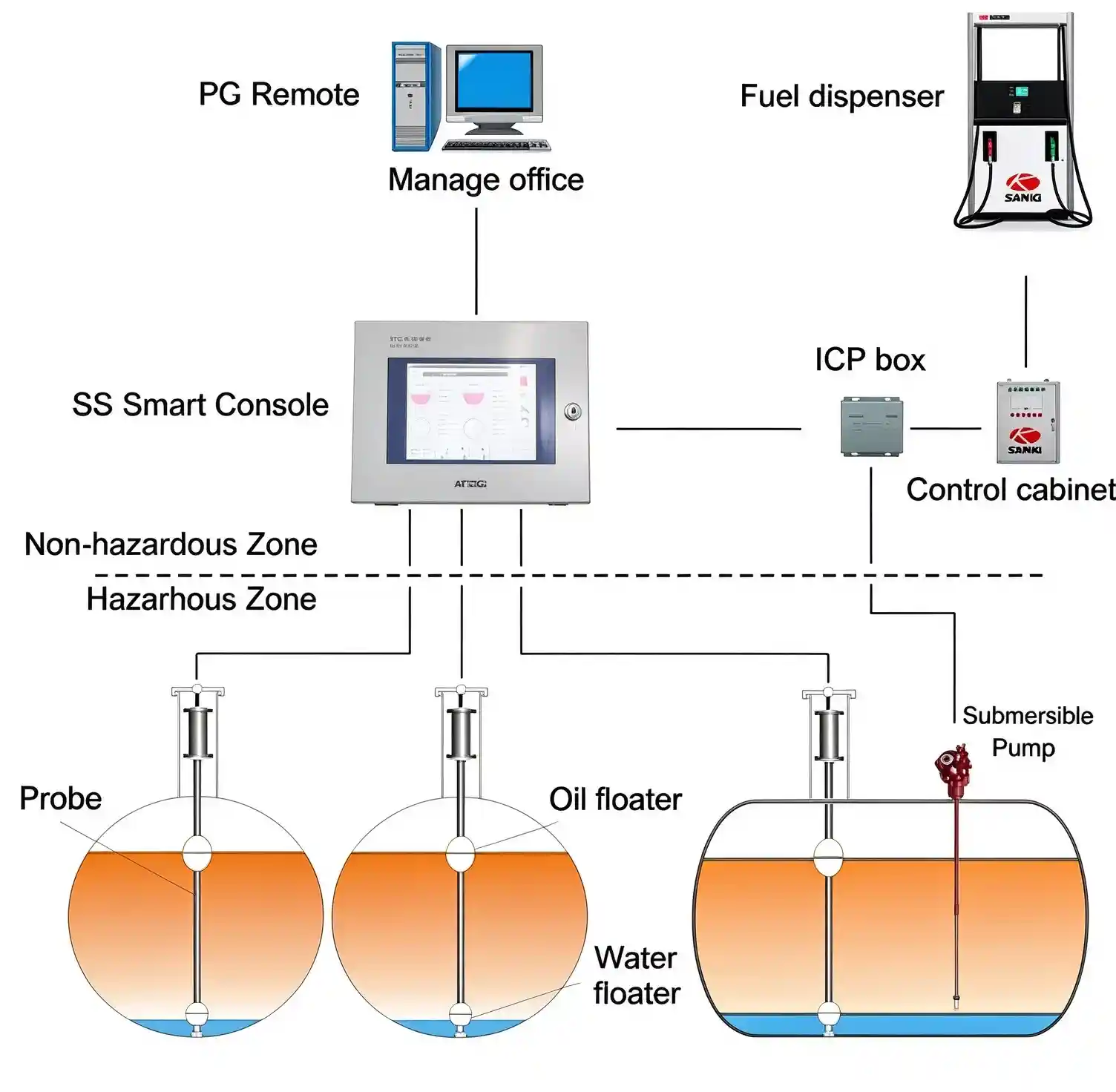
An unattended station needs reliable fuel inventory monitoring.
An automatic tank gauging system allows operators to monitor underground tank levels, track inventory changes and receive low-level alerts remotely.
This is particularly useful for station owners managing multiple locations or operating with limited on-site personnel.
4. Leak Detection Sensors
Fuel leakage can create serious environmental, operational and safety risks.
Leak detection sensors help identify abnormal conditions in tanks, piping systems or containment spaces, depending on the selected monitoring configuration.
For unattended stations, integrating leak detection with remote alarms can help operators respond more quickly to potential problems.
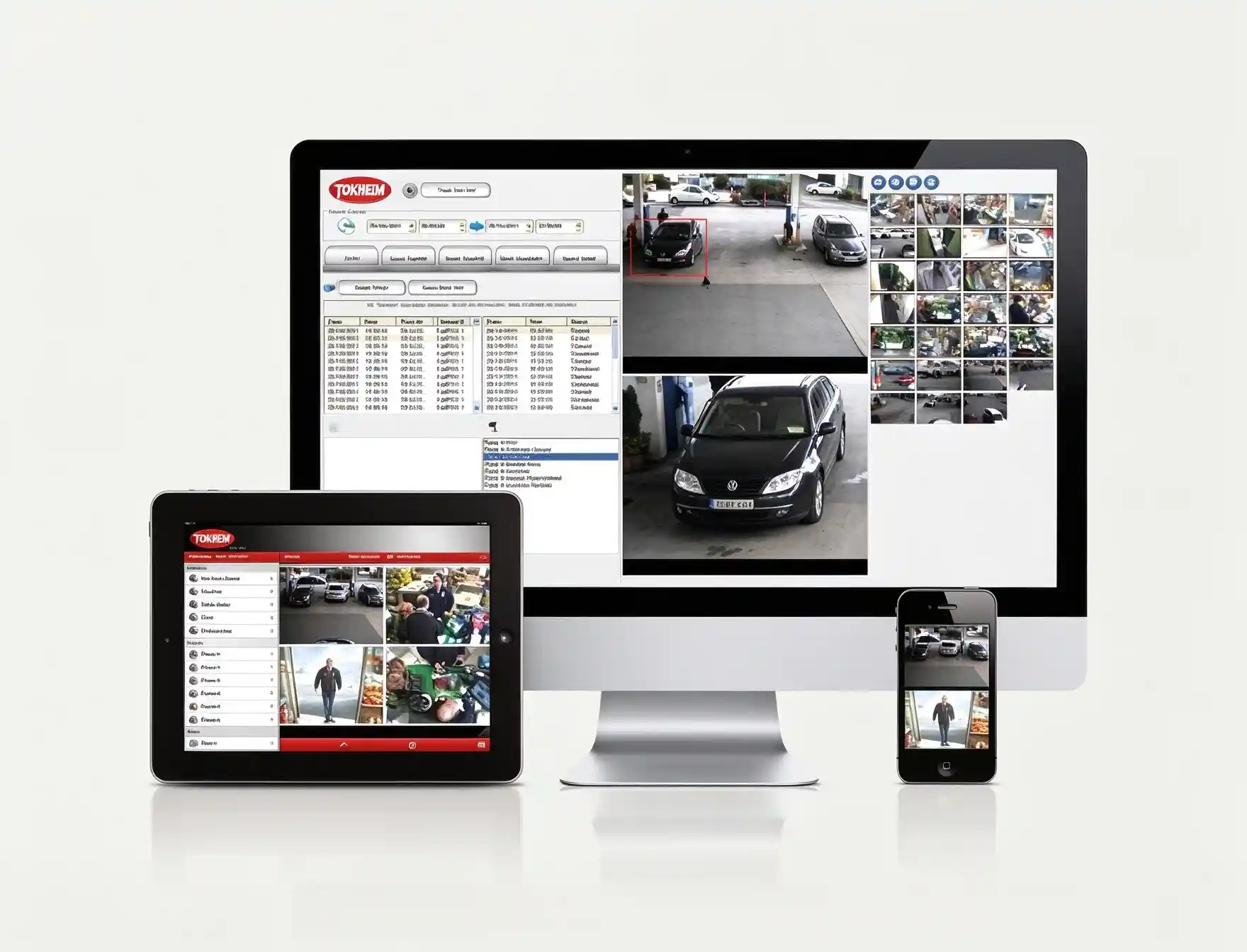
5. CCTV, Intercom and Emergency Alarm Systems
A self-service station still needs an effective security and emergency response arrangement.
Recommended equipment includes:
- CCTV cameras covering dispensing areas.
- Two-way intercom systems.
- Emergency stop buttons.
- Alarm notification systems.
- Remote monitoring equipment.
These systems help operators monitor site activity and communicate with customers when assistance is required.
How to Choose the Right Self-Service Fuel Station Model
Not every Nigerian fuel station needs to adopt a completely unmanned operating model.
There are two practical approaches:
| Operating Model | Main Characteristics | Suitable For |
|---|---|---|
| Fully unmanned | Digital payments, automated dispensing and remote monitoring, with no routine attendants at the forecourt | Operators with mature automation and security systems |
| Hybrid self-service | Customers operate dispensers independently, while staff remain available for assistance | Existing stations and operators entering the self-service market |
For many existing station owners, the hybrid model may be a more practical starting point.
It allows customers to become familiar with self-service fueling while operators gradually improve their digital infrastructure and operating procedures.
Before selecting either model, evaluate payment reliability, network availability, security arrangements, maintenance support and local regulatory requirements.
Frequently Asked Questions
Q1: Can an Existing Fuel Station Be Converted to Use a Self Service Fuel Dispenser?
Yes. Existing stations may be upgraded to support self-service operations, depending on their current dispenser configuration, electrical systems, fuel piping, payment infrastructure and site layout.
A technical assessment should be completed before purchasing new equipment.
Q2: Will Poor Internet Connectivity Disrupt Self-Service Fueling?
It can, particularly when the payment system and dispenser activation depend on a continuous internet connection.
When selecting smart dispensers, ask suppliers whether their systems support offline transaction storage, alternative payment procedures and automatic data synchronisation after network recovery.
Do not assume that every offline system can authorise payments without a connection. Confirm the actual payment provider’s requirements before installation.
Q3: Does a Self-Service Station Need Staff?
Not necessarily for routine dispensing, but completely eliminating on-site personnel may not be suitable for every location.
Security, customer assistance, emergency response and equipment maintenance still need to be considered.
Q4: What Equipment Is Required to Build an Unmanned Fuel Station?
A typical project may require smart self-service dispensers, underground storage tanks, fuel piping, safety valves, ATG systems, leak detection sensors, CCTV, payment terminals and remote monitoring software.
The exact equipment list depends on the station design, operating model and local requirements.
For new projects, selecting suitable underground fuel storage tanks is also an important part of the planning process.
Planning a Self-Service Fuel Station in Nigeria?
Nigeria’s self-service fuel retail market is developing, creating new opportunities for station owners, investors, EPC contractors and equipment distributors.
However, successful implementation requires more than simply purchasing smart fuel dispensers. Equipment compatibility, fuel inventory management, safety protection and remote monitoring all play important roles.
Xingzhongyuan (Quanzhou) Energy Co., Ltd. is a China-based fuel station equipment supply chain service provider. We help international clients coordinate equipment requirements for fuel station construction, renovation and upgrading projects.
We help international clients source self service fuel dispenser solutions and coordinate supporting equipment for complete fuel station projects.
Our equipment supply scope includes:
- Fuel dispensers and dispenser accessories.
- Smart self-service fueling equipment.
- Underground fuel storage tanks and accessories.
- Fuel piping systems and safety valves.
- ATG automatic tank gauging systems.
- Leak detection and monitoring equipment.
Whether you are planning a new unmanned fuel station or upgrading an existing site, we can help coordinate a suitable equipment package based on your project requirements.
Contact Xingzhongyuan for equipment information, technical coordination and project quotations.